Virgo: Difference between revisions
No edit summary |
|||
| (8 intermediate revisions by 3 users not shown) | |||
| Line 1: | Line 1: | ||
Authors: {{PAGEAUTHORS}} | |||
---- | |||
[[File:Virgo (vir).tiff|thumb|Virgo as defined in the 1920s. IAU and Sky & Telescope]] | [[File:Virgo (vir).tiff|thumb|Virgo as defined in the 1920s. IAU and Sky & Telescope]] | ||
Virgo, The Maiden, is a constellation in the zodiac. It is documented since the 4th century BCE (at least). Prior to this, there had been the constellation of The Furrow at this place. | Virgo, The Maiden, is a constellation in the zodiac. It is documented since the 4th century BCE (at least). Prior to this, there had been the constellation of The Furrow at this place. The young lady is a goddess, that much is certain – but which one, the Greeks disagree. Eratosthenes lists a total of five suggestions as to who she might be! | ||
== Etymology and History of the Constellation Name == | == Etymology and History of the Constellation Name == | ||
The word ‘virgin’ has an old-fashioned connotation. It no longer refers to women on the marriage market, but exclusively to sexual purity – in earlier times, ideally a characteristic of unmarried women for the purpose of reliably determining paternity and thus financial responsibility, but today no longer necessarily synonymous. So let's say ‘young lady’ to this figure – or Parthenos in Greek, an adult girl. | |||
===Origin of Constellation=== | |||
Hesiod and Aratos, he writes, call her Dike, goddess of justice. Others said it was Demeter, the Greek goddess of harvest and fertility, Tyche, the Greek goddess of chance and luck, Isis, the most powerful Egyptian sorceress and goddess, or Atargatis, the greatest Syrian goddess. The mermaid-like Atargatis is equated with Derketo and thus also with the constellation Andromeda, the other maiden in the sky. In this case, there could be a confusion. Such confusion is supported by the fact that the constellation Virgo, for example, is missing from the Leiden Aratea from the Carolingian period, even though it is located in the zodiac and is therefore of great importance. | |||
The reason for identifying Tyche with this constellation is supposedly that it has no head star. Ptolemy contradicts this, however, as in the Almagest two stars are indicated on the skull and two on the face – i.e. four head stars. The figure depicted in the Almagest also has wings, however. In standard iconography, none of the above-mentioned goddesses are depicted with wings. Atargatis can then be ruled out, as she is a fish-like deity. Isis and Tyche can be depicted with wings. Dike is less likely; like her Latin counterpart Justicia, her symbol is the scales. However, she has accompanying deities with wings, e.g. Nemesis, the goddess of righteous wrath. | |||
While Artemis is the mistress of the female initiation rite, commemorated in the constellation [[Ursa Major]], Demeter is the mistress of the male initiation rite of Eleusis near Athens. The season of spring, when both constellations are visible in the sky throughout the night, may have been the archaic reason for these figures. Demeter could also be identified with the Babylonian goddess Shala, whose iconography features an ear of grain.[[File:Leo+vir umzeichng4plani black.png|thumb|Leo and Virgo above the MUŠ-Dragon, two claytablet drawings from the Seleucid era (roughly 2nd century BCE), CC BY SMH based upon the drawings by E. Weidner (1967) and Thureau-Dangin (1922).]] | |||
[[File:Leo+vir umzeichng4plani black.png|thumb|Leo and Virgo above the MUŠ-Dragon, two claytablet drawings from the Seleucid era (roughly 2nd century BCE), CC BY SMH based upon the drawings by E. Weidner (1967) and Thureau-Dangin (1922).]] | |||
[[File:Kugel cnc+leo+hya+vir.JPG|thumb|Kugel Globe: Cancer, Leo, Hydra, Virgo (drawing by SMH 2024)]] | [[File:Kugel cnc+leo+hya+vir.JPG|thumb|Kugel Globe: Cancer, Leo, Hydra, Virgo (drawing by SMH 2024)]] | ||
==== Babylonian ==== | ==== Babylonian ==== | ||
In MUL.APIN in the 2nd millennium, the zodiac did not yet exist. In the zodiac precursor ‘Moon Path’, this constellation was still called ‘the furrow with the ear of grain’. It was associated with the goddess Shala, a rain goddess and wife of the storm god. Shala's ear of grain, which lies in the furrow, is the stable element in this constellation. The brightest star is called ‘the ear of corn’ not only in MUL.APIN, but also in Greek (stachys) and Latin ([[Spica]]). The Latin name is still used today. | |||
see | |||
* [[AB.SIN|AB.SIN<sub>2</sub>]] The Furrow | |||
* ''Šala'' | |||
==== Greco-Roman ==== | ==== Greco-Roman ==== | ||
===== Aratos ===== | ===== Aratos ===== | ||
<blockquote>[96] Beneath the two feet of Bootes you can observe the Maiden, who carries in her hand the radiant Spica. Whether she is the daughter of Astraeus, who, they say, was the original father of the stars, or of some other, [100] may her way be peaceful! There is, however, another tale current among men, that once she actually lived on earth, and came face to face with men, and did not ever spurn the tribes of ancient men and women, but sat in their midst although she was immortal. [105] And they called her Justice: gathering together the elders, either in the market-place or on the broad highway, she urged them in prophetic tones to judgements for the good o f the people. At that time they still had no knowledge of painful strife or quarrelsome conflict or noise of battle, [no] but lived just as they were; the dangerous sea was far from their thoughts, and as yet no ships brought them livelihood from afar, but oxen and ploughs and Justice herself, queen of the people and giver of civilised life, provided all their countless needs. That was as long as the earth still nurtured the Golden Age. [115] But with the Silver she associated little, and now not at all willingly, as she longed for the ways of the earlier folk. But nevertheless she was still with this Silver Age too. She would emerge from the sounding mountains towards evening all alone, and not engage anyone in friendly conversation. [120] But filling the broad hillsides with people, she would then speak menacingly, rebuking them for their wickedness, and say she would never more come face to face with them, even if they called her: ‘What an inferior generation your golden fathers have left! And you are likely to beget a still more evil progeny. [125] There will surely be wars, yes, and unnatural bloodshed among men, and suffering from their troubles will come upon them.’ So saying she made for the mountains, and left the people all staring after her. But when these men also had died and there were born [130] the Bronze Age men, more destructive than their predecessors, who were the first to forge the criminal sword for murder on the highways, and the first to taste the flesh of ploughing oxen, then Justice, conceiving a hatred for the generation of these men, flew up to the sky and took up her abode in that place, [135] where she is still visible to men by night as the Maiden near conspicuous Bootes. | |||
Above her two shoulders there circles a star [on her right wing: it is called again the Vintager], of similar magnitude and inset with a brightness equal to [140] that of the star which can be seen beneath the tail of the Great Bear. Impressive is the Bear, and impressive are the stars that she has nearby: once you have sighted them, you do not need any other guide, such are the stars that in beauty and magnitude move before her feet, one in front of the forelegs, one before the legs that descend from her loins, [145] and another under the hind knees. But all of them, individually in different positions, go on their way without a name. (Kidd 1997)</blockquote> | |||
===== Eratosthenes ===== | ===== Eratosthenes ===== | ||
===== Hipparchus ===== | ===== Hipparchus ===== | ||
====== Rising (Lib II Cap V §10) ====== | |||
<blockquote>The Rising of ...</blockquote> | |||
{| class="wikitable" | |||
|+ | |||
! | |||
! colspan="2" |east | |||
! colspan="2" |south | |||
|- | |||
! | |||
!lam1 | |||
!lam2 | |||
!lam1 | |||
!lam2 | |||
|- | |||
| | |||
| | |||
| | |||
| | |||
| | |||
|- | |||
| | |||
| | |||
| | |||
| | |||
| | |||
|- | |||
|star | |||
| | |||
| | |||
| | |||
| | |||
|- | |||
|duration | |||
| colspan="4" |2 1/8 hours = 127.5 min = 31 7/8 degree | |||
|} | |||
====== Setting (Lib II Cap VI §10) ====== | |||
{| class="wikitable" | |||
! | |||
! colspan="2" |west | |||
! colspan="2" |south | |||
|- | |||
! | |||
!lam1 | |||
!lam2 | |||
!lam1 | |||
!lam2 | |||
|- | |||
| | |||
| | |||
| | |||
| | |||
| | |||
|- | |||
| | |||
| | |||
| | |||
| | |||
| | |||
|- | |||
|star | |||
| | |||
| | |||
| | |||
| | |||
|- | |||
|duration | |||
| colspan="4" |2 2/3 hours = 160 min = 40° | |||
|} | |||
====== Stars Mentioned ====== | |||
{| class="wikitable" | |||
|+ | |||
! | |||
!Greek | |||
!German | |||
!English | |||
!ident. | |||
!src | |||
! | |||
!lam_culm | |||
|- | |||
| | |||
| | |||
| | |||
| | |||
| | |||
|Lib II Cap V §10 | |||
|rising, east, first | |||
| | |||
|- | |||
| | |||
| | |||
| | |||
| | |||
| | |||
|Lib II Cap V §10 | |||
|rising, east, last | |||
| | |||
|- | |||
| | |||
| | |||
| | |||
| | |||
| | |||
|Lib II Cap VI §2 | |||
|setting CrB, south, last | |||
|Psc 13.5 | |||
|- | |||
| | |||
| | |||
| | |||
| | |||
| | |||
|Lib II Cap VI §13 | |||
|setting Aql, south, first | |||
|Ari 2 | |||
|- | |||
| | |||
| | |||
| | |||
| | |||
| | |||
|Lib III Cap I §9 | |||
|rising Ori, south, last | |||
|Psc 13 | |||
|} | |||
===== Hyginus, Astronomica ===== | |||
<blockquote>Hesiod calls her the daughter of Jove and Themis. Aratus says that she is thought to be daughter of Astraeus and Aurora, who lived at the time of the Golden Age of men and was their leader. On account of her carefulness and fairness she was called Justice, and at that time no foreign nations were attacked in war, nor did anyone sail over the seas, but they were wont to live their lives caring for their fields. But those born after their death began to be less observant of duty and more greedy, so that Justice associated more rarely with men. Finally the disease became so extreme that it was said the Brazen Race was born; then she could not endure more, and flew away to the stars. Others call her Fortune — others, Ceres, and they dispute the more about her because her head is dimly seen. Some have called her Erigone, daughter of Icarus, whom we have spoken of before. Others call her a daughter of Apollo by Chrysothemis, an infant, named Parthenos. Because she died young she was put by Apollo among the constellations. (Mary Ward 1960)</blockquote> | |||
===== Geminos ===== | ===== Geminos ===== | ||
| Line 36: | Line 180: | ||
! | ! | ||
!Παρθένου ἀστερισμός | !Παρθένου ἀστερισμός | ||
! | !Constellation of Virgo | ||
! | ! | ||
|- | |- | ||
| Line 229: | Line 373: | ||
| | | | ||
|} | |} | ||
== | [[File:Parthenos Youla CH.png|thumb|Convex Hull for the stars inside Parthenos (CC BY Youla Azkarrula).]] | ||
===== Stars within the Constellation Area ===== | |||
{| class="wikitable sortable mw-collapsible" | |||
|+ | |||
!id | |||
!Label | |||
!IAU design. | |||
!description | |||
!Vmag | |||
|- | |||
|1 | |||
|Spica | |||
|HIP 65474 | |||
|Constellation lines (Vertex) | |||
|0.97 | |||
|- | |||
|2 | |||
|Porrima | |||
|HIP 61941 | |||
|Constellation lines | |||
|2.74 | |||
|- | |||
|3 | |||
|Vindemiatrix | |||
|HIP 63608 | |||
|Constellation lines (Vertex) | |||
|2.79 | |||
|- | |||
|4 | |||
|Minelauva | |||
|HIP 63090 | |||
|Constellation lines | |||
|3.38 | |||
|- | |||
|5 | |||
|Heze | |||
|HIP 66249 | |||
|Constellation lines | |||
|3.38 | |||
|- | |||
|6 | |||
|* gam Vir B | |||
|HR 4826 | |||
|Inside the hull | |||
|3.49 | |||
|- | |||
|7 | |||
|Zavijava | |||
|HIP 57757 | |||
|Constellation lines (Vertex) | |||
|3.6 | |||
|- | |||
|8 | |||
|μ Virginis | |||
|HIP 71957 | |||
|Constellation lines (Vertex) | |||
|3.88 | |||
|- | |||
|9 | |||
|Zaniah | |||
|HIP 60129 | |||
|Constellation lines | |||
|3.9 | |||
|- | |||
|10 | |||
|ν Virginis | |||
|HIP 57380 | |||
|Constellation lines (Vertex) | |||
|4.04 | |||
|- | |||
|11 | |||
|Syrma | |||
|HIP 69701 | |||
|Inside the hull | |||
|4.08 | |||
|- | |||
|12 | |||
|ο Virginis | |||
|HIP 58948 | |||
|Constellation lines | |||
|4.12 | |||
|- | |||
|13 | |||
|Kang | |||
|HIP 69427 | |||
|Constellation lines | |||
|4.21 | |||
|- | |||
|14 | |||
|τ Virginis | |||
|HIP 68520 | |||
|Constellation lines | |||
|4.237 | |||
|- | |||
|15 | |||
|θ Virginis | |||
|HIP 64238 | |||
|Inside the hull | |||
|4.397 | |||
|- | |||
|16 | |||
|Khambalia | |||
|HIP 69974 | |||
|Constellation lines (Vertex) | |||
|4.52 | |||
|- | |||
|17 | |||
|π Virginis | |||
|HIP 58590 | |||
|Constellation lines | |||
|4.642 | |||
|- | |||
|18 | |||
|Apamvatsa | |||
|HIP 66006 | |||
|Inside the hull | |||
|4.69 | |||
|- | |||
|19 | |||
|ψ Virginis | |||
|HIP 62985 | |||
|Constellation lines (Vertex) | |||
|4.8 | |||
|- | |||
|20 | |||
|σ Virginis | |||
|HIP 64852 | |||
|Inside the hull | |||
|4.8 | |||
|- | |||
|21 | |||
|Elgafar | |||
|HIP 70755 | |||
|Constellation lines (Vertex) | |||
|4.84 | |||
|- | |||
|22 | |||
|ξ Virginis | |||
|HIP 57328 | |||
|Constellation lines (Vertex) | |||
|4.842 | |||
|- | |||
|23 | |||
|ρ Virginis | |||
|HIP 61960 | |||
|Constellation lines | |||
|4.88 | |||
|- | |||
|24 | |||
|78 Vir | |||
|HIP 66200 | |||
|Inside the hull | |||
|4.94 | |||
|- | |||
|25 | |||
|16 Vir | |||
|HIP 60172 | |||
|Inside the hull | |||
|4.96 | |||
|- | |||
|26 | |||
|82 Vir | |||
|HIP 66803 | |||
|Inside the hull | |||
|5.01 | |||
|- | |||
|27 | |||
|υ Virginis | |||
|HIP 70012 | |||
|Inside the hull | |||
|5.14 | |||
|- | |||
|28 | |||
|90 Vir | |||
|HIP 67929 | |||
|Inside the hull | |||
|5.159 | |||
|- | |||
|29 | |||
|d2 Vir | |||
|HIP 62267 | |||
|Constellation lines | |||
|5.207 | |||
|- | |||
|30 | |||
|76 Vir | |||
|HIP 66098 | |||
|Constellation lines | |||
|5.21 | |||
|- | |||
|31 | |||
|4 Vir | |||
|HIP 57562 | |||
|Inside the hull | |||
|5.316 | |||
|- | |||
|32 | |||
|7 Vir | |||
|HIP 58510 | |||
|Inside the hull | |||
|5.345 | |||
|- | |||
|33 | |||
|106 Vir | |||
|HIP 70794 | |||
|Inside the hull | |||
|5.418 | |||
|- | |||
|34 | |||
|84 Vir | |||
|HIP 66936 | |||
|Inside the hull | |||
|5.423 | |||
|- | |||
|35 | |||
|95 Vir | |||
|HIP 68940 | |||
|Inside the hull | |||
|5.453 | |||
|- | |||
|36 | |||
|g Vir | |||
|HIP 64122 | |||
|Inside the hull | |||
|5.564 | |||
|- | |||
|37 | |||
|6 Vir | |||
|HIP 58110 | |||
|Inside the hull | |||
|5.569 | |||
|- | |||
|38 | |||
|31 Vir | |||
|HIP 61968 | |||
|Inside the hull | |||
|5.573 | |||
|- | |||
|39 | |||
| - | |||
|HIP 62325 | |||
|Inside the hull | |||
|5.65 | |||
|- | |||
|40 | |||
|136 G. Vir | |||
|HIP 65198 | |||
|Inside the hull | |||
|5.687 | |||
|- | |||
|41 | |||
|80 Vir | |||
|HIP 66320 | |||
|Inside the hull | |||
|5.706 | |||
|- | |||
|42 | |||
|FW Vir | |||
|HIP 61658 | |||
|Inside the hull | |||
|5.71 | |||
|- | |||
|43 | |||
| - | |||
|HIP 59309 | |||
|Inside the hull | |||
|5.72 | |||
|- | |||
|44 | |||
|66 Vir | |||
|HIP 65420 | |||
|Inside the hull | |||
|5.749 | |||
|- | |||
|45 | |||
|44 Vir | |||
|HIP 63414 | |||
|Inside the hull | |||
|5.791 | |||
|- | |||
|46 | |||
|65 Vir | |||
|HIP 65323 | |||
|Inside the hull | |||
|5.858 | |||
|- | |||
|47 | |||
|64 Vir | |||
|HIP 65241 | |||
|Inside the hull | |||
|5.873 | |||
|- | |||
|48 | |||
|25 Vir | |||
|HIP 61558 | |||
|Inside the hull | |||
|5.88 | |||
|- | |||
|49 | |||
|13 Vir | |||
|HIP 60030 | |||
|Inside the hull | |||
|5.897 | |||
|- | |||
|50 | |||
|92 Vir | |||
|HIP 68092 | |||
|Inside the hull | |||
|5.898 | |||
|- | |||
|51 | |||
|224 G. Vir | |||
|HIP 69493 | |||
|Inside the hull | |||
|5.9 | |||
|- | |||
|52 | |||
|79 G. Vir | |||
|HIP 62103 | |||
|Inside the hull | |||
|5.918 | |||
|- | |||
|53 | |||
|50 Vir | |||
|HIP 64224 | |||
|Inside the hull | |||
|5.943 | |||
|- | |||
|54 | |||
|146 G. Vir | |||
|HIP 65545 | |||
|Inside the hull | |||
|5.965 | |||
|- | |||
|55 | |||
|37 Vir | |||
|HIP 62757 | |||
|Inside the hull | |||
|6.003 | |||
|- | |||
|56 | |||
|56 G. Vir | |||
|HIP 61103 | |||
|Inside the hull | |||
|6.034 | |||
|- | |||
|57 | |||
|183 G. Vir | |||
|HIP 67271 | |||
|Inside the hull | |||
|6.049 | |||
|- | |||
|58 | |||
|* 46 Vir A | |||
|HIP 63494 | |||
|Inside the hull | |||
|6.07 | |||
|- | |||
|59 | |||
|72 Vir | |||
|HIP 65892 | |||
|Inside the hull | |||
|6.098 | |||
|- | |||
|60 | |||
|38 Vir | |||
|HIP 62875 | |||
|Inside the hull | |||
|6.11 | |||
|- | |||
|61 | |||
|230 G. Vir | |||
|HIP 69747 | |||
|Inside the hull | |||
|6.141 | |||
|- | |||
|62 | |||
|9 G. Vir | |||
|HIP 57629 | |||
|Inside the hull | |||
|6.15 | |||
|- | |||
|63 | |||
|104 Vir | |||
|HIP 70680 | |||
|Inside the hull | |||
|6.161 | |||
|- | |||
|64 | |||
|57 G. Vir | |||
|HIP 61134 | |||
|Inside the hull | |||
|6.172 | |||
|- | |||
|65 | |||
|19 G. Vir | |||
|HIP 58445 | |||
|Inside the hull | |||
|6.176 | |||
|- | |||
|66 | |||
|FT Vir | |||
|HIP 60813 | |||
|Inside the hull | |||
|6.21 | |||
|- | |||
|67 | |||
|2 Lib | |||
|HIP 70336 | |||
|Inside the hull | |||
|6.214 | |||
|- | |||
|68 | |||
|85 G. Vir | |||
|HIP 62421 | |||
|Inside the hull | |||
|6.26 | |||
|- | |||
|69 | |||
|IQ Vir | |||
|HIP 58002 | |||
|Inside the hull | |||
|6.29 | |||
|- | |||
|70 | |||
|112 G. Vir | |||
|HIP 64181 | |||
|Inside the hull | |||
|6.32 | |||
|- | |||
|71 | |||
|68 G. Vir | |||
|HIP 61637 | |||
|Inside the hull | |||
|6.334 | |||
|- | |||
|72 | |||
|EP Vir | |||
|HIP 62376 | |||
|Inside the hull | |||
|6.34 | |||
|- | |||
|73 | |||
|51 G. Vir | |||
|HIP 60804 | |||
|Inside the hull | |||
|6.342 | |||
|- | |||
|74 | |||
|129 G. Vir | |||
|HIP 64838 | |||
|Inside the hull | |||
|6.351 | |||
|- | |||
|75 | |||
|225 G. Vir | |||
|HIP 69564 | |||
|Inside the hull | |||
|6.36 | |||
|- | |||
|76 | |||
| - | |||
|HIP 58809 | |||
|Inside the hull | |||
|6.38 | |||
|- | |||
|77 | |||
|211 G. Vir | |||
|HIP 68739 | |||
|Inside the hull | |||
|6.387 | |||
|- | |||
|78 | |||
|204 G. Vir | |||
|HIP 68380 | |||
|Inside the hull | |||
|6.394 | |||
|- | |||
|79 | |||
|35 Vir | |||
|HIP 62443 | |||
|Inside the hull | |||
|6.41 | |||
|- | |||
|80 | |||
|150 G. Vir | |||
|HIP 65796 | |||
|Inside the hull | |||
|6.419 | |||
|- | |||
|81 | |||
|229 G. Vir | |||
|HIP 69727 | |||
|Inside the hull | |||
|6.434 | |||
|- | |||
|82 | |||
|91 G. Vir | |||
|HIP 62915 | |||
|Inside the hull | |||
|6.439 | |||
|- | |||
|83 | |||
|240 G. Vir | |||
|HIP 70038 | |||
|Inside the hull | |||
|6.44 | |||
|- | |||
|84 | |||
|96 Vir | |||
|HIP 69127 | |||
|Inside the hull | |||
|6.46 | |||
|- | |||
|85 | |||
|17 Vir | |||
|HIP 60353 | |||
|Inside the hull | |||
|6.47 | |||
|- | |||
|86 | |||
|233 G. Vir | |||
|HIP 69773 | |||
|Inside the hull | |||
|6.47 | |||
|- | |||
|87 | |||
| - | |||
|HIP 67004 | |||
|Inside the hull | |||
|6.498 | |||
|- | |||
|88 | |||
|235 G. Vir | |||
|HIP 69881 | |||
|Inside the hull | |||
|6.5 | |||
|- | |||
|89 | |||
| - | |||
|HIP 57636 | |||
|Inside the hull | |||
|6.56 | |||
|} | |||
== Transformation of constellation image == | == Transformation of constellation image == | ||
| Line 240: | Line 928: | ||
File:Kugel cnc+leo+hya+vir.JPG|Cancer, Leo, Virgo above Hydra on Greek Kugel Globe (1st century) | File:Kugel cnc+leo+hya+vir.JPG|Cancer, Leo, Virgo above Hydra on Greek Kugel Globe (1st century) | ||
</gallery> | </gallery> | ||
== Mythology/ Religion == | |||
The immortal Dike, daughter of Zeus and Themis, once lived on Earth. She could not be seen by men, but she lived among women. As humans became increasingly brutal, waging wars and revolts against each other and no longer respecting justice, she first retreated to the mountains and finally disappeared into the heavens in disgust at the boundless injustice. This is reported by Hesiod, Aratus and Eratosthenes. They allude to a popular ancient fable that teaches the struggle for justice, because otherwise humanity will perish. | |||
The story of Demeter is closely intertwined with that of her daughter Persephone. Persephone was abducted by Hades to be his wife, prompting Demeter to search for her. So Demeter is certainly not a ‘virgin’ if she has a daughter – just as Isis and Atargatis are not. If one wants to link the story of the abduction of the daughter with the constellation, Persephone herself could at best be this lady. She is also sometimes depicted with wings and assists her mother in the initiation ritual, so that the archaic context would also fit. However, she is missing from Eratosthenes' list of suggestions. | |||
==Weblinks== | ==Weblinks== | ||
| Line 246: | Line 939: | ||
== References == | == References == | ||
[[Category:Eurasia]] [[Category:Constellation]] [[Category:West Asian]][[Category:Almagest]] | [[Category:Eurasia]] [[Category:Constellation]] [[Category:West Asian]][[Category:Almagest]] | ||
[[Category:Ancient Greek]] [[Category:European]][[Category:88 IAU-Constellations]] | [[Category:Ancient Greek]] [[Category:European]][[Category:88 IAU-Constellations]][[Category:Zodiac]] | ||
[[Category:4work]] | [[Category:4work]] | ||
Latest revision as of 11:00, 26 February 2026
Authors: Susanne M Hoffmann, Youla Azkarrula, Doris Vickers, IanRidpath

Virgo, The Maiden, is a constellation in the zodiac. It is documented since the 4th century BCE (at least). Prior to this, there had been the constellation of The Furrow at this place. The young lady is a goddess, that much is certain – but which one, the Greeks disagree. Eratosthenes lists a total of five suggestions as to who she might be!
Etymology and History of the Constellation Name
The word ‘virgin’ has an old-fashioned connotation. It no longer refers to women on the marriage market, but exclusively to sexual purity – in earlier times, ideally a characteristic of unmarried women for the purpose of reliably determining paternity and thus financial responsibility, but today no longer necessarily synonymous. So let's say ‘young lady’ to this figure – or Parthenos in Greek, an adult girl.
Origin of Constellation
Hesiod and Aratos, he writes, call her Dike, goddess of justice. Others said it was Demeter, the Greek goddess of harvest and fertility, Tyche, the Greek goddess of chance and luck, Isis, the most powerful Egyptian sorceress and goddess, or Atargatis, the greatest Syrian goddess. The mermaid-like Atargatis is equated with Derketo and thus also with the constellation Andromeda, the other maiden in the sky. In this case, there could be a confusion. Such confusion is supported by the fact that the constellation Virgo, for example, is missing from the Leiden Aratea from the Carolingian period, even though it is located in the zodiac and is therefore of great importance.
The reason for identifying Tyche with this constellation is supposedly that it has no head star. Ptolemy contradicts this, however, as in the Almagest two stars are indicated on the skull and two on the face – i.e. four head stars. The figure depicted in the Almagest also has wings, however. In standard iconography, none of the above-mentioned goddesses are depicted with wings. Atargatis can then be ruled out, as she is a fish-like deity. Isis and Tyche can be depicted with wings. Dike is less likely; like her Latin counterpart Justicia, her symbol is the scales. However, she has accompanying deities with wings, e.g. Nemesis, the goddess of righteous wrath.
While Artemis is the mistress of the female initiation rite, commemorated in the constellation Ursa Major, Demeter is the mistress of the male initiation rite of Eleusis near Athens. The season of spring, when both constellations are visible in the sky throughout the night, may have been the archaic reason for these figures. Demeter could also be identified with the Babylonian goddess Shala, whose iconography features an ear of grain.


Babylonian
In MUL.APIN in the 2nd millennium, the zodiac did not yet exist. In the zodiac precursor ‘Moon Path’, this constellation was still called ‘the furrow with the ear of grain’. It was associated with the goddess Shala, a rain goddess and wife of the storm god. Shala's ear of grain, which lies in the furrow, is the stable element in this constellation. The brightest star is called ‘the ear of corn’ not only in MUL.APIN, but also in Greek (stachys) and Latin (Spica). The Latin name is still used today.
see
- AB.SIN2 The Furrow
- Šala
Greco-Roman
Aratos
[96] Beneath the two feet of Bootes you can observe the Maiden, who carries in her hand the radiant Spica. Whether she is the daughter of Astraeus, who, they say, was the original father of the stars, or of some other, [100] may her way be peaceful! There is, however, another tale current among men, that once she actually lived on earth, and came face to face with men, and did not ever spurn the tribes of ancient men and women, but sat in their midst although she was immortal. [105] And they called her Justice: gathering together the elders, either in the market-place or on the broad highway, she urged them in prophetic tones to judgements for the good o f the people. At that time they still had no knowledge of painful strife or quarrelsome conflict or noise of battle, [no] but lived just as they were; the dangerous sea was far from their thoughts, and as yet no ships brought them livelihood from afar, but oxen and ploughs and Justice herself, queen of the people and giver of civilised life, provided all their countless needs. That was as long as the earth still nurtured the Golden Age. [115] But with the Silver she associated little, and now not at all willingly, as she longed for the ways of the earlier folk. But nevertheless she was still with this Silver Age too. She would emerge from the sounding mountains towards evening all alone, and not engage anyone in friendly conversation. [120] But filling the broad hillsides with people, she would then speak menacingly, rebuking them for their wickedness, and say she would never more come face to face with them, even if they called her: ‘What an inferior generation your golden fathers have left! And you are likely to beget a still more evil progeny. [125] There will surely be wars, yes, and unnatural bloodshed among men, and suffering from their troubles will come upon them.’ So saying she made for the mountains, and left the people all staring after her. But when these men also had died and there were born [130] the Bronze Age men, more destructive than their predecessors, who were the first to forge the criminal sword for murder on the highways, and the first to taste the flesh of ploughing oxen, then Justice, conceiving a hatred for the generation of these men, flew up to the sky and took up her abode in that place, [135] where she is still visible to men by night as the Maiden near conspicuous Bootes. Above her two shoulders there circles a star [on her right wing: it is called again the Vintager], of similar magnitude and inset with a brightness equal to [140] that of the star which can be seen beneath the tail of the Great Bear. Impressive is the Bear, and impressive are the stars that she has nearby: once you have sighted them, you do not need any other guide, such are the stars that in beauty and magnitude move before her feet, one in front of the forelegs, one before the legs that descend from her loins, [145] and another under the hind knees. But all of them, individually in different positions, go on their way without a name. (Kidd 1997)
Eratosthenes
Hipparchus
Rising (Lib II Cap V §10)
The Rising of ...
| east | south | |||
|---|---|---|---|---|
| lam1 | lam2 | lam1 | lam2 | |
| star | ||||
| duration | 2 1/8 hours = 127.5 min = 31 7/8 degree | |||
Setting (Lib II Cap VI §10)
| west | south | |||
|---|---|---|---|---|
| lam1 | lam2 | lam1 | lam2 | |
| star | ||||
| duration | 2 2/3 hours = 160 min = 40° | |||
Stars Mentioned
| Greek | German | English | ident. | src | lam_culm | ||
|---|---|---|---|---|---|---|---|
| Lib II Cap V §10 | rising, east, first | ||||||
| Lib II Cap V §10 | rising, east, last | ||||||
| Lib II Cap VI §2 | setting CrB, south, last | Psc 13.5 | |||||
| Lib II Cap VI §13 | setting Aql, south, first | Ari 2 | |||||
| Lib III Cap I §9 | rising Ori, south, last | Psc 13 |
Hyginus, Astronomica
Hesiod calls her the daughter of Jove and Themis. Aratus says that she is thought to be daughter of Astraeus and Aurora, who lived at the time of the Golden Age of men and was their leader. On account of her carefulness and fairness she was called Justice, and at that time no foreign nations were attacked in war, nor did anyone sail over the seas, but they were wont to live their lives caring for their fields. But those born after their death began to be less observant of duty and more greedy, so that Justice associated more rarely with men. Finally the disease became so extreme that it was said the Brazen Race was born; then she could not endure more, and flew away to the stars. Others call her Fortune — others, Ceres, and they dispute the more about her because her head is dimly seen. Some have called her Erigone, daughter of Icarus, whom we have spoken of before. Others call her a daughter of Apollo by Chrysothemis, an infant, named Parthenos. Because she died young she was put by Apollo among the constellations. (Mary Ward 1960)
Geminos
Almagest
| id | Greek
(Heiberg 1898) |
English
(Toomer 1984) |
ident. |
|---|---|---|---|
| Παρθένου ἀστερισμός | Constellation of Virgo | ||
| 1 | τῶν ἐν ἄκρῳ τῷ κρανίῳ β ὁ νότιος. | the southernmost of the 2 stars in the top of the skull | nu Vir |
| 2 | ὁ βορειότερος αὐτῶν. | The northernmost of them | xi Vir |
| 3 | ὁ τῶν ἐπομένων αὐτοῖς ἐν τῷ προσώπῳ β ὁ βορειότερος. | The northernmost of the 2 stars to the rear of these, in the face | omi Vir |
| 4 | ὁ νοτιώτερος αὐτῶν. | The southernmost of them | pi Vir |
| 5 | ὁ ἐπ’ ἄκρας τῆς νοτίου καὶ ἀριστερᾶς πτέρυγος. | The star on the tip of the southern, left wing | bet Vir |
| 6 | τῶν ἐν τῇ ἀριστερᾷ πτέρυγι δ ὁ προηγούμευος. | The most advanced of the"4 stars in the left wing | eta Vir |
| ὁ τούτῳ ἑπόμενος. | The one to the rear of this | gam Vir | |
| ὁ ἔτι τούτῳ ἐπόμενος. | The one to the rear again of this | 46 Vir | |
| ὁ ἔσχατος καὶ ἐπόμευος τῶν δ | The last and rearmost of the 4 | tet Vir | |
| ὁ ἐν τῷ δεξιῷ πλευρῷ ὑπὸ τὴν ξώνηη | The star in the right side under the girdle | del Vir | |
| τῶν ἐν τῇ δεξιᾷ καὶ βορεύῳ πτέρυψι γ’ ὁ προηγούμενος | The most advanced of the 3 stars in the right, northern wing | rho Vir | |
| τῶν λοιπῶν β’ ὁ νότιος | The southernmost of the other 2 | 32 Vir | |
| ὁ βόρειος αὐτῶν καὶ καλούμενος Προτρογητήρ | The northernmost of these, called 'Vindemiatrix' | eps Vir | |
| ὁ ἐπὶ τοῦ ἀριστεροῦ ἀκροχείρου ὁ καλούμενος Στάχυς | The star on the .. left hand, called 'Spica' | alf Vir | |
| ὁ ὑπὸ τὸ περίξωμα ὡς κατὰ τοῦ δεξιοῦ γλουτοῦ. | The star under the apron, just about over the right buttock | zet Vir | |
| τοῦ ἐν τῷ ἀριστερῷ μηρῷ τετραπλεύρου τῆς προηγουμένης. πλευρᾶς ὁ βόρειος. | The quadrilateral in the left thigh: the northern star on the advance side | 74 Vir | |
| ὁ νότιος τῆς προηγουμένης πλευρᾶς. | The quadrilateral in the left thigh: the southern star.on the advance side | 76 Vir | |
| τῆς ἐπομένης πλευρᾶς τῶν β’ ὁ βορειότερος. | The quadrilateral in the left thigh: the northernmost of the 2 stars on the rear side | 82 Vir | |
| ὁ νοτιώτερος τῆς ἐπομένης πλευρᾶς | The quadrilateral in the left thigh: the southernmost star on the rear side | 68 Vir | |
| ὁ ἐπὶ τοῦ ἀριστεροῦ γόνατος | The star on t he lel't knee | 86 Vir | |
| ὁ ἐν τῷ δεξιῷ ὀπισθομήρῳ. | The star in the back of the right thigh | 90 Vir | |
| τῶν ἐν τῷ περιποδίῳ σύρματι 7’ ὁ μέσος. | The middle star of the 3 in the garment·hem round the feet | iot Vir | |
| ὁ φότιος αὐτῶν | The southernmost of them | kap Vir | |
| ὁ βόρειος τῶν τριῶν | The northernmost of thc three | phi Vir | |
| ὁ ἐπὶ τοῦ ἀριστεροῦ καὶ νοτίου ἀκρόποδος | The star an the left, southern foot | lam Vir | |
| ὁ ἐπὶ τοῦ δεξιοῦ καὶ βορεύου ἀκρόποδος. | The star on the right, northern foot | mu Vir | |
| ἀστέρες κε, ὧν αἱ μεγέθους ἂ, γ’ς, δ’ ξ, ε'ι, ς’ β | 26 stars, 1 of the lirst magnitude, 6 of the third, 7 of the fourth, 10 of the fifth, 2 of the sixth | ||
| Οἱ περὶ τὴν Παρθένου ἀμόρφωτοι. | Stars araund Virgo outside the constellation | ||
| τῶν ὑπὸ τὸν ἀριστερὸν πῆχυν ἐπ’ εὐθείας τριῶν ὁ προἠγούμενος | Thc most advanced ofthe three in a straight line under the left forearm | chi Vir | |
| ὁ μέσος αὐτῶν | The middle one of these | psi Vir | |
| ὁ ἑπόμενος τῶν γ | The rearmost of the 3 | 49 Vir | |
| τῶν ὑπὸ τὸν Στάχυν ὡς ἐπ’ εὐθείας γ’ ὁ προηγούμενος | Thc most advanced of the 3 stars almost on a straight line under Spica | 53 Vir | |
| ὁ μέσος αὐτῶν καὶ διπλοῦς | The middle one of thcse, which isadouble star | 61 + 63 Vir | |
| ὁ ἐπόμενος τῶν τριῶν | The rearmost of the three | 89 Vir | |
| ἀστέρες ξ, ὥν ἐ μεγέθους ὅ, ς’ β | 6 stars, 4 of the fifth magnitude, 2 of thc sixth |

Stars within the Constellation Area
| id | Label | IAU design. | description | Vmag |
|---|---|---|---|---|
| 1 | Spica | HIP 65474 | Constellation lines (Vertex) | 0.97 |
| 2 | Porrima | HIP 61941 | Constellation lines | 2.74 |
| 3 | Vindemiatrix | HIP 63608 | Constellation lines (Vertex) | 2.79 |
| 4 | Minelauva | HIP 63090 | Constellation lines | 3.38 |
| 5 | Heze | HIP 66249 | Constellation lines | 3.38 |
| 6 | * gam Vir B | HR 4826 | Inside the hull | 3.49 |
| 7 | Zavijava | HIP 57757 | Constellation lines (Vertex) | 3.6 |
| 8 | μ Virginis | HIP 71957 | Constellation lines (Vertex) | 3.88 |
| 9 | Zaniah | HIP 60129 | Constellation lines | 3.9 |
| 10 | ν Virginis | HIP 57380 | Constellation lines (Vertex) | 4.04 |
| 11 | Syrma | HIP 69701 | Inside the hull | 4.08 |
| 12 | ο Virginis | HIP 58948 | Constellation lines | 4.12 |
| 13 | Kang | HIP 69427 | Constellation lines | 4.21 |
| 14 | τ Virginis | HIP 68520 | Constellation lines | 4.237 |
| 15 | θ Virginis | HIP 64238 | Inside the hull | 4.397 |
| 16 | Khambalia | HIP 69974 | Constellation lines (Vertex) | 4.52 |
| 17 | π Virginis | HIP 58590 | Constellation lines | 4.642 |
| 18 | Apamvatsa | HIP 66006 | Inside the hull | 4.69 |
| 19 | ψ Virginis | HIP 62985 | Constellation lines (Vertex) | 4.8 |
| 20 | σ Virginis | HIP 64852 | Inside the hull | 4.8 |
| 21 | Elgafar | HIP 70755 | Constellation lines (Vertex) | 4.84 |
| 22 | ξ Virginis | HIP 57328 | Constellation lines (Vertex) | 4.842 |
| 23 | ρ Virginis | HIP 61960 | Constellation lines | 4.88 |
| 24 | 78 Vir | HIP 66200 | Inside the hull | 4.94 |
| 25 | 16 Vir | HIP 60172 | Inside the hull | 4.96 |
| 26 | 82 Vir | HIP 66803 | Inside the hull | 5.01 |
| 27 | υ Virginis | HIP 70012 | Inside the hull | 5.14 |
| 28 | 90 Vir | HIP 67929 | Inside the hull | 5.159 |
| 29 | d2 Vir | HIP 62267 | Constellation lines | 5.207 |
| 30 | 76 Vir | HIP 66098 | Constellation lines | 5.21 |
| 31 | 4 Vir | HIP 57562 | Inside the hull | 5.316 |
| 32 | 7 Vir | HIP 58510 | Inside the hull | 5.345 |
| 33 | 106 Vir | HIP 70794 | Inside the hull | 5.418 |
| 34 | 84 Vir | HIP 66936 | Inside the hull | 5.423 |
| 35 | 95 Vir | HIP 68940 | Inside the hull | 5.453 |
| 36 | g Vir | HIP 64122 | Inside the hull | 5.564 |
| 37 | 6 Vir | HIP 58110 | Inside the hull | 5.569 |
| 38 | 31 Vir | HIP 61968 | Inside the hull | 5.573 |
| 39 | - | HIP 62325 | Inside the hull | 5.65 |
| 40 | 136 G. Vir | HIP 65198 | Inside the hull | 5.687 |
| 41 | 80 Vir | HIP 66320 | Inside the hull | 5.706 |
| 42 | FW Vir | HIP 61658 | Inside the hull | 5.71 |
| 43 | - | HIP 59309 | Inside the hull | 5.72 |
| 44 | 66 Vir | HIP 65420 | Inside the hull | 5.749 |
| 45 | 44 Vir | HIP 63414 | Inside the hull | 5.791 |
| 46 | 65 Vir | HIP 65323 | Inside the hull | 5.858 |
| 47 | 64 Vir | HIP 65241 | Inside the hull | 5.873 |
| 48 | 25 Vir | HIP 61558 | Inside the hull | 5.88 |
| 49 | 13 Vir | HIP 60030 | Inside the hull | 5.897 |
| 50 | 92 Vir | HIP 68092 | Inside the hull | 5.898 |
| 51 | 224 G. Vir | HIP 69493 | Inside the hull | 5.9 |
| 52 | 79 G. Vir | HIP 62103 | Inside the hull | 5.918 |
| 53 | 50 Vir | HIP 64224 | Inside the hull | 5.943 |
| 54 | 146 G. Vir | HIP 65545 | Inside the hull | 5.965 |
| 55 | 37 Vir | HIP 62757 | Inside the hull | 6.003 |
| 56 | 56 G. Vir | HIP 61103 | Inside the hull | 6.034 |
| 57 | 183 G. Vir | HIP 67271 | Inside the hull | 6.049 |
| 58 | * 46 Vir A | HIP 63494 | Inside the hull | 6.07 |
| 59 | 72 Vir | HIP 65892 | Inside the hull | 6.098 |
| 60 | 38 Vir | HIP 62875 | Inside the hull | 6.11 |
| 61 | 230 G. Vir | HIP 69747 | Inside the hull | 6.141 |
| 62 | 9 G. Vir | HIP 57629 | Inside the hull | 6.15 |
| 63 | 104 Vir | HIP 70680 | Inside the hull | 6.161 |
| 64 | 57 G. Vir | HIP 61134 | Inside the hull | 6.172 |
| 65 | 19 G. Vir | HIP 58445 | Inside the hull | 6.176 |
| 66 | FT Vir | HIP 60813 | Inside the hull | 6.21 |
| 67 | 2 Lib | HIP 70336 | Inside the hull | 6.214 |
| 68 | 85 G. Vir | HIP 62421 | Inside the hull | 6.26 |
| 69 | IQ Vir | HIP 58002 | Inside the hull | 6.29 |
| 70 | 112 G. Vir | HIP 64181 | Inside the hull | 6.32 |
| 71 | 68 G. Vir | HIP 61637 | Inside the hull | 6.334 |
| 72 | EP Vir | HIP 62376 | Inside the hull | 6.34 |
| 73 | 51 G. Vir | HIP 60804 | Inside the hull | 6.342 |
| 74 | 129 G. Vir | HIP 64838 | Inside the hull | 6.351 |
| 75 | 225 G. Vir | HIP 69564 | Inside the hull | 6.36 |
| 76 | - | HIP 58809 | Inside the hull | 6.38 |
| 77 | 211 G. Vir | HIP 68739 | Inside the hull | 6.387 |
| 78 | 204 G. Vir | HIP 68380 | Inside the hull | 6.394 |
| 79 | 35 Vir | HIP 62443 | Inside the hull | 6.41 |
| 80 | 150 G. Vir | HIP 65796 | Inside the hull | 6.419 |
| 81 | 229 G. Vir | HIP 69727 | Inside the hull | 6.434 |
| 82 | 91 G. Vir | HIP 62915 | Inside the hull | 6.439 |
| 83 | 240 G. Vir | HIP 70038 | Inside the hull | 6.44 |
| 84 | 96 Vir | HIP 69127 | Inside the hull | 6.46 |
| 85 | 17 Vir | HIP 60353 | Inside the hull | 6.47 |
| 86 | 233 G. Vir | HIP 69773 | Inside the hull | 6.47 |
| 87 | - | HIP 67004 | Inside the hull | 6.498 |
| 88 | 235 G. Vir | HIP 69881 | Inside the hull | 6.5 |
| 89 | - | HIP 57636 | Inside the hull | 6.56 |
Transformation of constellation image
-
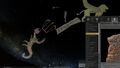 Sco-Lib+Furrow+Leo in Stellarium "MUL.APIN"
 -
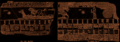 Leo and Virgo above the MUŠ-Dragon, two claytablet drawings from the Seleucid era (roughly 2nd century BCE), CC BY SMH based upon the drawings by E. Weidner (1967) and Thureau-Dangin (1922).
 -
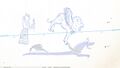 Leo+Hya+Vir drawings of VAT7847+AO6884 on Stellarium map
 -
 Drawing of the Babylonian version of the Maiden constellation by Papke (1987)
 -
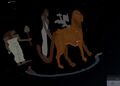 Leo and Vir above Hydra on the circular Dendera Zodiac, mapped to Stellarium
 -
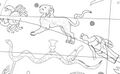 Cancer, Leo, Virgo above Hydra on Greek Kugel Globe (1st century)


Mythology/ Religion
The immortal Dike, daughter of Zeus and Themis, once lived on Earth. She could not be seen by men, but she lived among women. As humans became increasingly brutal, waging wars and revolts against each other and no longer respecting justice, she first retreated to the mountains and finally disappeared into the heavens in disgust at the boundless injustice. This is reported by Hesiod, Aratus and Eratosthenes. They allude to a popular ancient fable that teaches the struggle for justice, because otherwise humanity will perish.
The story of Demeter is closely intertwined with that of her daughter Persephone. Persephone was abducted by Hades to be his wife, prompting Demeter to search for her. So Demeter is certainly not a ‘virgin’ if she has a daughter – just as Isis and Atargatis are not. If one wants to link the story of the abduction of the daughter with the constellation, Persephone herself could at best be this lady. She is also sometimes depicted with wings and assists her mother in the initiation ritual, so that the archaic context would also fit. However, she is missing from Eratosthenes' list of suggestions.
Weblinks
- Ridpath, Ian, “Star Tales: online edition”.