Tenggala: Difference between revisions
infobox |
|||
| (4 intermediate revisions by the same user not shown) | |||
| Line 2: | Line 2: | ||
---- | ---- | ||
[[File:LintangTENG.jpg|thumb|Lintang Tenggala in the cloth (CC-BY UPTD Museum Bali Inventary no. 09.752)]] | [[File:LintangTENG.jpg|thumb|Lintang Tenggala in the cloth (CC-BY UPTD Museum Bali Inventary no. 09.752)]] | ||
{{Infobox constellation | |||
| name = ᬢᭂᬗ᭄ᬕᬮ (Těnggala) | |||
| native = ᬢᭂᬗ᭄ᬕᬮ | |||
| translation = a plough | |||
| pronounce = Těnggala | |||
| IPA = [təŋˈɡa.lə] | |||
| culture = Balinese | |||
| RA = 78.63446707 to 88.79293899 | |||
| dec = -9.669604919 to 7.407064 | |||
| areatotal = 125.51 | |||
| numbermainstars = 91 | |||
| numberbfstars = 46 | |||
| numberstarsplanets = | |||
| numberbrightstars = 10 | |||
| numbernearbystars = | |||
| brighteststarname = [[Rigel]] | |||
| starmagnitude = 0.13 | |||
| neareststarname = | |||
| stardistance = | |||
| numbermessierobjects = | |||
| meteorshowers = | |||
| bordering = Ori | |||
| notes = | |||
| cat = constellation | |||
}} | |||
[[File:Huluku.png|thumb|Lintang Huluku in lontar Prasi Palelintangan (CC-BY Alfred Maaß, (1929), Astrologische Kalender der Balinesen)]] | [[File:Huluku.png|thumb|Lintang Huluku in lontar Prasi Palelintangan (CC-BY Alfred Maaß, (1929), Astrologische Kalender der Balinesen)]] | ||
Těnggala is an Oceanic name from Bali (Indonesia). The lintang of těnggala is found in intersection of Rědite (Sunday, in saptawara) and Wage (in pancawara) in a series of palelintangan. Lintang těnggala means a plough constellation.<ref name=":1">Maass, Alfred, “Astrologische Kalender der Balinesen,” in Koninklijk Bataviaasch Genootschap van Kunsten en Wetenschappen, Feestbundel bij gelegenheid van zijn 150 jarig bestaan 1778-1928, 2 vols. (Weltevreden, 1929), Vol. 2, 126-157.</ref> | Těnggala is an Oceanic name from Bali (Indonesia). The lintang of těnggala is found in intersection of Rědite (Sunday, in saptawara) and Wage (in pancawara) in a series of palelintangan. Lintang těnggala means a plough constellation.<ref name=":1">Maass, Alfred, “Astrologische Kalender der Balinesen,” in Koninklijk Bataviaasch Genootschap van Kunsten en Wetenschappen, Feestbundel bij gelegenheid van zijn 150 jarig bestaan 1778-1928, 2 vols. (Weltevreden, 1929), Vol. 2, 126-157.</ref> | ||
| Line 28: | Line 53: | ||
[[File:Screenshot 2026-02-04 133821.png|center|thumb|800x800px|Huluku in the identification table by Maaß (1929). He mentioned "der Orion" which means "the Orion".]] | [[File:Screenshot 2026-02-04 133821.png|center|thumb|800x800px|Huluku in the identification table by Maaß (1929). He mentioned "der Orion" which means "the Orion".]] | ||
He also give further explanation with a specific detail (p. 148-149)<ref name=":1" /><blockquote>"So ist bei dem Pflug Orions Gürtel.....das Pflugeisen mit dem Pflug-holz der rote Betelgeuze ist eine Fusswunde des Bauers, Bellatrix ist sein Auge. Der weisse Rigel und der andere Punkt des Aussenvierecks sind die beiden Zugtiere."</blockquote><blockquote>'''English:''' "Thus, in the case of the plough Orion's belt, ...... the plough iron with the plug; the red Betelgeuse is a foot wound of the farmer, Bellatrix is his eye. The white Rigel and the other point of the outer square are the both draught animals."</blockquote> | He also give further explanation with a specific detail (p. 148-149)<ref name=":1" /><blockquote>"So ist bei dem Pflug Orions Gürtel.....das Pflugeisen mit dem Pflug-holz der rote Betelgeuze ist eine Fusswunde des Bauers, Bellatrix ist sein Auge. Der weisse Rigel und der andere Punkt des Aussenvierecks sind die beiden Zugtiere."</blockquote><blockquote>'''English:''' "Thus, in the case of the plough Orion's belt, ...... the plough iron with the plug; the red Betelgeuse is a foot wound of the farmer, Bellatrix is his eye. The white Rigel and the other point of the outer square are the both draught animals."</blockquote> | ||
For the sources comparison: | |||
{| class="wikitable" | |||
|+ | |||
!Lintang Identification | |||
!Friederich (1878)<ref>Friederich, R. (1878). An Account of the Island of Bali (Continued from Vol. IX. N.S. p. 120). ''The Journal of the Royal Asiatic Society of Great Britain and Ireland, New Series'', ''10''(1), 49–97. <nowiki>https://www.jstor.org/stable/25207751</nowiki></ref> | |||
!Alfred Maaß (1929)<ref name=":1" /> | |||
!UPTD Museum Bali (2021)<ref name=":0" /> | |||
|- | |||
|Shape / iconography / illustration | |||
|the plough | |||
|a farmer who has wound at his feet holding the back side of tenggala and whip at the other hand, while the opposite side of tenggala was connected to the drought animals | |||
|plough | |||
a man (farmer) carry a plough at rice field | |||
|- | |||
|Stars/celestial bodies related | |||
|three stars on the belt of Orion | |||
|the plough is on the Orion's belt, the red Betelgeuse is the farmer's wound at foot, Bellatrix is the farmer eye, white Rigel and other point near it are the drought animals. | |||
|Orion | |||
|} | |||
=== Transfer and Transformation of the Constellation === | === Transfer and Transformation of the Constellation === | ||
== Mythology / Religion == | == Mythology / Religion == | ||
In the Marerepuh Ceremony or a village cleansing ceremony, Tenggala is used as one of the tools in a procession around the village and coastline. The goal is to cleanse nature physically and spiritually, creating harmony between humans, nature, and God (Tri Hita Karana). Tenggala is accompanied by a tulud (a wooden stick), gawu (a wooden broom), and other tools, then sprinkled with tirta (holy water) to cleanse the entire area. | |||
In a special case, someone performing self-purification in the form of bayuh oton (a ritual performed on a tenggala). This depends on the person's birth date. | |||
=== Image Variants === | === Image Variants === | ||
| Line 43: | Line 90: | ||
==Cultural Beliefs== | ==Cultural Beliefs== | ||
===Numerology (Neptu/Urip)=== | ===Numerology (Neptu/Urip)=== | ||
Rědite (Sunday, in saptawara) has a value of 5 and Wage (in pancawara) has a value of 4. Thus, the total urip on this lintang is 9.<ref name=":0">Tim Kajian Palelintangan, “Gabungan Kajian Palelintangan,” Museum Bali (2021), 1-149.</ref> | Rědite (Sunday, in saptawara) has a value of 5 and Wage (in pancawara) has a value of 4. Thus, the total urip on this lintang is 9.<ref name=":0">Palelintangan Museum Study Team (Tim Kajian Palelintangan Museum), “Gabungan Kajian Palelintangan,” Museum Bali (2021), 1-149.</ref> | ||
===Astrological Characteristics=== | ===Astrological Characteristics=== | ||
When they were little they were miserable and happy in their old age, all their efforts and work found goodness, they could become rich, they were clever in hiding their feelings, generous but often trapped in the desire to be selfish and hard-hearted. They were the birth of Sang Wasi Bhaya (little ones embraced by danger).<ref name=":0" /> | When they were little they were miserable and happy in their old age, all their efforts and work found goodness, they could become rich, they were clever in hiding their feelings, generous but often trapped in the desire to be selfish and hard-hearted. They were the birth of Sang Wasi Bhaya (little ones embraced by danger).<ref name=":0" /> | ||
| Line 616: | Line 663: | ||
* [[References]] (general) | * [[References]] (general) | ||
[[Category:Asian]] [[Category:Southeast Asian]] | |||
[[Category:Indonesia]] [[Category:Asterism]] [[Category:Constellation]] | [[Category:Indonesia]] [[Category:Asterism]] [[Category:Constellation]] | ||
[[Category:Balinese]] [[Category:Ori]] | [[Category:Balinese]] [[Category:Ori]] | ||
Latest revision as of 03:54, 9 July 2026
Authors: Youla Azkarrula, Susanne M Hoffmann

| Asterism Info | |
| Native | ᬢᭂᬗ᭄ᬕᬮ |
|---|---|
| Romanisation | Těnggala |
| IPA | [təŋˈɡa.lə] |
| Translation | a plough |
| Position (2000) | |
| Right ascension | 78.63446707 to 88.79293899 |
| Declination | -9.669604919 to 7.407064 |
| Area | 125.51 sq. deg. |
| Stars | |
| Bright stars | 91 |
| Bayer/Flamsteed stars | 46 |
| Stars brighter than 3.00m | 10 |
| Brightest star | Rigel (0.13m) |
| Taxonomy | |
| category of asterism | constellation |
| IAU- constellations | Ori |

Těnggala is an Oceanic name from Bali (Indonesia). The lintang of těnggala is found in intersection of Rědite (Sunday, in saptawara) and Wage (in pancawara) in a series of palelintangan. Lintang těnggala means a plough constellation.[1]
Etymology and History
Těnggala (IPA: /təŋˈɡa.la/) is derived from Sanskrit लाङ्गल (lāṅgala), means a device pulled through the ground in order to break it open into furrows for planting (plough).
Spelling Variants
- uluku
- huluku
- wuluku
- waluku
Origin of Constellation
All the spelling variants of this constellations has one meaning, plow and plough. Bali is one of island in Indonesia that has huge area of agricultural. The tools used are very diverse and have different functions. These tools are tenggala, tetekan, singkal, penguruk, uga, and lampit.
Tenggala is also called luku. Meanwhile, lampit is called garu. The function of the tenggala is to turn the soil over so that it becomes loose. This tool consists of a singkal (a sharp piece of iron for cutting, turning and breaking up the soil and burying plant remains), tetekan (the body of the tenggala), penguruk (handle of the tenggala), and uga (or an assembly which is made of wood which is attached to the cow's neck and tied to the end of the body of the tenggala). Meanwhile, Lampit's function is to level the ground after it has been loosened using a tenggala.
General information


The astronomical identification of the constellation is taken from Maaß (1929)[1] who explains in general that these constellations and the according ritual practice
"sind seit alten Zeiten in einem Werk ,,wariga" niedergelegt, in dem wir zwei Kulturschichten, nämlich indische unq malaio-polynesische Bestandteile wiederfinden."
English: "are written down in a work called "wariga" since old times; there we recognise two cultural layers, i.e. the Indian and the Malayo-Polynesian."
He also quotes other scholars[2][3][4][5] and his earlier work[6][7] reporting that this work dates back to the 9th century CE when Bali was part of a Hindu empire on the neighbouring island of Java.[1] Neubronner van der Tuuk even uses the Old Javanese spelling.
Identification
The identifications, Maaß (1929) gives according to the aforementioned and his own studies during visits of the country and in European and Batavian libraries (p.150).[1]

He also give further explanation with a specific detail (p. 148-149)[1]
"So ist bei dem Pflug Orions Gürtel.....das Pflugeisen mit dem Pflug-holz der rote Betelgeuze ist eine Fusswunde des Bauers, Bellatrix ist sein Auge. Der weisse Rigel und der andere Punkt des Aussenvierecks sind die beiden Zugtiere."
English: "Thus, in the case of the plough Orion's belt, ...... the plough iron with the plug; the red Betelgeuse is a foot wound of the farmer, Bellatrix is his eye. The white Rigel and the other point of the outer square are the both draught animals."
For the sources comparison:
| Lintang Identification | Friederich (1878)[8] | Alfred Maaß (1929)[1] | UPTD Museum Bali (2021)[9] |
|---|---|---|---|
| Shape / iconography / illustration | the plough | a farmer who has wound at his feet holding the back side of tenggala and whip at the other hand, while the opposite side of tenggala was connected to the drought animals | plough
a man (farmer) carry a plough at rice field |
| Stars/celestial bodies related | three stars on the belt of Orion | the plough is on the Orion's belt, the red Betelgeuse is the farmer's wound at foot, Bellatrix is the farmer eye, white Rigel and other point near it are the drought animals. | Orion |
Transfer and Transformation of the Constellation
Mythology / Religion
In the Marerepuh Ceremony or a village cleansing ceremony, Tenggala is used as one of the tools in a procession around the village and coastline. The goal is to cleanse nature physically and spiritually, creating harmony between humans, nature, and God (Tri Hita Karana). Tenggala is accompanied by a tulud (a wooden stick), gawu (a wooden broom), and other tools, then sprinkled with tirta (holy water) to cleanse the entire area.
In a special case, someone performing self-purification in the form of bayuh oton (a ritual performed on a tenggala). This depends on the person's birth date.
Image Variants
-
 Lintang Huluku (CC-BY Alfred Maaß, (1929), Astrologische Kalender der Balinesen)
 -
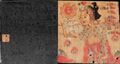 Lintang Tenggala in the cloth (CC-BY UPTD Museum Bali Inventary no. 09.746)
 -
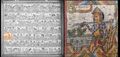 Lintang Tenggala in the cloth (CC-BY UPTD Museum Bali Inventary no. 09.752)
 -
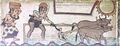 Lintang Wuluku (CC-BY Youla Azkarrula taken in the ceiling of Taman Gili Klungkung Palace Bali)


Cultural Beliefs
Numerology (Neptu/Urip)
Rědite (Sunday, in saptawara) has a value of 5 and Wage (in pancawara) has a value of 4. Thus, the total urip on this lintang is 9.[9]
Astrological Characteristics
When they were little they were miserable and happy in their old age, all their efforts and work found goodness, they could become rich, they were clever in hiding their feelings, generous but often trapped in the desire to be selfish and hard-hearted. They were the birth of Sang Wasi Bhaya (little ones embraced by danger).[9]
Matching Gemstones
Kecubung (amethyst), cempaka (yellow sapphire), ijo rangreng (peros).[9]
Weblinks
All HIP Stars within this constellation
Stars within the Constellation Area
| id | Label | IAU design. | description | Vmag |
|---|---|---|---|---|
| 1 | Rigel | HIP 24436 | within constellation lines | 0.13 |
| 2 | Betelgeuse | HIP 27989 | within constellation lines | 0.42 |
| 3 | Bellatrix | HIP 25336 | within constellation lines | 1.64 |
| 4 | Alnilam | HIP 26311 | within constellation lines | 1.69 |
| 5 | ζ Orionis | HIP 26727 | within constellation lines | 1.77 |
| 6 | Alnitak | HIP 26727 | Inside the Hull | 1.9 |
| 7 | Saiph | HIP 27366 | within constellation lines | 2.06 |
| 8 | Mintaka | HIP 25930 | within constellation lines | 2.41 |
| 9 | NGC 1980 | NGC 1980 | Inside the Hull | 2.5 |
| 10 | Hatysa | HIP 26241 | Inside the Hull | 2.77 |
| 11 | η Orionis | HIP 25281 | Inside the Hull | 3.35 |
| 12 | τ Orionis | HIP 24674 | Inside the Hull | 3.59 |
| 13 | * eta Ori A | HIP 25281 | Inside the Hull | 3.59 |
| 14 | * zet Ori B | HIP 26727 | Inside the Hull | 3.73 |
| 15 | σ Orionis | HIP 26549 | Inside the Hull | 3.79 |
| 16 | 29 Ori | HIP 25247 | Inside the Hull | 4.12 |
| 17 | 32 Ori | HIP 25813 | Inside the Hull | 4.2 |
| 18 | NGC 1981 | NGC 1981 | Inside the Hull | 4.2 |
| 19 | * 32 Ori A | HIP 25813 | Inside the Hull | 4.46 |
| 20 | 42 Ori | HIP 26237 | Inside the Hull | 4.59 |
| 21 | ω Orionis | HIP 26594 | Inside the Hull | 4.59 |
| 22 | ψ 2 Orionis | HIP 25473 | Inside the Hull | 4.611 |
| 23 | υ Orionis | HIP 25923 | Inside the Hull | 4.63 |
| 24 | 31 Ori | HIP 25737 | Inside the Hull | 4.71 |
| 25 | - | HIP 26199 | Inside the Hull | 4.72 |
| 26 | 22 Ori | HIP 25044 | Inside the Hull | 4.74 |
| 27 | 56 Ori | HIP 27750 | Inside the Hull | 4.75 |
| 28 | 49 Ori | HIP 26563 | Inside the Hull | 4.8 |
| 29 | * eta Ori B | HIP 25281 | Inside the Hull | 4.89 |
| 30 | 51 Ori | HIP 26885 | Inside the Hull | 4.9 |
| 31 | - | HIP 26736 | Inside the Hull | 4.95 |
| 32 | ψ 1 Orionis | HIP 25302 | Inside the Hull | 4.96 |
| 33 | 27 Ori | HIP 25282 | Inside the Hull | 5.072 |
| 34 | θ 1 Orionis C | HIP 26221 | Inside the Hull | 5.13 |
| 35 | 45 Ori | HIP 26268 | Inside the Hull | 5.234 |
| 36 | 38 Ori | HIP 26126 | Inside the Hull | 5.326 |
| 37 | - | HIP 25980 | Inside the Hull | 5.34 |
| 38 | VV Ori | HIP 26063 | Inside the Hull | 5.34 |
| 39 | 33 Ori | HIP 25861 | Inside the Hull | 5.46 |
| 40 | - | HIP 26197 | Inside the Hull | 5.53 |
| 41 | - | HIP 25028 | Inside the Hull | 5.68 |
| 42 | - | HIP 25223 | Inside the Hull | 5.7 |
| 43 | * n01 Ori A | HIP 25861 | Inside the Hull | 5.74 |
| 44 | - | HIP 25751 | Inside the Hull | 5.745 |
| 45 | - | HIP 26345 | Inside the Hull | 5.75 |
| 46 | * 32 Ori B | HIP 25813 | Inside the Hull | 5.76 |
| 47 | - | HIP 25708 | Inside the Hull | 5.78 |
| 48 | - | HIP 26108 | Inside the Hull | 5.895 |
| 49 | - | HIP 26762 | Inside the Hull | 5.912 |
| 50 | - | HIP 27253 | Inside the Hull | 5.93 |
| 51 | - | HIP 27560 | Inside the Hull | 5.936 |
| 52 | * 52 Ori A | HIP 27386 | Inside the Hull | 5.95 |
| 53 | - | HIP 26535 | Inside the Hull | 5.96 |
| 54 | - | HIP 26926 | Inside the Hull | 5.965 |
| 55 | - | HIP 27435 | Inside the Hull | 5.97 |
| 56 | - | HIP 26624 | Inside the Hull | 5.974 |
| 57 | - | HIP 27588 | Inside the Hull | 5.976 |
| 58 | * 52 Ori B | HIP 27386 | Inside the Hull | 6.01 |
| 59 | - | HIP 26427 | Inside the Hull | 6.024 |
| 60 | - | HIP 27118 | Inside the Hull | 6.089 |
| 61 | - | HIP 25378 | Inside the Hull | 6.144 |
| 62 | - | HIP 25187 | Inside the Hull | 6.15 |
| 63 | - | HIP 25976 | Inside the Hull | 6.16 |
| 64 | - | HIP 26477 | Inside the Hull | 6.18 |
| 65 | CK Ori | HIP 25785 | Inside the Hull | 6.202 |
| 66 | - | HIP 25869 | Inside the Hull | 6.208 |
| 67 | - | HIP 26106 | Inside the Hull | 6.22 |
| 68 | - | HIP 26713 | Inside the Hull | 6.22 |
| 69 | - | HIP 25401 | Inside the Hull | 6.233 |
| 70 | - | HIP 26149 | Inside the Hull | 6.251 |
| 71 | - | HIP 25288 | Inside the Hull | 6.297 |
| 72 | - | HIP 27212 | Inside the Hull | 6.31 |
| 73 | V1197 Ori | HIP 26953 | Inside the Hull | 6.311 |
| 74 | - | HIP 25786 | Inside the Hull | 6.313 |
| 75 | - | HIP 24847 | Inside the Hull | 6.35 |
| 76 | - | HIP 25505 | Inside the Hull | 6.35 |
| 77 | - | HR 1891 | Inside the Hull | 6.35 |
| 78 | - | HIP 25582 | Inside the Hull | 6.38 |
| 79 | - | HIP 25667 | Inside the Hull | 6.38 |
| 80 | * tet02 Ori B | HIP 26235 | Inside the Hull | 6.38 |
| 81 | - | HIP 26257 | Inside the Hull | 6.38 |
| 82 | θ 2 Orionis | HIP 26235 | Inside the Hull | 6.39 |
| 83 | V1377 Ori | HIP 26263 | Inside the Hull | 6.41 |
| 84 | - | HIP 24925 | Inside the Hull | 6.42 |
| 85 | - | HIP 25368 | Inside the Hull | 6.42 |
| 86 | - | HIP 26104 | Inside the Hull | 6.45 |
| 87 | - | HR 1898 | Inside the Hull | 6.45 |
| 88 | - | HIP 26020 | Inside the Hull | 6.46 |
| 89 | * sig Ori E | HR 1932 | Inside the Hull | 6.46 |
| 90 | - | HIP 25732 | Inside the Hull | 6.5 |
| 91 | - | HIP 26234 | Inside the Hull | 6.5 |
IAU Working Group on Star Names
In November 2025, it has been proposed to use the name "Tenggala" for a star in the area to preserve the Balinese heritage. The star sig Ori or HIP 26549 is in the plough inside the constellation which was selected because this is the identity of Tenggala. In Bali, Tenggala or the plough is vital to turn the soil over. Constellation Tenggala is mentioned in Palelintangan Prasi, dating roughly 700 CE, and is still used in Bali.
References
- References (general)
- ↑ 1.0 1.1 1.2 1.3 1.4 1.5 Maass, Alfred, “Astrologische Kalender der Balinesen,” in Koninklijk Bataviaasch Genootschap van Kunsten en Wetenschappen, Feestbundel bij gelegenheid van zijn 150 jarig bestaan 1778-1928, 2 vols. (Weltevreden, 1929), Vol. 2, 126-157.
- ↑ Friedrich, R. (1849). Voorloopig verslag van het eiland Bali, Batavia, Verb. Bat Gen. Deel 23, Nr. 13
- ↑ HINLOOPEN LABBERT0N, D. VAN (1910). Geillustreerd handboek van Insulinde. Amsterdam: "Vivat"
- ↑ PIGEAUD, TH. (1925). Een stuk over sterrenkunde uit het Anggastyaparwwa ...... Weltevreden: Albrecht. Tijdsch. v. lnd, T.-, L.- en Vk. deel LXV
- ↑ Nieuwenkamp, W. O. J. (1905), Schetsen van Bali en Lombok. (Eigen Haard)
- ↑ MAASS, ALFRED (1920). Sterne und Sternbilder im malaiischen Archipel. Berlin. Zeitschrift für Ethnologie Jg. 1920/21, H. 1
- ↑ MAASS, ALFRED (1924). Sternkunde und Sterndeuterei im malaiischen Archipel. Batavia, den Haag. Tijdsch. v. T.-, L.-en Vk. deel LX IV
- ↑ Friederich, R. (1878). An Account of the Island of Bali (Continued from Vol. IX. N.S. p. 120). The Journal of the Royal Asiatic Society of Great Britain and Ireland, New Series, 10(1), 49–97. https://www.jstor.org/stable/25207751
- ↑ 9.0 9.1 9.2 9.3 Palelintangan Museum Study Team (Tim Kajian Palelintangan Museum), “Gabungan Kajian Palelintangan,” Museum Bali (2021), 1-149.





