Naga: Difference between revisions
infobox |
|||
| (20 intermediate revisions by 4 users not shown) | |||
| Line 1: | Line 1: | ||
{{DISPLAYTITLE: Naga (नाग)}} | |||
Authors: {{PAGEAUTHORS}} | Authors: {{PAGEAUTHORS}} | ||
---- | ---- | ||
{{Infobox constellation | |||
| name = Naga | |||
| native = नाग | |||
| translation = large snake or serpent | |||
| pronounce = | |||
| IPA = | |||
| culture = IAU | |||
| RA = 199.730407 | |||
| dec = -23.17151401 | |||
| areatotal = 0 | |||
| numbermainstars = 1 | |||
| numberbfstars = 1 | |||
| numberstarsplanets = | |||
| numberbrightstars = 0 | |||
| numbernearbystars = | |||
| brighteststarname = Naga | |||
| starmagnitude = 3 | |||
| neareststarname = | |||
| stardistance = | |||
| numbermessierobjects = | |||
| meteorshowers = | |||
| bordering = Hya | |||
| notes = | |||
| cat = IAU-Star Name | |||
}} | |||
[[File:LintangNAGA.jpg|thumb|Lintang Naga in the cloth (CC-BY UPTD Museum Bali Inventary no. 09.752)]] | [[File:LintangNAGA.jpg|thumb|Lintang Naga in the cloth (CC-BY UPTD Museum Bali Inventary no. 09.752)]] | ||
{{Infobox constellation | |||
| name = ᬦᬕ (naga) | |||
| native = ᬦᬕ | |||
| translation = a dragon | |||
| pronounce = naga | |||
| IPA = [ˈna.ɡə] | |||
| culture = Balinese | |||
| RA = 131.693801 to 199.730407 | |||
| dec = -31.85762444 to 6.41880152 | |||
| areatotal = 848.79 | |||
| numbermainstars = 133 | |||
| numberbfstars = 89 | |||
| numberstarsplanets = | |||
| numberbrightstars = 5 | |||
| numbernearbystars = | |||
| brighteststarname = [[Alphard]] | |||
| starmagnitude = 1.97 | |||
| neareststarname = | |||
| stardistance = | |||
| numbermessierobjects = | |||
| meteorshowers = | |||
| bordering = Hya, Sex, Crt, Crv | |||
| notes = | |||
| cat = constellation | |||
}} | |||
[[File:Naga profileCard SadeghFaghanpour-IAU-WGSN.jpg|thumb|Naga profile Card (CC BY Sadegh Faghanpour for IAU-WGSN).]] | |||
[[File:Naga.png|thumb|Lintang Naga in lontar Prasi Palelintangan (CC-BY Alfred Maaß, (1929), Astrologische Kalender der Balinesen)]] | [[File:Naga.png|thumb|Lintang Naga in lontar Prasi Palelintangan (CC-BY Alfred Maaß, (1929), Astrologische Kalender der Balinesen)]] | ||
[[File:Stellarium-20251010-212838262.png|thumb|Balinese constellation: Naga (a dragon), re-drawn by Jessica Gullberg for the planetarium software Stellarium (CC-BY Youla Azkarrula & Jessica Gullberg)]] | [[File:Stellarium-20251010-212838262.png|thumb|Balinese constellation: Naga (a dragon), re-drawn by Jessica Gullberg for the planetarium software Stellarium (CC-BY Youla Azkarrula & Jessica Gullberg)]] | ||
Naga is a constellation used in several Indonesian sky | Naga is a constellation used in several Indonesian sky cultures. It projects mythological dragon into the sky. The dragon as a religious/divine creature that exists in many cultures in South East Asia from India to Indonesia (e.g. Cambodia, Thailand, Hong Kong, China ...). The Balinese astral calendar "P[[Balinese (All Terms)|alelintangan]]" has "Naga" as one of 35 "lintang" (constellations).<ref name=":2">Maass, Alfred, “Astrologische Kalender der Balinesen,” in Koninklijk Bataviaasch Genootschap van Kunsten en Wetenschappen, Feestbundel bij gelegenheid van zijn 150 jarig bestaan 1778-1928, 2 vols. (Weltevreden, 1929), Vol. 2, 126-157.</ref> There naga is found in intersection of Wraspati (Thursday, in saptawara) and Kliwon (in pancawara). | ||
[[File:Naga stickfigure SadeghFaghanpour-IAU-WGSN.jpg|thumb|Naga stick figure (CC BY Sadegh Faghanpour for IAU-WGSN).]] | |||
Naga is the modern star name for γ Hya. | |||
==Etymology and History== | |||
Naga (IPA: /ˈna.ɡa/, [ˈna.ɡa]) is inherited from Malay naga, and derived from Sanskrit नाग, nāgá, means “large snake”. Some languages borrow Sanskrit terms and have the same meaning as snake, namely: Iban, Indonesia, Italian, Javanese, Malay, Marano, Portuguese, Tagalog and Yakan. In Japanese, "naga" means "long", which perfectly fits the image of the serpent in the sky. | |||
In Lithuanian, one of the oldest languages in Europe and connected with Sanskrit, "naga" means nail. The German word for "nail" is "Nagel". The term for 'nude' in Germanic languages "naked" (English), "naakt" (Dutch), "nackt" (German), "naken" (Swedish & Norwegian) is also etymologically related. It all derives from the homophonous Sanskrit term "nāga" for gold/ iron/ metal. | |||
=== Variants (name, spelling...) === | === Variants (name, spelling...) === | ||
| Line 18: | Line 72: | ||
=== Origin of Constellation === | === Origin of Constellation === | ||
On Bali, Naga are legendary creatures and exist in the folklore of almost every tribe and civilization in the world. Naga could be referred to as a big snake, a big water snake or a dragon. Unlike in some civilizations which consider dragons to be evil monsters, in Bali, dragons are considered to be sacred figures who are able to guard the island of Bali. Apart from that, there are quite a few depictions of dragons in several places such as temples, houses, government offices and former buildings left over from the Balinese kingdom. Sometimes they also make dragon ornaments on keris (traditional Balinese dagger). | On Bali, Naga are legendary creatures and exist in the folklore of almost every tribe and civilization in the world. Naga could be referred to as a big snake, a big water snake or a dragon. Unlike in some civilizations which consider dragons to be evil monsters, in Bali, dragons are considered to be sacred figures who are able to guard the island of Bali. Apart from that, there are quite a few depictions of dragons in several places such as temples, houses, government offices and former buildings left over from the Balinese kingdom. Sometimes they also make dragon ornaments on ''keris'' (traditional Balinese dagger). | ||
==== General information ==== | ==== General information ==== | ||
| Line 32: | Line 86: | ||
==== Naga in India ==== | ==== Naga in India ==== | ||
Nāga, in Sanskrit and almost all Indian languages means a snake or cobra. Although it is not explicitly used as a name for any constellation the constellation Āśleṣā ([[Ashlesha]]), is recognised as the head of a snake. | Nāga, in Sanskrit and almost all Indian languages means a snake or cobra. Although it is not explicitly used as a name for any constellation the constellation Āśleṣā ([[Ashlesha]]), is recognised as the head of a snake. | ||
It is very difficult to trace the origin in general as is common with all Sanskrit words, but in most etymologies, it points to the word nāga (though the diacritical marks were not specified). There are 81 meanings for this word,<ref>On the problems of understanding the term "naga"https://www.wisdomlib.org/definition/naga</ref> but all images show a serpent / snake / cobra. | |||
'''Name Variants:''' | |||
* Vasuki, | |||
* Adisesha, | |||
* kalinga | |||
In South India about 40% of the names (male and female) will start with naga. | |||
Mythological stories involving snakes are abundant. For example, the ascending and descending nodes of the moon are called Rāhu and Ketu. Rahu has a human head and the body of a snake; it is the converse for Ketu. They both emerge as the two individual bodies when a demon’s head was chopped off. Snake worship is very common in India; people install stone idols of snakes even today. | Mythological stories involving snakes are abundant. For example, the ascending and descending nodes of the moon are called Rāhu and Ketu. Rahu has a human head and the body of a snake; it is the converse for Ketu. They both emerge as the two individual bodies when a demon’s head was chopped off. Snake worship is very common in India; people install stone idols of snakes even today. | ||
| Line 58: | Line 122: | ||
# The Javanese-Balinese Branch (Indonesia): Traveled via maritime trade routes. It was "ennobled" by Javanese court culture, gaining the crown and royal regalia, and was eventually re-contextualized to fit the volcanic landscape of Bali. | # The Javanese-Balinese Branch (Indonesia): Traveled via maritime trade routes. It was "ennobled" by Javanese court culture, gaining the crown and royal regalia, and was eventually re-contextualized to fit the volcanic landscape of Bali. | ||
They are "taxonomically" distinct now. | They are "taxonomically" distinct now. One can think of them like the Lion and the Tiger: they are both "Big Cats", but they have lived in different jungles for so long that they have developed different stripes. | ||
In conclusion, the Balinese "Naga" is distinct regarding modern iconography, but the underlying "DNA" remains a shared heritage of the broader Indo-Pacific maritime exchange. | |||
=== Transfer and Transformation === | === Transfer and Transformation === | ||
| Line 71: | Line 137: | ||
File:Olbrich Botanical Garden Naga Dragon Statue.jpg|Naga dragon statue at Olbrich Botanical Garden (CC BY צבוע לבנה). | File:Olbrich Botanical Garden Naga Dragon Statue.jpg|Naga dragon statue at Olbrich Botanical Garden (CC BY צבוע לבנה). | ||
File:Wat Si Saket Vientiane 5.jpg|Believed to be Vientiane’s oldest surviving temple, Wat Si Saket is famous for its cloister wall and rows of hundreds of seated Buddhas. (CC BY Philip Nalangan) | File:Wat Si Saket Vientiane 5.jpg|Believed to be Vientiane’s oldest surviving temple, Wat Si Saket is famous for its cloister wall and rows of hundreds of seated Buddhas. (CC BY Philip Nalangan) | ||
File:Naga and Naga Kanya (snake god and goddess), from the Gond Country on the Nerbudda - DPLA - 657678574197483a1cccd123b2404d5f.jpg|Naga and Naga Kanya (snake god and goddess), from the Gond Country on the Nerbudda (CC0 between 1850 and 1873 ). | File:Naga and Naga Kanya (snake god and goddess), from the Gond Country on the Nerbudda - DPLA - 657678574197483a1cccd123b2404d5f.jpg|Naga and Naga Kanya (snake god and goddess), from the Gond Country, India, on the Nerbudda (CC0 between 1850 and 1873 ). | ||
File:Angkor naga.jpg|Seven-headed ''naga'' from the entrance of an Angkor Thom gate (CC BY Gisling(zh:唐戈)) | File:Angkor naga.jpg|Seven-headed ''naga'' from the entrance of an Angkor Thom gate (CC BY Gisling(zh:唐戈)) | ||
</gallery> | </gallery> | ||
| Line 107: | Line 173: | ||
=== Numerology (Neptu/Urip) === | === Numerology (Neptu/Urip) === | ||
Wraspati (Thursday, in saptawara) has a value of 8 and Kliwon (in pancawara) has a value of 8. Thus, the total urip on this lintang is 16.<ref name=":0">Tim Kajian Palelintangan, “Gabungan Kajian Palelintangan,” Museum Bali (2021), 1-149.</ref> | Wraspati (Thursday, in saptawara) has a value of 8 and Kliwon (in pancawara) has a value of 8. Thus, the total urip on this lintang is 16.<ref name=":0">Palelintangan Museum Study Team (Tim Kajian Palelintangan Museum), “Gabungan Kajian Palelintangan,” Museum Bali (2021), 1-149.</ref> | ||
=== Astrological Characteristics === | === Astrological Characteristics === | ||
| Line 247: | Line 313: | ||
|- | |- | ||
| 21 | | 21 | ||
| τ 2 Hydrae | | τ<sup>2</sup> Hydrae | ||
| HIP 46776 | | HIP 46776 | ||
| Inside the Hull | | Inside the Hull | ||
| Line 253: | Line 319: | ||
|- | |- | ||
| 22 | | 22 | ||
| υ 2 Hydrae | | υ<sup>2</sup> Hydrae | ||
| HIP 49402 | | HIP 49402 | ||
| Inside the Hull | | Inside the Hull | ||
| Line 259: | Line 325: | ||
|- | |- | ||
| 23 | | 23 | ||
| τ 1 Hydrae | | τ<sup>1</sup> Hydrae | ||
| HIP 46509 | | HIP 46509 | ||
| Inside the Hull | | Inside the Hull | ||
| Line 283: | Line 349: | ||
|- | |- | ||
| 27 | | 27 | ||
| ϕ 3 Hydrae | | ϕ<sup>3</sup> Hydrae | ||
| HIP 52085 | | HIP 52085 | ||
| Inside the Hull | | Inside the Hull | ||
| Line 361: | Line 427: | ||
|- | |- | ||
| 40 | | 40 | ||
| * | | * Gam Sex A | ||
| HIP 48437 | | HIP 48437 | ||
| Inside the Hull | | Inside the Hull | ||
| Line 469: | Line 535: | ||
|- | |- | ||
| 58 | | 58 | ||
| χ 2 Hydrae | | χ<sup>2</sup> Hydrae | ||
| HIP 54255 | | HIP 54255 | ||
| Inside the Hull | | Inside the Hull | ||
| Line 547: | Line 613: | ||
|- | |- | ||
| 71 | | 71 | ||
| ϕ 2 Hydrae | | ϕ<sup>2</sup> Hydrae | ||
| HIP 51905 | | HIP 51905 | ||
| Inside the Hull | | Inside the Hull | ||
| Line 727: | Line 793: | ||
|- | |- | ||
| 101 | | 101 | ||
| * | | * Psi Crt A | ||
| HIP 54742 | | HIP 54742 | ||
| Inside the Hull | | Inside the Hull | ||
| Line 835: | Line 901: | ||
|- | |- | ||
| 119 | | 119 | ||
| * | | * Gam Sex B | ||
| HIP 48437 | | HIP 48437 | ||
| Inside the Hull | | Inside the Hull | ||
| Line 926: | Line 992: | ||
== IAU Working Group on Star Names == | == IAU Working Group on Star Names == | ||
The name "Naga" was proposed to WGSN as a star name in 2025 based on the Balinese lintang (constellation). As the name "Naga" has a strong cultural significance in many South East Asian cultures, the WGSN agreed to use it as a star name. The name is proposed for the star | The name "Naga" was proposed to WGSN as a star name in 2025 based on the Balinese lintang (constellation). As the name "Naga" has a strong cultural significance in many South East Asian cultures, the WGSN agreed to use it as a star name. The name is proposed for the star Gamma Hya or HIP 64962 because of Naga's cultural significance on Bali where it designates a constellation. HIP 64962 is the star position is at the Naga's tail. Naga are mystical creatures with special powers. The famous Naga Basuki, in particular, is the one that is connected to the Bali Strait. When Manik Angkeran needed money to pay his gambling debts, he cut the Naga's tail that had gold in it. Check full mythology above. Constellation Naga is mentioned in Palelintangan Prasi, dating roughly 700 CE, and is still used in Bali. | ||
On | On 22 Februrary 2026, WGSN decided to adopt the name Naga for γ Hya ([https://simbad.cds.unistra.fr/simbad/sim-id?Ident=gam+Hya&NbIdent=1&Radius=2&Radius.unit=arcmin&submit=submit+id SIMBAD]). <gallery> | ||
File:Naga profileCard SadeghFaghanpour-IAU-WGSN.jpg|Naga profile Card (CC BY Sadegh Faghanpour for IAU-WGSN). | |||
File:Naga stickfigure SadeghFaghanpour-IAU-WGSN.jpg|Naga stick figure (CC BY Sadegh Faghanpour for IAU-WGSN). | |||
</gallery> | |||
== Weblinks == | == Weblinks == | ||
| Line 939: | Line 1,008: | ||
[[Category:Indonesia]] [[Category:Asterism]] [[Category:Constellation]] | [[Category:Indonesia]] [[Category:Southeast Asian]] [[Category:Asian]] [[Category:Asterism]] [[Category:Constellation]][[Category:IAU-Star Name]] | ||
[[Category:Balinese]] [[Category:Hya]] [[Category:Sex]] [[Category:Crt]] [[Category:Crv]] | [[Category:Balinese]] [[Category:Hya]] [[Category:Sex]] [[Category:Crt]] [[Category:Crv]] | ||
<references /> | |||
Latest revision as of 01:36, 17 August 2026
Authors: Youla Azkarrula, Susanne M Hoffmann, Cheung Sze Leung, IanRidpath
| Asterism Info | |
| Native | नाग |
|---|---|
| Translation | large snake or serpent |
| Position (2000) | |
| Right ascension | 199.730407 |
| Declination | -23.17151401 |
| Area | 0 sq. deg. |
| Stars | |
| Bright stars | 1 |
| Bayer/Flamsteed stars | 1 |
| Stars brighter than 3.00m | 0 |
| Brightest star | Naga (3m) |
| Taxonomy | |
| category of asterism | IAU-Star Name |
| IAU- constellations | Hya |

| Asterism Info | |
| Native | ᬦᬕ |
|---|---|
| Romanisation | naga |
| IPA | [ˈna.ɡə] |
| Translation | a dragon |
| Position (2000) | |
| Right ascension | 131.693801 to 199.730407 |
| Declination | -31.85762444 to 6.41880152 |
| Area | 848.79 sq. deg. |
| Stars | |
| Bright stars | 133 |
| Bayer/Flamsteed stars | 89 |
| Stars brighter than 3.00m | 5 |
| Brightest star | Alphard (1.97m) |
| Taxonomy | |
| category of asterism | constellation |
| IAU- constellations | Hya, Sex, Crt, Crv |


Naga is a constellation used in several Indonesian sky cultures. It projects mythological dragon into the sky. The dragon as a religious/divine creature that exists in many cultures in South East Asia from India to Indonesia (e.g. Cambodia, Thailand, Hong Kong, China ...). The Balinese astral calendar "Palelintangan" has "Naga" as one of 35 "lintang" (constellations).[1] There naga is found in intersection of Wraspati (Thursday, in saptawara) and Kliwon (in pancawara).

Naga is the modern star name for γ Hya.
Etymology and History
Naga (IPA: /ˈna.ɡa/, [ˈna.ɡa]) is inherited from Malay naga, and derived from Sanskrit नाग, nāgá, means “large snake”. Some languages borrow Sanskrit terms and have the same meaning as snake, namely: Iban, Indonesia, Italian, Javanese, Malay, Marano, Portuguese, Tagalog and Yakan. In Japanese, "naga" means "long", which perfectly fits the image of the serpent in the sky.
In Lithuanian, one of the oldest languages in Europe and connected with Sanskrit, "naga" means nail. The German word for "nail" is "Nagel". The term for 'nude' in Germanic languages "naked" (English), "naakt" (Dutch), "nackt" (German), "naken" (Swedish & Norwegian) is also etymologically related. It all derives from the homophonous Sanskrit term "nāga" for gold/ iron/ metal.
Variants (name, spelling...)
The constellation in the sky is always called "Naga" but the divine creature has the following name variants (for explanation see below):
- Naga Besukih
- Antaboga
- Taksaka
Origin of Constellation
On Bali, Naga are legendary creatures and exist in the folklore of almost every tribe and civilization in the world. Naga could be referred to as a big snake, a big water snake or a dragon. Unlike in some civilizations which consider dragons to be evil monsters, in Bali, dragons are considered to be sacred figures who are able to guard the island of Bali. Apart from that, there are quite a few depictions of dragons in several places such as temples, houses, government offices and former buildings left over from the Balinese kingdom. Sometimes they also make dragon ornaments on keris (traditional Balinese dagger).
General information

The astronomical identification of the constellation is taken from Maaß (1929)[1] who explains in general that these constellations and the according ritual practice
"sind seit alten Zeiten in einem Werk ,,wariga" niedergelegt, in dem wir zwei Kulturschichten, nämlich indische und malaio-polynesische Bestandteile wiederfinden."
English: "are written down in a work called "wariga" since old times; there we recognise two cultural layers, i.e. the Indian and the Malayo-Polynesian."
He also quotes other scholars[2][3][4][5] and his earlier work[6][7] reporting that this work dates back to the 9th century CE when Bali was part of a Hindu empire on the neighbouring island of Java.[1] Neubronner van der Tuuk even uses the Old Javanese spelling.
Identification
The identifications, Maaß (1929) gives according to the aforementioned and his own studies during visits of the country and in European and Batavian libraries (p.150).[1]

Maaß (1929), p. 144: "eine Schlange. Bösartig und schlau; - sehr schlechte Denkungsart;" English: - a snake. Malicious and cunning; - very bad way of thinking;
Naga in India
Nāga, in Sanskrit and almost all Indian languages means a snake or cobra. Although it is not explicitly used as a name for any constellation the constellation Āśleṣā (Ashlesha (आश्लेषः)), is recognised as the head of a snake.
It is very difficult to trace the origin in general as is common with all Sanskrit words, but in most etymologies, it points to the word nāga (though the diacritical marks were not specified). There are 81 meanings for this word,[8] but all images show a serpent / snake / cobra.
Name Variants:
- Vasuki,
- Adisesha,
- kalinga
In South India about 40% of the names (male and female) will start with naga.
Mythological stories involving snakes are abundant. For example, the ascending and descending nodes of the moon are called Rāhu and Ketu. Rahu has a human head and the body of a snake; it is the converse for Ketu. They both emerge as the two individual bodies when a demon’s head was chopped off. Snake worship is very common in India; people install stone idols of snakes even today.
Naga in other South Asian Cultures
"Naga" creatures exist in many Southeast Asian cultures.
Modern Distinctions: Bali vs. Mainland Southeast Asia (SEA)
While they share a name, the "taxonomical" differences between the two today are significant:
- Anatomy: Mainland SEA Nagas (Thailand/Cambodia/Laos/Myanmar) are fundamentally multi-headed serpents (3, 5, 7, or 9 heads). In contrast, the Balinese Naga is almost always single-headed.
- Visual Style: The Balinese Naga is a "Royal Dragon"—it wears a crown (Makuta), earrings, and often has a beard. The Mainland version is more serpentine, emphasizing the flared cobra hood.
- Symbolic Meaning: In the mainland, Nagas are primarily Guardians of the Buddha and water spirits. In Bali, they are Cosmic Stabilizers tied to the volcanic earth and the support of the world.
Evidence of a Shared Origin
Despite these modern differences, two key pieces of evidence link them to a singular source:
- Evidence 1: The Cosmic Churning (Cosmology) Both regions root their Naga lore in the Indian myth of the Samudra Manthan (Churning of the Ocean of Milk). In Bali, this is the Adi Parwa. The use of the Naga (Basuki) as the "churning rope" wrapped around a cosmic mountain is a shared blueprint that defines the spiritual architecture of both Balinese temples and Khmer monuments like Angkor Wat.
- Evidence 2: The Naga-Ship Tradition The "Naga-boat" is a cross-cultural phenomenon. Whether it is the Chinese Dragon Boat, the Mekong Naga Boats, or the Balinese Ritual Naga-Banda, they all share the belief that the boat is the physical body of the water-serpent. This tradition stems from an ancient "Monsoon Culture" where the river was seen as a living Naga that one must "ride" to navigate the world.
The Evolutionary Path: From India to the Islands
The divergence occurred based on the "cultural filter" through which the Indian Naga traveled:
- The Indian Root (c. 1500 BCE): Originated as the Vedic Vritra and later the Puranic Shesha/Vasuki.
- The Buddhist Branch (Mainland SEA): Traveled via land and sea to Angkor. It merged with local snake-worship to become the multi-headed protector of the Dharma.
- The Javanese-Balinese Branch (Indonesia): Traveled via maritime trade routes. It was "ennobled" by Javanese court culture, gaining the crown and royal regalia, and was eventually re-contextualized to fit the volcanic landscape of Bali.
They are "taxonomically" distinct now. One can think of them like the Lion and the Tiger: they are both "Big Cats", but they have lived in different jungles for so long that they have developed different stripes.
In conclusion, the Balinese "Naga" is distinct regarding modern iconography, but the underlying "DNA" remains a shared heritage of the broader Indo-Pacific maritime exchange.
Transfer and Transformation
... of the Constellation
Interpretations of Naga in different cultures
-
 Naga in Cambodia. The term Naga in Hinduism, Buddhism and Jainism denotes divine. (CC BY Dmitry Makeev).
 -
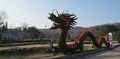 modern park decoration in shape of a Naga-like dragon in Hefei, China
 -
 A Naga, a half-man, half-snake creature (CC BY Greg Willis).
 -
 Naga dragon statue at Olbrich Botanical Garden (CC BY צבוע לבנה).
 -
 Believed to be Vientiane’s oldest surviving temple, Wat Si Saket is famous for its cloister wall and rows of hundreds of seated Buddhas. (CC BY Philip Nalangan)
 -
 Naga and Naga Kanya (snake god and goddess), from the Gond Country, India, on the Nerbudda (CC0 between 1850 and 1873 ).
 -
 Seven-headed naga from the entrance of an Angkor Thom gate (CC BY Gisling(zh:唐戈))


.jpg)


,_from_the_Gond_Country_on_the_Nerbudda_-_DPLA_-_657678574197483a1cccd123b2404d5f.jpg)

Mythology / Religion
Naga Besukih (Bali)
The presence of the Balinese mythological creature, Naga Besukih, cannot be separated from the folklore about the formation of the Bali Strait. The story involves Manik Angkeran who was the son of a Brahmin named Sidi Mantra.
Sidi Mantra was famous for his supernatural powers while his son, although brave and clever, apparently had a penchant for gambling which made him in debt. To free himself from debt, Sidi Mantra told Manik Angkeran to ask for a little treasure guarded by Naga Besukih in the crater of Mount Agung.
The dragon agreed to the request. However, Manik apparently repeated his bad habits so he secretly returned to Naga Besukih to give him help. Blinded by the treasure stored in Naga Besukih's body, Manik cut off the dragon's tail.
With his supernatural powers, Besukih managed to burn Manik to ashes when the dragon licked his tracks. Sidi Mantra then begged Naga Besukih to revive his son on the condition that his tail be returned.
With his magical powers, Sidi Mantra managed to restore the Dragon's tail and the child came back to life. Manik then apologized and promised not to repeat his actions. After disappearing, a water source appeared where Manik stood, which grew larger and larger. With his stick, Sidi Mantra made a dividing line with the child. That place later became the Bali Strait.
Antaboga
Antaboga or Anantaboga is a Balinese mythological creature who rules snakes from a puppet story. This creature has the form of a dragon snake with a crown and a gold necklace. According to local beliefs, Antaboga has many powers and one of them is the ability to revive dead bodies. This creature is said to live in Saptapralata or the seventh layer of the earth's base. He has a wife named Dewi Supreti who also has the form of a dragon and two children named Bambang Naga Tatmala and Dewi Nagini.
Taksaka
Taksaka or Taksa is one of the dragons, the son of Dewi Kadru and Kashyapa who lives in Nagaloka with his other brothers. In the Mahabharata legend, Naga Taksaka is the dragon who killed King Parikesit.
The story of Taksaka appears in the Adiparwa story where Dewi Kadru asks Resi Kasyapa to grant her a thousand children. Bagawan Kasyapa then gives a thousand eggs, from which dragons emerge, one of which is Taksaka. But in Balinese mythology, Taksaka is not a dragon but a snake who lives in Kahyangan.
Image Variants
-
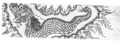 Lintang Naga (CC-BY Alfred Maaß, (1929), Astrologische Kalender der Balinesen)
 -
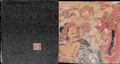 Lintang Naga in the cloth (CC-BY UPTD Museum Bali Inventary no. 09.746)
 -
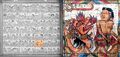 Lintang Naga in the cloth (CC-BY UPTD Museum Bali Inventary no. 09.752)
 -
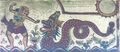 Lintang Naga (CC-BY Youla Azkarrula taken in the ceiling of Taman Gili Klungkung Palace Bali)


Cultural Beliefs
Numerology (Neptu/Urip)
Wraspati (Thursday, in saptawara) has a value of 8 and Kliwon (in pancawara) has a value of 8. Thus, the total urip on this lintang is 16.[9]
Astrological Characteristics
Often makes trouble for his enemies, his joys and sorrows are balanced, has talent in literature, always performs praises to God and is firm in meditation. His mantras and curses are bathing. Has many memories, has a clean heart. Unfortunately they are very easily offended and sensitive so that with this nature they are often swayed by their own feelings.[9]
Matching Gemstones
Biduri bulan (moon stone), Nila (saphire), Kalimayah (Opal).[9]
All HIP Stars within this constellation
Stars within the Constellation Area
| id | Label | IAU design. | description | Vmag |
|---|---|---|---|---|
| 1 | Alphard | HIP 46390 | within constellation lines | 1.97 |
| 2 | Gienah | HIP 59803 | Inside the Hull | 2.58 |
| 3 | Kraz | HIP 61359 | Inside the Hull | 2.64 |
| 4 | ϵ Corvi | HIP 59316 | Inside the Hull | 2.98 |
| 5 | γ Hydrae | HIP 64962 | within constellation lines | 3 |
| 6 | ζ Hydrae | HIP 43813 | within constellation lines | 3.1 |
| 7 | ν Hydrae | HIP 52943 | within constellation lines | 3.11 |
| 8 | Ashlesha | HIP 43109 | within constellation lines | 3.38 |
| 9 | ξ Hydrae | HIP 56343 | within constellation lines | 3.54 |
| 10 | δ Crateris | HIP 55282 | Inside the Hull | 3.56 |
| 11 | λ Hydrae | HIP 49841 | within constellation lines | 3.61 |
| 12 | μ Hydrae | HIP 51069 | within constellation lines | 3.81 |
| 13 | Ukdah | HIP 47431 | Inside the Hull | 3.91 |
| 14 | θ Hydrae | HIP 45336 | Inside the Hull | 3.91 |
| 15 | Alchiba | HIP 59199 | Inside the Hull | 4.01 |
| 16 | γ Crateris | HIP 55705 | Inside the Hull | 4.06 |
| 17 | Alkes | HIP 53740 | Inside the Hull | 4.07 |
| 18 | Zhang | HIP 48356 | within constellation lines | 4.11 |
| 19 | ρ Hydrae | HIP 43234 | Inside the Hull | 4.337 |
| 20 | β Crateris | HIP 54682 | Inside the Hull | 4.449 |
| 21 | τ2 Hydrae | HIP 46776 | Inside the Hull | 4.548 |
| 22 | υ2 Hydrae | HIP 49402 | Inside the Hull | 4.588 |
| 23 | τ1 Hydrae | HIP 46509 | Inside the Hull | 4.6 |
| 24 | ζ Crateris | HIP 57283 | Inside the Hull | 4.706 |
| 25 | ϵ Crateris | HIP 55687 | Inside the Hull | 4.802 |
| 26 | U Hya | HIP 52009 | Inside the Hull | 4.82 |
| 27 | ϕ3 Hydrae | HIP 52085 | Inside the Hull | 4.903 |
| 28 | ψ Hydrae | HIP 64166 | Inside the Hull | 4.934 |
| 29 | λ Crateris | HIP 55598 | Inside the Hull | 5.09 |
| 30 | - | HIP 56332 | Inside the Hull | 5.11 |
| 31 | II Hya | HIP 57613 | Inside the Hull | 5.11 |
| 32 | η Crateris | HIP 58188 | Inside the Hull | 5.16 |
| 33 | ζ Corvi | HIP 60189 | Inside the Hull | 5.21 |
| 34 | ϵ Sextantis | HIP 50414 | Inside the Hull | 5.24 |
| 35 | - | HIP 53252 | Inside the Hull | 5.24 |
| 36 | 31 Crt | HIP 58587 | Inside the Hull | 5.264 |
| 37 | 303 G. Hya | HIP 58082 | Inside the Hull | 5.272 |
| 38 | 200 G. Hya | HIP 49809 | Inside the Hull | 5.296 |
| 39 | - | HIP 46404 | Inside the Hull | 5.32 |
| 40 | * Gam Sex A | HIP 48437 | Inside the Hull | 5.43 |
| 41 | - | HIP 52737 | Inside the Hull | 5.44 |
| 42 | 3 Crv | HIP 59394 | Inside the Hull | 5.47 |
| 43 | ι Crateris | HIP 56802 | Inside the Hull | 5.48 |
| 44 | - | HIP 54029 | Inside the Hull | 5.511 |
| 45 | 33 Hya | HIP 46982 | Inside the Hull | 5.548 |
| 46 | - | HR 3750 | Inside the Hull | 5.56 |
| 47 | - | HIP 51046 | Inside the Hull | 5.56 |
| 48 | 28 Hya | HIP 46221 | Inside the Hull | 5.579 |
| 49 | 225 G. Hya | HIP 51491 | Inside the Hull | 5.58 |
| 50 | * 17 Crt A | HIP 56280 | Inside the Hull | 5.58 |
| 51 | 195 G. Hya | HIP 49569 | Inside the Hull | 5.582 |
| 52 | 18 Sex | HIP 49865 | Inside the Hull | 5.618 |
| 53 | - | HIP 61015 | Inside the Hull | 5.63 |
| 54 | - | HIP 53316 | Inside the Hull | 5.651 |
| 55 | 6 Crv | HIP 60425 | Inside the Hull | 5.658 |
| 56 | * 17 Crt B | HIP 56280 | Inside the Hull | 5.671 |
| 57 | 236 G. Hya | HIP 51933 | Inside the Hull | 5.71 |
| 58 | χ2 Hydrae | HIP 54255 | Inside the Hull | 5.71 |
| 59 | 41 Sex | HIP 52980 | Inside the Hull | 5.791 |
| 60 | - | HIP 59728 | Inside the Hull | 5.807 |
| 61 | - | HIP 56078 | Inside the Hull | 5.813 |
| 62 | - | HIP 52948 | Inside the Hull | 5.842 |
| 63 | - | HIP 53778 | Inside the Hull | 5.857 |
| 64 | - | HIP 53723 | Inside the Hull | 5.879 |
| 65 | - | HIP 58158 | Inside the Hull | 5.893 |
| 66 | 17 Sex | HIP 49812 | Inside the Hull | 5.901 |
| 67 | κ Crateris | HIP 55874 | Inside the Hull | 5.923 |
| 68 | 25 Sex | HIP 50885 | Inside the Hull | 5.97 |
| 69 | - | HIP 60157 | Inside the Hull | 5.97 |
| 70 | 136 G. Hya | HIP 46288 | Inside the Hull | 5.985 |
| 71 | ϕ2 Hydrae | HIP 51905 | Inside the Hull | 6.012 |
| 72 | 6 Sex | HIP 48341 | Inside the Hull | 6.016 |
| 73 | 209 G. Hya | HIP 50536 | Inside the Hull | 6.027 |
| 74 | - | HIP 61951 | Inside the Hull | 6.03 |
| 75 | - | HIP 56364 | Inside the Hull | 6.044 |
| 76 | 243 G. Hya | HIP 52113 | Inside the Hull | 6.045 |
| 77 | - | HIP 59895 | Inside the Hull | 6.07 |
| 78 | - | HIP 50292 | Inside the Hull | 6.075 |
| 79 | - | HIP 54214 | Inside the Hull | 6.086 |
| 80 | - | HIP 49293 | Inside the Hull | 6.097 |
| 81 | ψ Crateris | HIP 54742 | Inside the Hull | 6.105 |
| 82 | 157 G. Hya | HIP 46869 | Inside the Hull | 6.113 |
| 83 | - | HIP 57732 | Inside the Hull | 6.122 |
| 84 | 146 G. Hya | HIP 46529 | Inside the Hull | 6.126 |
| 85 | 217 G. Hya | HIP 50790 | Inside the Hull | 6.13 |
| 86 | 81 G. Hya | HIP 43902 | Inside the Hull | 6.131 |
| 87 | 105 G. Hya | HIP 45167 | Inside the Hull | 6.131 |
| 88 | - | HIP 56293 | Inside the Hull | 6.16 |
| 89 | NS Hya | HIP 44738 | Inside the Hull | 6.17 |
| 90 | TU Crv | HIP 61496 | Inside the Hull | 6.184 |
| 91 | VX Crt | HIP 56899 | Inside the Hull | 6.19 |
| 92 | - | HIP 56901 | Inside the Hull | 6.198 |
| 93 | - | HIP 51490 | Inside the Hull | 6.2 |
| 94 | - | HIP 57079 | Inside the Hull | 6.2 |
| 95 | - | HIP 49900 | Inside the Hull | 6.225 |
| 96 | 245 G. Hya | HIP 52391 | Inside the Hull | 6.228 |
| 97 | - | HIP 56245 | Inside the Hull | 6.228 |
| 98 | 199 G. Hya | HIP 49802 | Inside the Hull | 6.23 |
| 99 | 197 G. Hya | HIP 49689 | Inside the Hull | 6.244 |
| 100 | 159 G. Hya | HIP 46893 | Inside the Hull | 6.25 |
| 101 | * Psi Crt A | HIP 54742 | Inside the Hull | 6.25 |
| 102 | - | HIP 61270 | Inside the Hull | 6.254 |
| 103 | - | HIP 58574 | Inside the Hull | 6.255 |
| 104 | 147 G. Hya | HIP 46543 | Inside the Hull | 6.257 |
| 105 | 144 G. Hya | HIP 46504 | Inside the Hull | 6.27 |
| 106 | 337 G. Hya | HIP 63243 | Inside the Hull | 6.303 |
| 107 | - | HIP 50584 | Inside the Hull | 6.308 |
| 108 | 37 Hya | HIP 47427 | Inside the Hull | 6.32 |
| 109 | - | HIP 51490 | Inside the Hull | 6.32 |
| 110 | - | HIP 53259 | Inside the Hull | 6.34 |
| 111 | - | HIP 54048 | Inside the Hull | 6.343 |
| 112 | 71 G. Hya | HIP 43570 | Inside the Hull | 6.35 |
| 113 | 172 G. Hya | HIP 47454 | Inside the Hull | 6.356 |
| 114 | - | HIP 53849 | Inside the Hull | 6.36 |
| 115 | - | HIP 50552 | Inside the Hull | 6.361 |
| 116 | - | HIP 54749 | Inside the Hull | 6.378 |
| 117 | 34 Hya | HIP 47249 | Inside the Hull | 6.39 |
| 118 | - | HIP 61208 | Inside the Hull | 6.39 |
| 119 | * Gam Sex B | HIP 48437 | Inside the Hull | 6.4 |
| 120 | 332 G. Hya | HIP 62448 | Inside the Hull | 6.405 |
| 121 | 308 G. Hya | HIP 58436 | Inside the Hull | 6.416 |
| 122 | - | HIP 48351 | Inside the Hull | 6.42 |
| 123 | - | HIP 56830 | Inside the Hull | 6.42 |
| 124 | 274 G. Hya | HIP 54703 | Inside the Hull | 6.43 |
| 125 | 294 G. Hya | HIP 57001 | Inside the Hull | 6.44 |
| 126 | 258 G. Hya | HIP 53387 | Inside the Hull | 6.444 |
| 127 | 166 G. Hya | HIP 47242 | Inside the Hull | 6.46 |
| 128 | - | HIP 48839 | Inside the Hull | 6.46 |
| 129 | 299 G. Hya | HIP 57749 | Inside the Hull | 6.477 |
| 130 | 233 G. Hya | HIP 51852 | Inside the Hull | 6.479 |
| 131 | 297 G. Hya | HIP 57507 | Inside the Hull | 6.48 |
| 132 | - | HIP 50693 | Inside the Hull | 6.499 |
| 133 | - | HIP 51656 | Inside the Hull | 6.5 |
IAU Working Group on Star Names
The name "Naga" was proposed to WGSN as a star name in 2025 based on the Balinese lintang (constellation). As the name "Naga" has a strong cultural significance in many South East Asian cultures, the WGSN agreed to use it as a star name. The name is proposed for the star Gamma Hya or HIP 64962 because of Naga's cultural significance on Bali where it designates a constellation. HIP 64962 is the star position is at the Naga's tail. Naga are mystical creatures with special powers. The famous Naga Basuki, in particular, is the one that is connected to the Bali Strait. When Manik Angkeran needed money to pay his gambling debts, he cut the Naga's tail that had gold in it. Check full mythology above. Constellation Naga is mentioned in Palelintangan Prasi, dating roughly 700 CE, and is still used in Bali.
On 22 Februrary 2026, WGSN decided to adopt the name Naga for γ Hya (SIMBAD).
-
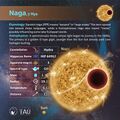 Naga profile Card (CC BY Sadegh Faghanpour for IAU-WGSN).
 -
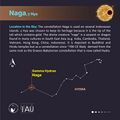 Naga stick figure (CC BY Sadegh Faghanpour for IAU-WGSN).
Weblinks
References
- References (general)
- ↑ 1.0 1.1 1.2 1.3 Maass, Alfred, “Astrologische Kalender der Balinesen,” in Koninklijk Bataviaasch Genootschap van Kunsten en Wetenschappen, Feestbundel bij gelegenheid van zijn 150 jarig bestaan 1778-1928, 2 vols. (Weltevreden, 1929), Vol. 2, 126-157.
- ↑ Friedrich, R. (1849). Voorloopig verslag van het eiland Bali, Batavia, Verb. Bat Gen. Deel 23, Nr. 13
- ↑ HINLOOPEN LABBERT0N, D. VAN (1910). Geillustreerd handboek van Insulinde. Amsterdam: "Vivat"
- ↑ PIGEAUD, TH. (1925). Een stuk over sterrenkunde uit het Anggastyaparwwa ...... Weltevreden: Albrecht. Tijdsch. v. lnd, T.-, L.- en Vk. deel LXV
- ↑ Nieuwenkamp, W. O. J. (1905), Schetsen van Bali en Lombok. (Eigen Haard)
- ↑ MAASS, ALFRED (1920). Sterne und Sternbilder im malaiischen Archipel. Berlin. Zeitschrift für Ethnologie Jg. 1920/21, H. 1
- ↑ MAASS, ALFRED (1924). Sternkunde und Sterndeuterei im malaiischen Archipel. Batavia, den Haag. Tijdsch. v. T.-, L.-en Vk. deel LX IV
- ↑ On the problems of understanding the term "naga"https://www.wisdomlib.org/definition/naga
- ↑ 9.0 9.1 9.2 Palelintangan Museum Study Team (Tim Kajian Palelintangan Museum), “Gabungan Kajian Palelintangan,” Museum Bali (2021), 1-149.