Centaurus: Difference between revisions
From All Skies Encyclopaedia
No edit summary |
No edit summary |
||
| Line 33: | Line 33: | ||
[[Category:Eurasia]] | [[Category:Eurasia]] | ||
[[Category:European]] | |||
[[Category:Constellation]] | [[Category:Constellation]] | ||
[[Category:Almagest]] | [[Category:Almagest]] | ||
Revision as of 11:00, 23 August 2024

One of the 88 IAU constellations.
Etymology and History
The Greek constellation is possibly derived from a Babylonian one. There were several centaur-like creatures and other mixed man-animal beings in Mesopotamian culture; seal imprints and reliefs witness them.
Origin of Constellation
Transfer and Transformation of the Constellation
-
 Jessica Gullberg's impression of the Babylonian constellation UR.IDIM (The Mad Dog) in Stellarium 2021.
 -
 Centaurus et Lupus on the ancient Greek Kugel Globe, drawing by SMH 2021.
 -
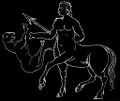 Centaurus et Lupus on the ancient Greco-Roman Farnese Globe, drawing by SMH 2017.
 -
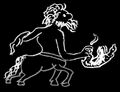 Centaurus et Lupus on the ancient Roman Mainz Globe, drawing by SMH 2021.
 -
 Centaurus and Lupus constellations from the Mercator celestial globe 1551 (CC0).
 -
 Centaurus as drawn by Joh. Bayer (1603) and Lupus drawn by the user of this exemplar of the atlas (extra map for Bayer).