Sangkal Tikel: Difference between revisions
| Line 29: | Line 29: | ||
==== Identification ==== | ==== Identification ==== | ||
The identifications, Maaß (1929) gives according to the aforementioned and his own studies during visits of the country and in European and Batavian libraries (p.150).<ref name=":1" /> | The identifications, Maaß (1929) gives according to the aforementioned and his own studies during visits of the country and in European and Batavian libraries (p.150).<ref name=":1" /> | ||
[[File:Screenshot 2026-02-05 130538.png|center|thumb|800x800px|Sangkal Tikel in the identification table by Maaß (1929). He mentioned this lintang is related to Mula constellation from Naksatra. There are also the star list of scorpionis.]] | |||
Maaß (1929) p. 140: <blockquote>"sangkal tikel, gebrochener Hobel; - sangal tikel; - ein Mann, dem beim Fällen eines Baumes der Stiel seines Beiles bricht."</blockquote>'''English''': sangkal tikel, broken plane; - sangal tikel; - a man whose axe handle breaks while felling a tree. | Maaß (1929) p. 140: <blockquote>"sangkal tikel, gebrochener Hobel; - sangal tikel; - ein Mann, dem beim Fällen eines Baumes der Stiel seines Beiles bricht."</blockquote>'''English''': sangkal tikel, broken plane; - sangal tikel; - a man whose axe handle breaks while felling a tree. | ||
Revision as of 12:42, 5 February 2026
Authors: Youla Azkarrula, Susanne M Hoffmann


Sangkal Tikěl is an Oceanic name from Bali (Indonesia). The lintang of sangkal tikěl is found in intersection of Wraspati (Thursday, in saptawara) and Umanis (in pancawara) in a series of palelintangan. Lintang sangkal tikěl means a broken hoe constellation.[1]
Etymology and History
Sangkal Tikěl (IPA: [saŋ.kəˈti.kəl])
Spelling Variants
- sangka tikěl
Origin of Constellation
Sangkal Tikěl is a broken hoe. Sangkal is a frame for tools containing a blade (e.g. plane, razor). A hoe is a rectangular tool made of wood, with a hole for a knife, and a handle. It is used to smooth wooden building materials. The various types of hoe are:[2]
- Sangkal Pamiring: a hoe used to smooth wood that is difficult to smooth with a regular hoe.
- Sangkal Pangedong: a hoe used to smooth decorative grooves in wooden terraces.
- Sangkal Yuyu: a hoe made of iron, with an iron handle, shaped like a crab, used to smooth wood that is difficult to smooth with a regular hoe.
But Sangkal for this constellation is a hoe, a tool for Balinese farmers to cultivate the land, dig, level the land, and clear weeds in rice fields and gardens, especially in narrow areas that do not allow the use of heavy machinery.
General information

The astronomical identification of the constellation is taken from Maaß (1929)[1] who explains in general that these constellations and the according ritual practice
"sind seit alten Zeiten in einem Werk ,,wariga" niedergelegt, in dem wir zwei Kulturschichten, nämlich indische und malaio-polynesische Bestandteile wiederfinden."
English: "are written down in a work called "wariga" since old times; there we recognise two cultural layers, i.e. the Indian and the Malayo-Polynesian."
He also quotes other scholars[3][4][5][6] and his earlier work[7][8] reporting that this work dates back to the 9th century CE when Bali was part of a Hindu empire on the neighbouring island of Java.[1] Neubronner van der Tuuk even uses the Old Javanese spelling.
Identification
The identifications, Maaß (1929) gives according to the aforementioned and his own studies during visits of the country and in European and Batavian libraries (p.150).[1]

Maaß (1929) p. 140:
"sangkal tikel, gebrochener Hobel; - sangal tikel; - ein Mann, dem beim Fällen eines Baumes der Stiel seines Beiles bricht."
English: sangkal tikel, broken plane; - sangal tikel; - a man whose axe handle breaks while felling a tree.
Transfer and Transformation of the Constellation
Mythology / Religion
Sangkal for Balinese people is a practical tool that is vital for their agriculture, as well as holding deep cultural meaning as a symbol of work, tradition, and the harmonious relationship between humans and nature (the concept of Pabelasan in Tri Hita Karana).
Image Variants
-
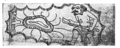 Lintang Sangkal Tikel (CC-BY Alfred Maaß, (1929), Astrologische Kalender der Balinesen)
 -
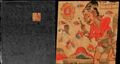 Lintang Sangkal Tikel in the cloth (CC-BY UPTD Museum Bali Inventary no. 09.746)
 -
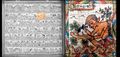 Lintang Sangkal Tikel in the cloth (CC-BY UPTD Museum Bali Inventary no. 09.752)
 -
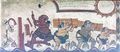 Lintang Sangkalatikel (CC-BY Youla Azkarrula taken in the ceiling of Taman Gili Klungkung Palace Bali)


Cultural Beliefs
Numerology (Neptu/Urip)
Wraspati (Thursday, in saptawara) has a value of 8 and Umanis (in pancawara) has a value of 5. Thus, the total urip on this lintang is 13.[9]
Astrological Characteristics
All their actions bring danger, often plagued by sadness, have thoughts that are always changing, stealing and have difficulty finding happiness in their lives. They have noble ideals, are easy to get along with and are liked by many people. They like to be praised and like to interfere in other people's affairs.[9]
Matching Gemstones
Mirah (Ruby), Ijo Ireng (Peros).[9]
Weblinks
All HIP Stars within this constellation
Stars within the Constellation Area
| id | Label | IAU design. | description | Vmag |
|---|---|---|---|---|
| 1 | Antares | HIP 80763 | Inside the Hull | 0.91 |
| 2 | Shaula | HIP 85927 | within constellation lines | 1.63 |
| 3 | Larawag | HIP 82396 | within constellation lines | 2.29 |
| 4 | κ Scorpii | HIP 86670 | within constellation lines | 2.386 |
| 5 | [SC96] Mis 162 | [SC96] Mis 162 | Inside the Hull | 2.51 |
| 6 | Lesath | HIP 85696 | within constellation lines | 2.65 |
| 7 | Paikauhale | HIP 81266 | Inside the Hull | 2.81 |
| 8 | Xamidimura | HIP 82514 | within constellation lines | 2.98 |
| 9 | ι 1 Scorpii | HIP 87073 | within constellation lines | 2.992 |
| 10 | η Scorpii | HIP 84143 | within constellation lines | 3.33 |
| 11 | Pipirima | HIP 82545 | Inside the Hull | 3.542 |
| 12 | Jabbah | HIP 79374 | Inside the Hull | 4 |
| 13 | Q Sco | HIP 86170 | Inside the Hull | 4.267 |
| 14 | Jabbah | HIP 79374 | within constellation lines | 4.349 |
| 15 | ρ Ophiuchi | HIP 80473 | Inside the Hull | 4.63 |
| 16 | 22 Sco | HIP 80815 | Inside the Hull | 4.79 |
| 17 | V1073 Sco | HIP 83574 | Inside the Hull | 4.87 |
| 18 | - | HIP 83336 | Inside the Hull | 5.01 |
| 19 | * rho Oph A | HIP 80473 | Inside the Hull | 5.05 |
| 20 | * alf Sco B | HD 148479 | Inside the Hull | 5.2 |
| 21 | 27 Sco | HIP 82960 | Inside the Hull | 5.49 |
| 22 | - | HIP 84401 | Inside the Hull | 5.53 |
| 23 | - | HIP 84150 | Inside the Hull | 5.655 |
| 24 | - | HIP 81741 | Inside the Hull | 5.836 |
| 25 | - | HIP 85889 | Inside the Hull | 5.838 |
| 26 | Gliese 667 A | HIP 84709 | Inside the Hull | 5.89 |
| 27 | V923 Sco | HIP 83491 | Inside the Hull | 5.902 |
| 28 | - | HIP 85048 | Inside the Hull | 5.914 |
| 29 | - | HIP 83235 | Inside the Hull | 5.934 |
| 30 | - | HIP 84425 | Inside the Hull | 5.95 |
| 31 | - | HIP 83693 | Inside the Hull | 5.98 |
| 32 | - | HIP 81992 | Inside the Hull | 5.982 |
| 33 | - | HIP 85543 | Inside the Hull | 5.985 |
| 34 | - | HIP 83100 | Inside the Hull | 6.048 |
| 35 | - | HIP 80910 | Inside the Hull | 6.081 |
| 36 | RR Sco | HIP 82912 | Inside the Hull | 6.1 |
| 37 | - | HIP 84489 | Inside the Hull | 6.12 |
| 38 | - | HIP 83706 | Inside the Hull | 6.13 |
| 39 | - | HIP 82453 | Inside the Hull | 6.22 |
| 40 | - | HIP 86246 | Inside the Hull | 6.27 |
| 41 | - | HIP 84151 | Inside the Hull | 6.285 |
| 42 | - | HIP 82855 | Inside the Hull | 6.32 |
| 43 | - | HIP 82731 | Inside the Hull | 6.34 |
| 44 | [SC96] Mis 201 | [SC96] Mis 201 | Inside the Hull | 6.36 |
| 45 | - | HR 6426 | Inside the Hull | 6.37 |
| 46 | - | HIP 85019 | Inside the Hull | 6.419 |
| 47 | - | HIP 84332 | Inside the Hull | 6.44 |
| 48 | - | HIP 85020 | Inside the Hull | 6.44 |
| 49 | - | HIP 81891 | Inside the Hull | 6.452 |
| 50 | [SC96] GC 33 | [SC96] GC 33 | Inside the Hull | 6.5 |
IAU Working Group on Star Names
In November 2025, it has been proposed to use the name "Sangkatikel" for a star in the area to preserve the Balinese heritage. The star kap Sco or HIP 86670 is in the axe tip. Constellation Bade is mentioned in Palelintangan Prasi, dating roughly 700 CE, and is still used in Bali.
References
- References (general)
- ↑ 1.0 1.1 1.2 1.3 Maass, Alfred, “Astrologische Kalender der Balinesen,” in Koninklijk Bataviaasch Genootschap van Kunsten en Wetenschappen, Feestbundel bij gelegenheid van zijn 150 jarig bestaan 1778-1928, 2 vols. (Weltevreden, 1929), Vol. 2, 126-157.
- ↑ Tim penyusun. Kamus Budaya Bali. 2016, Balai Bahasa Bali https://repositori.kemendikdasmen.go.id/16216/1/Kamus+Budaya+Bali+2016.pdf
- ↑ Friedrich, R. (1849). Voorloopig verslag van het eiland Bali, Batavia, Verb. Bat Gen. Deel 23, Nr. 13
- ↑ HINLOOPEN LABBERT0N, D. VAN (1910). Geillustreerd handboek van Insulinde. Amsterdam: "Vivat"
- ↑ PIGEAUD, TH. (1925). Een stuk over sterrenkunde uit het Anggastyaparwwa ...... Weltevreden: Albrecht. Tijdsch. v. lnd, T.-, L.- en Vk. deel LXV
- ↑ Nieuwenkamp, W. O. J. (1905), Schetsen van Bali en Lombok. (Eigen Haard)
- ↑ MAASS, ALFRED (1920). Sterne und Sternbilder im malaiischen Archipel. Berlin. Zeitschrift für Ethnologie Jg. 1920/21, H. 1
- ↑ MAASS, ALFRED (1924). Sternkunde und Sterndeuterei im malaiischen Archipel. Batavia, den Haag. Tijdsch. v. T.-, L.-en Vk. deel LX IV
- ↑ 9.0 9.1 9.2 Tim Kajian Palelintangan, “Gabungan Kajian Palelintangan,” Museum Bali (2021), 1-149.





