Canis Major: Difference between revisions
| Line 6: | Line 6: | ||
==Etymology and History== | ==Etymology and History== | ||
In Hellenistic times, Greek astronomy had only one constellation, the Dog, so there was no need to distinguish between a large and a small dog. According to Eratosthenes, this dog had the bright star Sirius on its tongue. Ptolemy in Roman times placed it on the dog's snout. | ===Origin of Constellation === | ||
In Hellenistic times, Greek astronomy had only one constellation, the Dog, so there was no need to distinguish between a large and a small dog. According to Eratosthenes, this dog had the bright star Sirius on its tongue. Ptolemy in Roman times placed it on the dog's snout. | |||
What is interesting about Sirius, however, is that today we use the Greek proper name from Hellenistic times. Ptolemy in Roman times called the brightest star of the constellation ‘the Dog’. | What is interesting about [[Sirius]], however, is that today we use the Greek proper name from Hellenistic times. Ptolemy in Roman times called the brightest star of the constellation ‘the Dog’. | ||
=== | ==== Bright Star ==== | ||
Sirius is the brightest star in the night sky and therefore particularly easy to observe at dusk. This makes it ideal for a special calendar function. In the course of the year, it does not matter where the beginning and end are – the only important thing is that the stellar year, like the solar year, has approximately 365 days. There were therefore several possibilities in different cultures as to when to celebrate the New Year: in Mesopotamia, it was usually the spring equinox, but there was also the variant with the autumn equinox. In Egypt, the New Year was celebrated in summer – with five days ‘between the years’ when it was hardly possible to work anyway due to the intense heat. This ancient Egyptian custom was still known when the country on the Nile was under Greek and Roman rule. This explains the ancient term ‘dog days’ for the hottest days of the year with the heliacal rising of Sirius. | |||
The Greek word for the star – seirios, scorching – can refer both to its brightness and to the heat of summer at the time of its heliacal rising. The latter was certainly the case with the Egyptian word: since the 3rd millennium, the word ‘Sothis’ has been used to refer to a constellation of at least three stars, which later – perhaps only in the 1st millennium – was restricted to the bright Sirius. As in Mesopotamia, the Sothis star system was used in Egypt to determine the calendar. However, whether the rising of Sirius was really associated with the flooding of the Nile is highly controversial among researchers and difficult to prove. What is certain is that the star system was associated with the goddess of magic, Isis. She was always one of the supreme deities in the Egyptian pantheon, and in Roman times, the growing Christianity had to assert itself against the cult of Isis, among others, as an extremely strong competitor. | |||
In the case of Sirius, however, it is interesting that we now use the Greek proper name from the Hellenistic period. Ptolemy in Roman times called the brightest star in the constellation ‘the dog’. Many astronomers were puzzled by the question of why Ptolemy described the star as reddish. This even sparked speculation about a possible supernova or nova on its companion, a white dwarf. Both can be dismissed because it may be a matter of uncertainty in text translations: Eratosthenes already described the star as ‘fiery’ and “flaming” or ‘flickering’. The flickering and shimmering in all colours is caused by the Earth's atmosphere. In most cultures, reddish stars are referred to as fire stars: e.g. [[Antares|Antare]]<nowiki/>s in China or [[Aldebaran]] in Mesopotamia. In the case of Sirius, the word probably means ‘glittering’ in the sense of ‘bright compared to other stars’. It would therefore be a metaphor for great brightness, like a beacon in the dark, heralding the new year and the hot season. The attribution of ‘red’ would therefore be a misunderstanding in one of the numerous stages of translation. Sirius is and was white in colour even back then. This is confirmed by other ancient astronomers and astrologers in their descriptions, e.g. Manilius in the first century. | |||
==== Babylonian ==== | ==== Babylonian ==== | ||
Babylonian astronomy records the constellation Arrow ([[KAK.SI.SA2|KAK.SI.SA<sub>2</sub>]]) in this region of the sky. There are probably two constellations in this region of the sky: the Arrow and the Bow. In some versions of Babylonian uranography, they are held by a person, presumably a deity, standing east of the Milky Way. However, this does not seem to apply to all variants; in MUL.APIN, for example, no such figure is mentioned, but rather two independent constellations (Bow and Arrow), while textual descriptions from the 1st millennium suggest such a figure. | |||
[[Sirius]] definitely belongs to the Arrow and, as the brightest star, sometimes stands alone for this constellation, especially when observed at twilight (i.e. for calendar determination). Therefore, there are various suggestions in research as to which stars other than Sirius also belong to the arrow. A line from Sirius to [[Procyon]] is rather unlikely from a calendar perspective. Presumably, the constellation of Sirius should be thought of as southward. Since the constellation of the bow should be located near the arrow, it is presumed to be in the southernmost stars of the dog or in the faint stars east of it. Whether it is a bow and arrow, just an arrow or a deity with an arrow (and bow), there is certainly no dog to be found here in Babylonian mythology: the Babylonian constellation Dog belongs to the goddess of medicine, [[Gula]], and is located in the area of our constellation [[Hercules]]. | |||
==== Greco-Roman ==== | ==== Greco-Roman ==== | ||
| Line 924: | Line 933: | ||
==Mythology== | ==Mythology== | ||
Eratosthenes recounts two stories about how the dog might have come to be in the sky: on the one hand, he could be Orion's faithful companion, and on the other, he could have been a gift to Princess Europa. | |||
As Orion's dog, he accompanied him on the hunt and is considered a faithful companion and helper to humans against wild animals. That is why he was immortalised in the starry sky with Orion's ascent, writes Eratosthenes. | |||
However, the dog could also have had a whole series of other owners: together with the javelin, it is said to have been given by Zeus to the king's daughter Europa as her guardian. She later passed these gifts on to her son Minos. As king of Crete, he later suffered from an illness from which the Attic princess Prokris cured him. Out of gratitude, he gave her the immortal dog and the accurate javelin. When Prokris married King Cephalus of Thebes, the gifts came into his possession. Thebes was plagued by an uncatchable fox, and when they hunted it with the swift dog, only Zeus could end the pursuit: He turned the fox to stone and placed the dog among the stars. | |||
Hyginus and Ovid see the two dogs as the faithful companions of Ikarios, the bringer of culture, who, at the behest of the god Dionysus, introduced the art of viticulture and wine production to the land around Athens. | |||
==Weblinks== | ==Weblinks== | ||
Revision as of 20:26, 26 February 2026
Authors: Susanne M Hoffmann, Youla Azkarrula, Doris Vickers, IanRidpath

One of the 88 IAU constellations. This is the (one and only) constellation of the Dog in ancient Greek astronomy.

Etymology and History
Origin of Constellation
In Hellenistic times, Greek astronomy had only one constellation, the Dog, so there was no need to distinguish between a large and a small dog. According to Eratosthenes, this dog had the bright star Sirius on its tongue. Ptolemy in Roman times placed it on the dog's snout.
What is interesting about Sirius, however, is that today we use the Greek proper name from Hellenistic times. Ptolemy in Roman times called the brightest star of the constellation ‘the Dog’.
Bright Star
Sirius is the brightest star in the night sky and therefore particularly easy to observe at dusk. This makes it ideal for a special calendar function. In the course of the year, it does not matter where the beginning and end are – the only important thing is that the stellar year, like the solar year, has approximately 365 days. There were therefore several possibilities in different cultures as to when to celebrate the New Year: in Mesopotamia, it was usually the spring equinox, but there was also the variant with the autumn equinox. In Egypt, the New Year was celebrated in summer – with five days ‘between the years’ when it was hardly possible to work anyway due to the intense heat. This ancient Egyptian custom was still known when the country on the Nile was under Greek and Roman rule. This explains the ancient term ‘dog days’ for the hottest days of the year with the heliacal rising of Sirius.
The Greek word for the star – seirios, scorching – can refer both to its brightness and to the heat of summer at the time of its heliacal rising. The latter was certainly the case with the Egyptian word: since the 3rd millennium, the word ‘Sothis’ has been used to refer to a constellation of at least three stars, which later – perhaps only in the 1st millennium – was restricted to the bright Sirius. As in Mesopotamia, the Sothis star system was used in Egypt to determine the calendar. However, whether the rising of Sirius was really associated with the flooding of the Nile is highly controversial among researchers and difficult to prove. What is certain is that the star system was associated with the goddess of magic, Isis. She was always one of the supreme deities in the Egyptian pantheon, and in Roman times, the growing Christianity had to assert itself against the cult of Isis, among others, as an extremely strong competitor.
In the case of Sirius, however, it is interesting that we now use the Greek proper name from the Hellenistic period. Ptolemy in Roman times called the brightest star in the constellation ‘the dog’. Many astronomers were puzzled by the question of why Ptolemy described the star as reddish. This even sparked speculation about a possible supernova or nova on its companion, a white dwarf. Both can be dismissed because it may be a matter of uncertainty in text translations: Eratosthenes already described the star as ‘fiery’ and “flaming” or ‘flickering’. The flickering and shimmering in all colours is caused by the Earth's atmosphere. In most cultures, reddish stars are referred to as fire stars: e.g. Antares in China or Aldebaran in Mesopotamia. In the case of Sirius, the word probably means ‘glittering’ in the sense of ‘bright compared to other stars’. It would therefore be a metaphor for great brightness, like a beacon in the dark, heralding the new year and the hot season. The attribution of ‘red’ would therefore be a misunderstanding in one of the numerous stages of translation. Sirius is and was white in colour even back then. This is confirmed by other ancient astronomers and astrologers in their descriptions, e.g. Manilius in the first century.
Babylonian
Babylonian astronomy records the constellation Arrow (KAK.SI.SA2) in this region of the sky. There are probably two constellations in this region of the sky: the Arrow and the Bow. In some versions of Babylonian uranography, they are held by a person, presumably a deity, standing east of the Milky Way. However, this does not seem to apply to all variants; in MUL.APIN, for example, no such figure is mentioned, but rather two independent constellations (Bow and Arrow), while textual descriptions from the 1st millennium suggest such a figure.
Sirius definitely belongs to the Arrow and, as the brightest star, sometimes stands alone for this constellation, especially when observed at twilight (i.e. for calendar determination). Therefore, there are various suggestions in research as to which stars other than Sirius also belong to the arrow. A line from Sirius to Procyon is rather unlikely from a calendar perspective. Presumably, the constellation of Sirius should be thought of as southward. Since the constellation of the bow should be located near the arrow, it is presumed to be in the southernmost stars of the dog or in the faint stars east of it. Whether it is a bow and arrow, just an arrow or a deity with an arrow (and bow), there is certainly no dog to be found here in Babylonian mythology: the Babylonian constellation Dog belongs to the goddess of medicine, dGula, and is located in the area of our constellation Hercules.
Greco-Roman
Aratos
[326] Such is also his guardian Dog, seen standing on its two legs below the soaring back of Orion, variegated, not bright overall, but dark in the region of the belly as it moves round; but the tip of its [330] jaw is inset with a formidable star, that blazes most intensely: and so men call it the Scorcher. When Sirius rises with the sun, trees can no longer outwit it by feebly putting forth leaves. For with its keen shafts it easily pierces their ranks, [335] and strengthens some, but destroys all the growth of others. We also hear of it at its setting. The other stars lying round about Sirius define the legs more faintly. (Kidd 1997)
Eratosthenes
Hipparchus
Rising (Lib II Cap V §10)
The Rising of ...
| east | south | |||
|---|---|---|---|---|
| lam1 | lam2 | lam1 | lam2 | |
| star | ||||
| duration | 2 1/8 hours = 127.5 min = 31 7/8 degree | |||
Setting (Lib II Cap VI §10)
| west | south | |||
|---|---|---|---|---|
| lam1 | lam2 | lam1 | lam2 | |
| star | ||||
| duration | 2 2/3 hours = 160 min = 40° | |||
Stars Mentioned
| Greek | German | English | ident. | src | lam_culm | ||
|---|---|---|---|---|---|---|---|
| Lib II Cap V §10 | rising, east, first | ||||||
| Lib II Cap V §10 | rising, east, last | ||||||
| Lib II Cap VI §2 | setting CrB, south, last | Psc 13.5 | |||||
| Lib II Cap VI §13 | setting Aql, south, first | Ari 2 | |||||
| Lib III Cap I §9 | rising Ori, south, last | Psc 13 |
Hyginus, Astronomica
He is said to have been given by Jove as a guardian for Europa, and later to have come to Minos. When Minos was ill, Procris, wife of Cephalus, is said to have cured him, and received the dog as a reward for her services, as she was very fond of hunting and the dog was so swift that no beast could escape. After her death the dog came to Cephalus her husband, who brought it to Thebes with him when he came. There was a fox there which was said to be so swift that it could outrun all dogs. So when the two animals met, Jupiter, in a dilemma, as Istros says, changed them both to stone.
Some have said that this is the dog of Orion, and because Orion was devoted to hunting, the dog was put with him among the stars. Others have called it the dog of Icarus. These many suggestions have their own advocates.
The Dog has one star on his tongue which itself is called Dog, and on its head another which Isis is thought to have put there under her own name, and to have called it Sirius on account of the brilliance of the flame because it seems to shine more than the rest. So, in order for men to recognize it more easily, she called it Sirius. (Mary Ward 1960)
Almagest Κύων
| id | Greek
(Heiberg 1898) |
English
(Toomer 1984) |
ident. |
|---|---|---|---|
| Κυνὸς ἀστερισμός | Constellation of the Dog | ||
| 1 | ἐν τῷ στόματι λαμπρότατος καλούμενος Κύωυ καὶ ὑπόκιρρος. | The star in the mouth, the brightest, which is called 'the Dog' and is reddish | alf CMa |
| 2 | ὁ ἐπὶ τῶν ὡτοη. | The star on the ears | tet CMa |
| 3 | ὁ ἐπὶ τῆς κεφαλῆ | The star on the head | gam CMa |
| 4 | τῶν ἐκ τῷ τραχήλῳ β ὁ βόρειος | The northernrriost of the 2 stars in the neck | iot CMa |
| 5 | ὁ φόσιος αὐτῶν | The southernmost of them | pi CMa |
| 6 | ὁ ἐπὶ τοῦ στήθους. | The star on the chest | nu3 CMa |
| 7 | τῶν ἐπὶ τοῦ δεξιοῦ γόνατος β ὁ βόρειος. | The northernmost of the 2 stars on the right knee | nu2 CMa |
| 8 | ὁ νοτιώτερος αὐτῶν. | The southernmost of them | bet CMa |
| 9 | ὁ ἐπ’ ἄκρῳ τῷ ἐμπροσθίῳ ποδί | The star on the end of the front leg | xi1 CMa |
| 10 | τῶν ἐν τῷ ἀριστερῷ γόνατι β ὁ προηγούμευος. | The more advanced of the 2 stars in the left knee | xi2 CMa |
| 11 | ὁ ὁ ἐπόμενος αὐτῶν | The rearmost of them | omi2 CMa |
| 12 | τῶν ἐν τῷ ἀριστερῷ ὤμῳ β’ ὁ ἑπόμενος; | The rearmost of the 2 stars in the left shoulder | omi1 CMa |
| 13 | ὁ προηγούμενος αὐτῶν | The more advanced of them | del CMa |
| 14 | ὁ ἐν τῇ ἐκφύσει τοῦ ἀριστεροῦ μηροῦ. | The star in the place where the 1eft thigh joins [the body) | del CMa |
| 15 | ὁ ὑπὸ τὴν κοιλίαν ἐν τοῦς μεσομήροις | The star below the belly, in the middle of the thighs | eps CMa |
| 16 | ὁ ἐπὶ τῆς ἀγκύλης τοῦ δεξιοῦ ποδός | The star on the joint of the right leg | kap CMa |
| 17 | ὁ ἐπ’ ἄκρου τοῦ δεξιοῦ ποδός. | The star on the end of the right leg | zet CMa |
| 18 | ὁ ἐπὶ τῆς οὐρᾶς | The star on the tail | eta CMa |
| ἀστέρες τῆ, ὥν αἱ μεγέθους ἂ, γ’ ἓ, δ’ ἓ, ε’ ξ. | {18 stars, 1 of the first magnitude, 5 of the third, 5 ofthe fourth, 7 of the fifth} | ||
| Οἱ περὶ τὸν Κύνα ἀμόρφωτοι. | |||
| 19 | ὁ ἀπ’ ἄρκτου τῆς κορυφῆς τοῦ Κυνός. | The star to the north of the top of The Dog | 22 Mon |
| 20 | τῶν ὑπὸ τοὺς ὀπισθίους πόδας ὡς ἐπ’ εὐθείας ὁ ὁ νοτιώτατος. | The southernmost ofthe 4 stars almost on a straight line under the hind legs | θ Col |
| 21 | ὁ τούτου βορειότερος. | The one north of this | κ Col |
| 22 | ὁ ἔτι τούτου βορειότερος. | The one north again of this | δ Col |
| 23 | ὁ λοιπὸς καὶ βορειότερος τῶν δ | The last and northernmost of the 4 | λ CMa |
| 24 | τῶν πρὸς δυσμὰς τοῦς τέσσαρσιη ὡς ἐπ’ εὐθείας γ ὁ προἠγούμενος | The most advanced ofthe 3 stars almost on a straightline to the west of the [ above] four | μ Col |
| 25 | ὁ μέσος αὐτῶν | The middle one | λ Col |
| 26 | ὁ ἑπόμευος τῶν τριῶν. | The rearmost of the three | γ Col |
| 27 | τῶν ὑπὸ τούτους β λαμπρῶν ὁ ἐπόμευος. | The rearmost of thc 2 bright stars under these | β Col |
| 28 | ὁ προηγούμενος αὐτῶν. | The more advanccd of them | α Col |
| 29 | ὁ λοιπὸς καὶ νοτιώτερος τῶν προειρημένων. | The last star, to the south of the abovc | ε Col |
| all | ἀστέρες ἱα, ὥν β’ μεγέθους β, δ’ 9. | {11 stars, 2 of the second magnitude, 9 of the fourth) |

Stars within the Constellation Area
| id | Label | IAU design. | description | Vmag |
|---|---|---|---|---|
| 1 | Sirius | HIP 32349 | Constellation lines | -1.46 |
| 2 | NAME CMa Dwarf Galaxy | NAME CMa Dwarf Galaxy | Inside the hull | -0.1 |
| 3 | Adhara | HIP 33579 | Constellation lines | 1.5 |
| 4 | Wezen | HIP 34444 | Constellation lines | 1.84 |
| 5 | Mirzam | HIP 30324 | Constellation lines (Vertex) | 1.97 |
| 6 | Aludra | HIP 35904 | Constellation lines (Vertex) | 2.45 |
| 7 | Cl Collinder 121 | Cl Collinder 121 | Inside the hull | 2.6 |
| 8 | Furud | HIP 30122 | Constellation lines (Vertex) | 2.99 |
| 9 | ο 2 Canis Majoris | HIP 33977 | Constellation lines | 3.02 |
| 10 | Nganurganity | HIP 33856 | Constellation lines | 3.47 |
| 11 | ω Canis Majoris | HIP 35037 | Constellation lines | 3.82 |
| 12 | ο 1 Canis Majoris | HIP 33152 | Constellation lines | 3.87 |
| 13 | κ Canis Majoris | HIP 32759 | Constellation lines (Vertex) | 3.89 |
| 14 | ν 2 Canis Majoris | HIP 31592 | Constellation lines | 3.91 |
| 15 | θ Canis Majoris | HIP 33160 | Constellation lines (Vertex) | 4.08 |
| 16 | Muliphein | HIP 34045 | Constellation lines (Vertex) | 4.12 |
| 17 | ξ 1 Canis Majoris | HIP 31125 | Constellation lines | 4.33 |
| 18 | ι Canis Majoris | HIP 33347 | Constellation lines | 4.385 |
| 19 | τ Canis Majoris | HIP 35415 | Constellation lines (Vertex) | 4.4 |
| 20 | ν 3 Canis Majoris | HIP 31700 | Constellation lines | 4.43 |
| 21 | ξ 2 Canis Majoris | HIP 31416 | Constellation lines | 4.5 |
| 22 | M 41 | M 41 | Inside the hull | 4.5 |
| 23 | - | HIP 35205 | Inside the hull | 4.64 |
| 24 | 27 CMa | HIP 34981 | Inside the hull | 4.65 |
| 25 | π Canis Majoris | HIP 33302 | Constellation lines | 4.664 |
| 26 | 15 CMa | HIP 33092 | Constellation lines | 4.83 |
| 27 | μ Canis Majoris | HIP 33345 | Constellation lines | 5.09 |
| 28 | 10 CMa | HIP 32292 | Inside the hull | 5.17 |
| 29 | 11 CMa | HIP 32492 | Constellation lines | 5.272 |
| 30 | - | HIP 35427 | Inside the hull | 5.288 |
| 31 | - | HIP 32411 | Inside the hull | 5.298 |
| 32 | - | HIP 33316 | Inside the hull | 5.3 |
| 33 | - | HIP 34624 | Inside the hull | 5.448 |
| 34 | - | HIP 33478 | Inside the hull | 5.47 |
| 35 | - | HIP 32677 | Inside the hull | 5.51 |
| 36 | - | HIP 35044 | Inside the hull | 5.582 |
| 37 | - | HIP 33575 | Inside the hull | 5.583 |
| 38 | - | HR 2522 | Inside the hull | 5.59 |
| 39 | - | HIP 30436 | Inside the hull | 5.6 |
| 40 | LS CMa | HIP 33804 | Inside the hull | 5.635 |
| 41 | - | HIP 33077 | Constellation lines | 5.648 |
| 42 | - | HIP 32385 | Inside the hull | 5.68 |
| 43 | LZ CMa | HIP 34579 | Inside the hull | 5.69 |
| 44 | ν 1 Canis Majoris | HIP 31564 | Inside the hull | 5.695 |
| 45 | - | HIP 31870 | Constellation lines | 5.71 |
| 46 | - | HIP 32810 | Inside the hull | 5.747 |
| 47 | - | HIP 30836 | Inside the hull | 5.761 |
| 48 | - | HIP 32809 | Inside the hull | 5.771 |
| 49 | 17 CMa | HIP 33248 | Constellation lines | 5.792 |
| 50 | - | HIP 34758 | Inside the hull | 5.825 |
| 51 | FV CMa | HIP 34360 | Inside the hull | 5.83 |
| 52 | 26 CMa | HIP 34798 | Inside the hull | 5.897 |
| 53 | - | HIP 31037 | Inside the hull | 5.903 |
| 54 | - | HIP 32366 | Inside the hull | 5.916 |
| 55 | - | HIP 34914 | Inside the hull | 5.96 |
| 56 | - | HIP 35611 | Inside the hull | 5.986 |
| 57 | - | HIP 31758 | Inside the hull | 6.03 |
| 58 | - | HIP 32368 | Inside the hull | 6.033 |
| 59 | - | HIP 29843 | Constellation lines (Vertex) | 6.04 |
| 60 | - | HIP 33094 | Inside the hull | 6.04 |
| 61 | - | HIP 31859 | Inside the hull | 6.05 |
| 62 | - | HIP 30711 | Inside the hull | 6.07 |
| 63 | - | HIP 34142 | Inside the hull | 6.072 |
| 64 | 12 CMa | HIP 32504 | Inside the hull | 6.08 |
| 65 | - | HIP 34318 | Inside the hull | 6.088 |
| 66 | GY CMa | HIP 34924 | Inside the hull | 6.101 |
| 67 | - | HIP 33079 | Inside the hull | 6.123 |
| 68 | - | HIP 33126 | Inside the hull | 6.22 |
| 69 | - | HIP 32144 | Inside the hull | 6.23 |
| 70 | - | HIP 33492 | Inside the hull | 6.23 |
| 71 | - | HIP 33666 | Inside the hull | 6.26 |
| 72 | - | HIP 30062 | Inside the hull | 6.27 |
| 73 | - | HIP 34940 | Inside the hull | 6.27 |
| 74 | - | HIP 33760 | Inside the hull | 6.279 |
| 75 | - | HIP 33703 | Inside the hull | 6.305 |
| 76 | - | HIP 32827 | Inside the hull | 6.314 |
| 77 | - | HIP 31469 | Inside the hull | 6.32 |
| 78 | - | HIP 34248 | Inside the hull | 6.325 |
| 79 | - | HIP 33330 | Inside the hull | 6.34 |
| 80 | - | HIP 35132 | Inside the hull | 6.34 |
| 81 | - | HIP 33532 | Inside the hull | 6.361 |
| 82 | - | HIP 30503 | Inside the hull | 6.39 |
| 83 | - | HIP 33591 | Inside the hull | 6.395 |
| 84 | - | HIP 31266 | Inside the hull | 6.402 |
| 85 | V415 CMa | HIP 31593 | Inside the hull | 6.41 |
| 86 | - | HIP 32322 | Inside the hull | 6.43 |
| 87 | - | HIP 35326 | Inside the hull | 6.434 |
| 88 | - | HIP 30988 | Inside the hull | 6.44 |
| 89 | KX CMa | HIP 33040 | Inside the hull | 6.44 |
| 90 | - | HIP 30141 | Inside the hull | 6.48 |
| 91 | - | HIP 31736 | Inside the hull | 6.5 |
| 92 | NGC 2354 | NGC 2354 | Inside the hull | 6.5 |
Transfer and Transformation of the Constellation
-
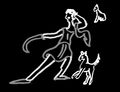 Canis Major and Canis Minor on the Kugel Globe (1st c.BCE), drawing by SMH 2021.
 -
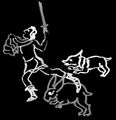 Canis Major on the Mainz Globe following Orion (drawing by SMH 2021)
 -
 Canis Major on Mercator (1551)
 -
 Canis Major in Bayer's Uranometria (1603)
 -
 Canis Major in Hevelius (1690)
 -
 Canis Major in Flamsteed/ Fortin (1776)
 -
 Canis Major in Jamieson (1822)
 -
 Canis Major in Hall (1825)


.jpg)

.jpg)


Mythology
Eratosthenes recounts two stories about how the dog might have come to be in the sky: on the one hand, he could be Orion's faithful companion, and on the other, he could have been a gift to Princess Europa.
As Orion's dog, he accompanied him on the hunt and is considered a faithful companion and helper to humans against wild animals. That is why he was immortalised in the starry sky with Orion's ascent, writes Eratosthenes.
However, the dog could also have had a whole series of other owners: together with the javelin, it is said to have been given by Zeus to the king's daughter Europa as her guardian. She later passed these gifts on to her son Minos. As king of Crete, he later suffered from an illness from which the Attic princess Prokris cured him. Out of gratitude, he gave her the immortal dog and the accurate javelin. When Prokris married King Cephalus of Thebes, the gifts came into his possession. Thebes was plagued by an uncatchable fox, and when they hunted it with the swift dog, only Zeus could end the pursuit: He turned the fox to stone and placed the dog among the stars.
Hyginus and Ovid see the two dogs as the faithful companions of Ikarios, the bringer of culture, who, at the behest of the god Dionysus, introduced the art of viticulture and wine production to the land around Athens.