Argo: Difference between revisions
No edit summary |
No edit summary |
||
| Line 9: | Line 9: | ||
Yet, the Babylonian uranology does contain a constellation of a ship ([[MA2.GUR8|MA<sub>2</sub>.GUR<sub>8</sub>]]) or rather a boat but this is at the opposite site of the sky, frequently identified with the stars in the modern constellations [[Sagittarius]] (Sgr), [[Corona Australis]] (CrA) and [[Capricornus]] (Cap, or only CrA). Some scholars think that The Ship (now called Argo) in the Greek culture is halved and sails backwards through the sky because of hypothetical roots in the Epic of Gilgamesh. However, this scholarly suggestions lacks evidence. | Yet, the Babylonian uranology does contain a constellation of a ship ([[MA2.GUR8|MA<sub>2</sub>.GUR<sub>8</sub>]]) or rather a boat but this is at the opposite site of the sky, frequently identified with the stars in the modern constellations [[Sagittarius]] (Sgr), [[Corona Australis]] (CrA) and [[Capricornus]] (Cap, or only CrA). Some scholars think that The Ship (now called Argo) in the Greek culture is halved and sails backwards through the sky because of hypothetical roots in the Epic of Gilgamesh. However, this scholarly suggestions lacks evidence. | ||
=== Aratus === | === Origin of the Constellation === | ||
Eratosthenes reports that this heavenly ship was the first ship ever built. The reconstruction of his text does not allow for any definite conclusion as to whether the ship was constructed by the goddess Athena herself or by humans. In any case, it is said to have been the first to plough through the inaccessible sea and thus served as a model for all subsequent ships. The constellation is thus a symbol of the invention of the ship. Athena is said not to have placed it in its entirety in the sky because, on the one hand, this image was intended to be a memorial to the gods for the glory of this technical innovation. On the other hand, the existing parts – the mast, the rudder and the oars up to the mast – were intended to encourage sailors in their work. In Roman times (probably the 2nd century CE), Hyginus misunderstood this original Greek statement to mean that half the ship in the sky was intended to encourage sailors in the event of a shipwreck. The true reason for the disappearance of half a ship probably remains hidden in the pre-literate past. | |||
With the star catalogue of the Almagest, the ship can be clearly reconstructed in the sky, and the image thus drawn corresponds to the image on the Farnese Globe. Even in Roman times, the Greek image was drawn unchanged. | |||
With their explorations and voyages of discovery in the south, Europeans expanded the originally normal-sized Greek constellation to cover a very large area: in ancient times, the masthead was seen in the stars now called Pyxis, and the ship's hull ended at the stars κ and δ Velae, the upper right flank of the ‘false cross’. In early modern times, the stars up to β Carinae were added to the ship Argo. In ancient times, these had remained below the horizon in the Mediterranean region and were not assigned to any constellation. This measure made the ship longer, and where there had previously been only a mast, it now had a sail. However, it continued to be depicted as halved. The French astronomer Nicolas-Louis Lacaille considered this modern constellation Argo to be too large. Not only is it large, but its location in the Milky Way also means that it contains a great many stars. When compiling a star catalogue, however, it is practical to insert subheadings (constellation names) from time to time, especially with 160 stars in Argo listed in Lacaille's catalogue of 1755. A subdivision was therefore appropriate. | |||
Thus, the ship was divided into its individual parts, the keel and the sails. The stern had already been depicted by Aratus as adorned with numerous stars. It therefore made sense to separate the stern or aft ship from the long list of stars in the hull. De Lacaille used the stars that had once formed the mast and now appeared to stand incoherently above the Milky Way to mark a grandiose invention of his time: the needle of the marine magnetic compass. Thus, the original constellation of the ship was transformed into a new group of four constellations with a marine context: stern ([[Puppis]]), hull (now [[Carina]]), sails ([[Vela]]) and a ship's compass ([[Pyxis]]), which, confusingly, is not located in the ship (hull) but next to the mast. | |||
==== Babylonian ==== | |||
This constellation had only indirect Babylonian precursors. The Babylonians mainly engaged in river navigation with raft-like boats, and in Assyria, seaworthy ships for the Mediterranean are only documented in the 1st millennium, i.e. approximately half a millennium to a whole millennium after the canonisation of the constellations in MUL.APIN. The Babylonian constellation ‘Ship’ is not only in a completely different place in the sky (CrA or south of [[Sagittarius]]), but also looks completely different from the Greek Argo. However, the myths behind the Argo and the Babylonian ship have a common root: both myths and the story of Noah's Ark are likely to go back to a Sumerian original, which is told in the Epic of Gilgamesh. The Epic of Gilgamesh also mentions a ship with a smashed bow, which may explain the representation in the sky. However, these roots may have already been forgotten in the Greek archaic period. | |||
==== Graeco-Roman ==== | |||
===== Aratus ===== | |||
<blockquote> | <blockquote> | ||
Close to the great Dog’s tail is Argo towed stern first. Its course is not that of a ship proceeding on its normal business, but its movement is backward-turned, like that of real [345] ships when the sailors have already turned the stern about on entering harbour: all the crew quickly back water, and the ship surging astern makes fast to the land. So this Argo of Jason is towed stern first. Dark and starless from the prow as far as the actual mast she goes, but the rest is all bright. [351] The steering-oar is detached and set fast under the Dog’s hind legs as it runs ahead. (Kidd 1997)</blockquote> | Close to the great Dog’s tail is Argo towed stern first. Its course is not that of a ship proceeding on its normal business, but its movement is backward-turned, like that of real [345] ships when the sailors have already turned the stern about on entering harbour: all the crew quickly back water, and the ship surging astern makes fast to the land. So this Argo of Jason is towed stern first. Dark and starless from the prow as far as the actual mast she goes, but the rest is all bright. [351] The steering-oar is detached and set fast under the Dog’s hind legs as it runs ahead. (Kidd 1997)</blockquote> | ||
=== Other names === | ===== Other names ===== | ||
''Ratis'' (Manilius I, 623 and 694; Germanicus 622 and 683), ''Cymba'' (Avienus 757), ''Carina'' (Germanicus 374; Avienus 808), ''Puppis'' (Cic. Arat. 34; 389) | ''Ratis'' (Manilius I, 623 and 694; Germanicus 622 and 683), ''Cymba'' (Avienus 757), ''Carina'' (Germanicus 374; Avienus 808), ''Puppis'' (Cic. Arat. 34; 389) | ||
| Line 2,557: | Line 2,571: | ||
In his 1768 ''Coelum Australe Stelliferum'', Lacaille divided the more than 160 stars in the constellation into the regions ''Argûs in carina'' (Carina, the keel), ''Argûs in puppi'' (Puppis, the stern), and ''Argûs in velis'' (Vela, the sails). | In his 1768 ''Coelum Australe Stelliferum'', Lacaille divided the more than 160 stars in the constellation into the regions ''Argûs in carina'' (Carina, the keel), ''Argûs in puppi'' (Puppis, the stern), and ''Argûs in velis'' (Vela, the sails). | ||
== Mythology == | |||
According to legend, the king's son Jason, accompanied by numerous other Greek heroes, set sail for Colchis, a region between the Caucasus and the Black Sea. From Thessaly in northern Greece, he chose his companions and made preparations for the journey, while a shipbuilder named Argos constructed the ship that was named after him. Argos went on board for the maiden voyage, and Jason's Argonauts to Colchis also included the twins Castor and Polydeuces (Latin: Pollux) and the musician Orpheus. | |||
Their task was to capture the Golden Fleece of the flying and talking ram Chrysomeles. To do this, they sailed through the Isthmus, which until then had been reputed to be impassable for ships. The rocks on its shores are said to have moved whenever a ship approached them. The Argonauts outwitted the rocks with a trick by sending a dove ahead. The bird managed to escape the rocks, which then stopped shaking and allowed the Argo to pass. | |||
The Argo is considered the first seaworthy ship. This can be reconciled with the legend by the fact that attempts had previously been made to cross the isthmus with river boats, which apparently failed. | |||
The Argo then sailed across the Black Sea, reached Colchis, where Jason captured not only the Golden Fleece but also the king's daughter, and then continued on to new adventures for the Argonauts. After numerous other heroic deeds, the ship was initially erected as a monument. The elderly Jason then visited the rotting ship and lay down to rest in the wreck. As part of the mast broke off and killed him, he found his final resting place here. The remains of the ship were then placed in the sky by Poseidon. | |||
Since the Greek Argo myth, like the Babylonian constellation Ship and Noah's Ark, also goes back to a Sumerian flood myth, it is worth mentioning what this ark might have looked like. A cuneiform text was discovered in the British Museum in London that describes in great detail the appearance of this monstrous ship that saved the animal world. In the mid-2010s, the media reported on the reconstruction of this huge round river boat. This shape (without sails and mast) impressively proves that the Argo really only has the mythological background in common with the ark and neither its shape nor its place in the sky. | |||
==References== | ==References== | ||
Revision as of 20:15, 26 February 2026
Authors: Susanne M Hoffmann, Youla Azkarrula, Doris Vickers, Ian Ridpath
.gif)
Argo Navis (short: Argo) is one of the constellations of the Almagest star catalogue (137 CE) that became standardized by common usage of several cultures in the subsequent centuries. In the Early Modern Era, the constellation was changed and finally included in the set of constellations, globally defined by the IAU over the course of the 1920s.
Concordance, Etymology, History
There is no Babylonian predecessor at the place of this Greek constellation.[1] In the place of the Greek Argo, the Babylonian uranology recognizes the constellations of the Harrow (gišGAN2.UR3, Maškakātu) and the Asterism of Eridu (Eriduki).
Yet, the Babylonian uranology does contain a constellation of a ship (MA2.GUR8) or rather a boat but this is at the opposite site of the sky, frequently identified with the stars in the modern constellations Sagittarius (Sgr), Corona Australis (CrA) and Capricornus (Cap, or only CrA). Some scholars think that The Ship (now called Argo) in the Greek culture is halved and sails backwards through the sky because of hypothetical roots in the Epic of Gilgamesh. However, this scholarly suggestions lacks evidence.
Origin of the Constellation
Eratosthenes reports that this heavenly ship was the first ship ever built. The reconstruction of his text does not allow for any definite conclusion as to whether the ship was constructed by the goddess Athena herself or by humans. In any case, it is said to have been the first to plough through the inaccessible sea and thus served as a model for all subsequent ships. The constellation is thus a symbol of the invention of the ship. Athena is said not to have placed it in its entirety in the sky because, on the one hand, this image was intended to be a memorial to the gods for the glory of this technical innovation. On the other hand, the existing parts – the mast, the rudder and the oars up to the mast – were intended to encourage sailors in their work. In Roman times (probably the 2nd century CE), Hyginus misunderstood this original Greek statement to mean that half the ship in the sky was intended to encourage sailors in the event of a shipwreck. The true reason for the disappearance of half a ship probably remains hidden in the pre-literate past.
With the star catalogue of the Almagest, the ship can be clearly reconstructed in the sky, and the image thus drawn corresponds to the image on the Farnese Globe. Even in Roman times, the Greek image was drawn unchanged.
With their explorations and voyages of discovery in the south, Europeans expanded the originally normal-sized Greek constellation to cover a very large area: in ancient times, the masthead was seen in the stars now called Pyxis, and the ship's hull ended at the stars κ and δ Velae, the upper right flank of the ‘false cross’. In early modern times, the stars up to β Carinae were added to the ship Argo. In ancient times, these had remained below the horizon in the Mediterranean region and were not assigned to any constellation. This measure made the ship longer, and where there had previously been only a mast, it now had a sail. However, it continued to be depicted as halved. The French astronomer Nicolas-Louis Lacaille considered this modern constellation Argo to be too large. Not only is it large, but its location in the Milky Way also means that it contains a great many stars. When compiling a star catalogue, however, it is practical to insert subheadings (constellation names) from time to time, especially with 160 stars in Argo listed in Lacaille's catalogue of 1755. A subdivision was therefore appropriate.
Thus, the ship was divided into its individual parts, the keel and the sails. The stern had already been depicted by Aratus as adorned with numerous stars. It therefore made sense to separate the stern or aft ship from the long list of stars in the hull. De Lacaille used the stars that had once formed the mast and now appeared to stand incoherently above the Milky Way to mark a grandiose invention of his time: the needle of the marine magnetic compass. Thus, the original constellation of the ship was transformed into a new group of four constellations with a marine context: stern (Puppis), hull (now Carina), sails (Vela) and a ship's compass (Pyxis), which, confusingly, is not located in the ship (hull) but next to the mast.
Babylonian
This constellation had only indirect Babylonian precursors. The Babylonians mainly engaged in river navigation with raft-like boats, and in Assyria, seaworthy ships for the Mediterranean are only documented in the 1st millennium, i.e. approximately half a millennium to a whole millennium after the canonisation of the constellations in MUL.APIN. The Babylonian constellation ‘Ship’ is not only in a completely different place in the sky (CrA or south of Sagittarius), but also looks completely different from the Greek Argo. However, the myths behind the Argo and the Babylonian ship have a common root: both myths and the story of Noah's Ark are likely to go back to a Sumerian original, which is told in the Epic of Gilgamesh. The Epic of Gilgamesh also mentions a ship with a smashed bow, which may explain the representation in the sky. However, these roots may have already been forgotten in the Greek archaic period.
Graeco-Roman
Aratus
Close to the great Dog’s tail is Argo towed stern first. Its course is not that of a ship proceeding on its normal business, but its movement is backward-turned, like that of real [345] ships when the sailors have already turned the stern about on entering harbour: all the crew quickly back water, and the ship surging astern makes fast to the land. So this Argo of Jason is towed stern first. Dark and starless from the prow as far as the actual mast she goes, but the rest is all bright. [351] The steering-oar is detached and set fast under the Dog’s hind legs as it runs ahead. (Kidd 1997)
Other names
Ratis (Manilius I, 623 and 694; Germanicus 622 and 683), Cymba (Avienus 757), Carina (Germanicus 374; Avienus 808), Puppis (Cic. Arat. 34; 389)
Eratosthenes
Hipparchus
Rising (Lib II Cap V §10)
The Rising of ...
| east | south | |||
|---|---|---|---|---|
| lam1 | lam2 | lam1 | lam2 | |
| star | ||||
| duration | 2 1/8 hours = 127.5 min = 31 7/8 degree | |||
Setting (Lib II Cap VI §10)
| west | south | |||
|---|---|---|---|---|
| lam1 | lam2 | lam1 | lam2 | |
| star | ||||
| duration | 2 2/3 hours = 160 min = 40° | |||
Stars Mentioned
| Greek | German | English | ident. | src | lam_culm | ||
|---|---|---|---|---|---|---|---|
| Lib II Cap V §10 | rising, east, first | ||||||
| Lib II Cap V §10 | rising, east, last | ||||||
| Lib II Cap VI §2 | setting CrB, south, last | Psc 13.5 | |||||
| Lib II Cap VI §13 | setting Aql, south, first | Ari 2 | |||||
| Lib III Cap I §9 | rising Ori, south, last | Psc 13 |
Hyginus, Astronomica
Some have said this ship was called Argo in Greek on account of her speed, others because Argus was her inventor. Many have said she was the first ship on the sea, and for this reason especially was pictured in the stars. Pindar says she was built in the town of Magnesia called Demetrias — Callimachus in that district near the temple of Actian Apollo which the Argonauts are thought to have founded on their departure. The place is called Pagasae, in Greek pagasai, because the Argo was first fitted together there. Homer says that this same place was in the district of Thessaly. Aeschylus and some others say that in the same place a speaking beam was added by Minerva. The entire form of the ship does not appear in the stars; it is divided from stern to mast, signifying that men should not be in despair when their ships are wrecked. (Mary Ward 1960)
Geminos
Ptolemy's Almagest

Argo, The Ship is one of the southern constellations.
| No. | Greek
(Heiberg 1898) |
English translation
(Toomer 1984) |
ident. |
|---|---|---|---|
| Ἀργοῦς ἀστερισμός. | |||
| 1 | τῶν ἐν τῷ ἀκροστολίῳ β ὁ προηγούμενος. | The more advanced of the 2 stars in the stern-ornament | 11 (e) Pup |
| 2 | ὁ ἐπόμενος αὐτῶν. | The rearmost of them | rho Pup |
| 3 | τῶν ὑπὲρ τὴν ἐν τῇ πρύμυῃ ἀσπιδίσκην β συνεχῶν ὁ βορειότερος | The northernmost of the 2 stars close together over the little shield in the poop | xi Pup |
| 4 | ὁ νοτιώτερος αὐτῶ | The southernmost of them | o Pup |
| 5 | ὁ τούτου προηγούμενος. | The star in advance of these | m Pup
HR 2944 |
| 6 | ὁ ἐν μέσῃ τῇ ἀσπιδίσκῃ λαμπφός | The bright star in the middle of the little shield | HR 2948 +29 |
| 7 | τῶν ὑπὸ τὴν ἀσπιδίσκηη γ’ ὁ προηγούμενος | The most advanced of the 3 stars under the little shield | p Pup
HR 2922 |
| 8 | ὁ ἐπόμενος αὐτῶν | The rearmost of them | 3 Pup |
| 9 | ὁ μέσος τῶν τριῶν. | The middle one of the three | 1 Pup |
| 10 | ὁ ἐπὶ τοῦ χηρίσκου. | The star on the goose[-neck] | HR 3113 |
| 11 | τῶν ἐν τῇ τρόπει τῆς πρύμνης β ὁ βορειότερος | The northernmost of the 2 stars in the stern-keel | ? |
| 12 | ὁ νοτιώτερος αὐτῶ | The southernmost of them | pi Pup |
| 13 | τῶν ἐν τῷ καταστρώματι τῆς πρόμνης ὁ βορειότερος. | Stars in the poop-deck:
1. the northernmost |
f Pup
HR 2937 |
| 14 | τῶν ἐφεξῆς ἡ ὁ προηγούμενος! | 2. the most advanced of the next 3 | HR 2961 + 64 |
| 15 | ὁ μέσος αὐτῶ | 3. the middle one | c Pup
HR 3017 |
| 16 | ὁ ἐπόμευος τῶν τριῶν | 4. the rearmost of the three | b Pup
HR 3084 |
| 17 | ὁ τούτοις ἐπόμευος ἐπὶ τοῦ καταστρώματος λαμπρός | 5. the bright star on the deck to the rear of these | zet Pup |
| 18 | τῶν ὑπὸ τὸν λαμπρὸν ἀμαυρῶν β ὁ προηγούμενος | 6. the more advanced of the 2 faint stars under the bright one | a Pup
HR 3080 |
| 19 | ὁ ἐπόμενος αὐτῶ | 7. the rearmost of them | HR 3162 |
| 20 | τῶν ὑπὲρ τὸν εἰρημένου λαμπρὸν β ὁ ἠγούμενοςἡ | 8. the more advanced of the 2 stars over the above-mentioned bright one | h1 Pup
HR 3225 |
| 21 | ὁ ἐπόμενος αὐτῶν | 9. the rearmost of them | h2 Pup
HR 3243 |
| 22 | τῶν ἐπὶ ταῖς ἀσπιδύσκαις ὡς ἐπὶ τῆς ἱστοδόκης ν’ ὁ βόρειος. | The northernmost of the 3 stars on the little shields, about on the mast holder | HR 3439 |
| 23 | ὁ μέσος αὐτῶν | The middle one | d Vel
HR 3477 |
| 24 | ὁ γότιος τῶν τριῶν. | The southernmost of the three | e Vel
HR 3426 |
| 25 | τῶν ὑπὸ τούτους β συνεχῶν ὁ βορειότερος. | The northernmost of the 2 stars close together under these | *a Vel
HR 3487 |
| 26 | ὁ νοτιώτερος αὐτῶν. | The southernmost of them | *b Vel
HR 3445 |
| 27 | τῶν ἐν μέσῳ τῷ ἱστῷ β ὁ νότιος | The southernmost of the 2 stars in the middle of the mast | bet Pyx |
| 28 | ὁ βορειότερος αὐτῶν. | The northernmost of them | alf Pyx |
| 29 | τῶν πρὸς τῷ ἄκρῳ τοῦ ἱστοῦ β ὁ προηγούμενος. | The more advanced of the 2 stars by the tip of the mast | gam Pyx |
| 30 | ὁ ἐπόμενος αὐτῶν | The rearmost of them | del Pyx |
| 31 | ὁ ὑποκάτω τῆς ν’ καὶ ἐπομένης ἀσπιδίσκης | The star below the 3rd and rearmost little shield | lam Vel |
| 32 | ὁ ἐπὶ τῆς ἀποτομῆς τοῦ καταστρώματος. | The star on the cut-off of the deck | psi Vel |
| 33 | ὁ μεταξὺ τῶν πηδαλίωυ ἐν τῇ τρόπει | The star between the steering-oars, in the keel | sig Pup |
| 34 | ὁ τούτῳ ἐπόμενος ἀμαυρός. | The faint star to the rear of this | HR 3055 |
| 35 | ὁ τούτῳ ἐπόμενος ὑπὸ τὸ κατάστρωμα λαμπρός | The bright star to the rear of this, under the deck | gam Vel |
| 36 | ὁ τούτου πρὸς νότου ἐπὶ τῆς κάτω τρόπεως λαμπρός | The bright star to the south of this, on the lower [part of the] keel | chi Car |
| 37 | τῶν ἐπομένων τούτῳ ἢ ὁ προηγούμενος | The most advanced of the 3 stars to the rear of this | omi Vel |
| 38 | ὁ μέσος αὐτῶν. | The middle one | del Vel |
| 39 | ὁ ἐπόμενος τῶν τριῶν. | The rearmost of the three | HR 3498 |
| 40 | τῶν τούτοις ἐπομένων β ὁ πρὸς τῇ ἀποτομῇ ὁ προηγούμενος. | The more advanced of the 2 stars to the rear of these, near the cut-off | kap Vel |
| 41 | ὁ ἐπόμευος αὐτῶν . | The rearmost of them | N Vel
HR 3803 |
| 42 | τῶν ἐν τῷ βορείῳ καὶ ἠγουμένῳ πηδαλίῳ β ὁ ἠγούμενος | The more advanced of the 2 stars in the northern, advance steering-oar | eta Col |
| 43 | ὁ ἐπόμενος αὐτῶν. | The rearmost of them | nu Pup |
| 44 | ὁ τῶν ἐν τῷ λοιπῷ πηδαλίῳ β ὁ προηγούμενος καλούμενος. Κάνωβος | The more advanced of the 2 stars in the other steering-oar, called Canopus | alf Car |
| 45 | ὁ λοιπὸς καὶ ἐπόμενος αὐτῶν. | The other, rearmost star | tau Pup |
| all | ἀστέρες με, ὥν α’ μεγέθους ἂ, β’ ξ, ἡ ἱα, δ’ ιθ, εξ, ς’ α |

Stars within the Constellation Area
| id | Label | IAU design. | description | Vmag |
|---|---|---|---|---|
| 1 | Canopus | HIP 30438 | Constellation lines (Vertex) | -0.74 |
| 2 | γ 2 Velorum | HIP 39953 | Constellation lines | 1.83 |
| 3 | Alsephina | HIP 42913 | Constellation lines (Vertex) | 1.93 |
| 4 | Suhail | HIP 44816 | Constellation lines | 2.21 |
| 5 | Naos | HIP 39429 | Constellation lines | 2.25 |
| 6 | Markeb | HIP 45941 | Constellation lines (Vertex) | 2.473 |
| 7 | π Puppis | HIP 35264 | Constellation lines | 2.7 |
| 8 | Tureis | HIP 39757 | Constellation lines | 2.81 |
| 9 | τ Puppis | HIP 32768 | Inside the hull | 2.93 |
| 10 | σ Puppis | HIP 36377 | Constellation lines | 3.25 |
| 11 | Azmidi | HIP 38170 | Constellation lines | 3.3 |
| 12 | χ Carinae | HIP 38827 | Constellation lines | 3.431 |
| 13 | ψ Velorum | HIP 46651 | Constellation lines (Vertex) | 3.6 |
| 14 | c Pup | HIP 37819 | Inside the hull | 3.61 |
| 15 | ο Velorum | HIP 42536 | Inside the hull | 3.63 |
| 16 | α Pyxidis | HIP 42828 | Constellation lines | 3.68 |
| 17 | - | HIP 38414 | Inside the hull | 3.696 |
| 18 | - | HIP 44511 | Inside the hull | 3.75 |
| 19 | - | HIP 42570 | Inside the hull | 3.81 |
| 20 | - | HIP 43023 | Inside the hull | 3.91 |
| 21 | 3 Pup | HIP 37677 | Constellation lines | 3.93 |
| 22 | β Pyxidis | HIP 42515 | Constellation lines | 3.954 |
| 23 | γ Pyxidis | HIP 43409 | Constellation lines (Vertex) | 4.01 |
| 24 | - | HIP 42884 | Inside the hull | 4.046 |
| 25 | - | HIP 38164 | Inside the hull | 4.11 |
| 26 | - | HIP 42312 | Constellation lines | 4.14 |
| 27 | * gam01 Vel | HR 3206 | Inside the hull | 4.173 |
| 28 | 11 Pup | HIP 38835 | Constellation lines (Vertex) | 4.184 |
| 29 | - | HIP 38518 | Inside the hull | 4.24 |
| 30 | - | HIP 40706 | Inside the hull | 4.4 |
| 31 | V Pup | HIP 38957 | Inside the hull | 4.41 |
| 32 | NS Pup | HIP 40091 | Inside the hull | 4.42 |
| 33 | * k02 Pup | HIP 37229 | Inside the hull | 4.429 |
| 34 | - | HIP 40326 | Inside the hull | 4.44 |
| 35 | - | HIP 44191 | Inside the hull | 4.446 |
| 36 | QZ Pup | HIP 38455 | Inside the hull | 4.474 |
| 37 | ο Puppis | HIP 38070 | Constellation lines | 4.49 |
| 38 | QW Pup | HIP 34834 | Inside the hull | 4.49 |
| 39 | * f Pup | HIP 37096 | Inside the hull | 4.53 |
| 40 | 1 Pup | HIP 37648 | Constellation lines | 4.59 |
| 41 | IC 2395 | IC 2395 | Inside the hull | 4.6 |
| 42 | - | HIP 45448 | Inside the hull | 4.62 |
| 43 | - | HIP 36917 | Constellation lines | 4.63 |
| 44 | - | HIP 38500 | Inside the hull | 4.63 |
| 45 | - | HIP 36514 | Inside the hull | 4.65 |
| 46 | PU Pup | HIP 37173 | Constellation lines (Vertex) | 4.67 |
| 47 | NV Pup | HIP 35363 | Inside the hull | 4.67 |
| 48 | Q Pup | HIP 38089 | Inside the hull | 4.71 |
| 49 | H Vel | HIP 43878 | Inside the hull | 4.723 |
| 50 | - | HIP 40096 | Inside the hull | 4.75 |
| 51 | - | HIP 35020 | Inside the hull | 4.76 |
| 52 | MX Pup | HIP 40274 | Inside the hull | 4.77 |
| 53 | - | HIP 42624 | Inside the hull | 4.77 |
| 54 | χ Pup | HIP 38901 | Inside the hull | 4.79 |
| 55 | - | HIP 40945 | Inside the hull | 4.8 |
| 56 | HY Vel | HIP 42726 | Inside the hull | 4.815 |
| 57 | * B Vel | HIP 41039 | Inside the hull | 4.82 |
| 58 | A Pup | HIP 34495 | Inside the hull | 4.83 |
| 59 | - | HIP 37297 | Inside the hull | 4.84 |
| 60 | ζ Pyxidis | HIP 42483 | Inside the hull | 4.872 |
| 61 | OU Pup | HIP 34899 | Inside the hull | 4.874 |
| 62 | - | HIP 36942 | Inside the hull | 4.92 |
| 63 | H Pup | HIP 34059 | Inside the hull | 4.925 |
| 64 | - | HIP 43347 | Inside the hull | 4.935 |
| 65 | - | HIP 45439 | Inside the hull | 4.94 |
| 66 | - | HIP 33357 | Inside the hull | 4.95 |
| 67 | GX Vel | HIP 45085 | Inside the hull | 5 |
| 68 | - | HIP 35226 | Inside the hull | 5.009 |
| 69 | - | HIP 42088 | Inside the hull | 5.01 |
| 70 | - | HIP 39690 | Inside the hull | 5.021 |
| 71 | - | HIP 31765 | Inside the hull | 5.03 |
| 72 | - | HIP 37606 | Inside the hull | 5.04 |
| 73 | N Pup | HIP 38872 | Inside the hull | 5.064 |
| 74 | OS Pup | HIP 40321 | Inside the hull | 5.064 |
| 75 | - | HIP 38010 | Inside the hull | 5.068 |
| 76 | GU Vel | HIP 41483 | Inside the hull | 5.073 |
| 77 | - | HIP 36114 | Inside the hull | 5.081 |
| 78 | - | HIP 34670 | Inside the hull | 5.09 |
| 79 | - | HIP 45505 | Inside the hull | 5.094 |
| 80 | L2 Puppis | HIP 34922 | Inside the hull | 5.1 |
| 81 | NW Pup | HIP 35406 | Inside the hull | 5.11 |
| 82 | 12 Pup | HIP 39023 | Inside the hull | 5.11 |
| 83 | KX Vel | HIP 43413 | Inside the hull | 5.11 |
| 84 | * 212 Pup A | HIP 38423 | Inside the hull | 5.12 |
| 85 | MZ Pup | HIP 39487 | Inside the hull | 5.12 |
| 86 | O Pup | HIP 38917 | Inside the hull | 5.123 |
| 87 | NO Vel | HIP 40285 | Inside the hull | 5.127 |
| 88 | - | HIP 32765 | Inside the hull | 5.14 |
| 89 | FZ Vel | HIP 44093 | Inside the hull | 5.146 |
| 90 | - | HIP 41639 | Inside the hull | 5.15 |
| 91 | - | HIP 33779 | Inside the hull | 5.151 |
| 92 | - | HIP 42834 | Inside the hull | 5.16 |
| 93 | - | HIP 37664 | Inside the hull | 5.17 |
| 94 | - | HIP 41296 | Inside the hull | 5.17 |
| 95 | - | HIP 40943 | Inside the hull | 5.176 |
| 96 | - | HIP 39961 | Inside the hull | 5.183 |
| 97 | C Pup | HIP 34081 | Inside the hull | 5.19 |
| 98 | - | HR 3359 | Inside the hull | 5.19 |
| 99 | NZ Vel | HIP 42504 | Inside the hull | 5.19 |
| 100 | - | HIP 43352 | Inside the hull | 5.194 |
| 101 | - | HIP 38020 | Inside the hull | 5.208 |
| 102 | IS Vel | HIP 39970 | Inside the hull | 5.217 |
| 103 | NY Vel | HIP 42540 | Inside the hull | 5.22 |
| 104 | - | HIP 39061 | Inside the hull | 5.224 |
| 105 | LN Vel | HIP 42679 | Inside the hull | 5.227 |
| 106 | F Pup | HIP 35393 | Inside the hull | 5.243 |
| 107 | - | HIP 45344 | Inside the hull | 5.25 |
| 108 | - | HIP 45631 | Inside the hull | 5.254 |
| 109 | - | HIP 34065 | Inside the hull | 5.28 |
| 110 | - | HIP 35957 | Inside the hull | 5.28 |
| 111 | - | HIP 43671 | Inside the hull | 5.302 |
| 112 | - | HIP 45544 | Inside the hull | 5.304 |
| 113 | E Pup | HIP 34802 | Inside the hull | 5.31 |
| 114 | - | HIP 38146 | Inside the hull | 5.313 |
| 115 | - | HIP 38846 | Inside the hull | 5.346 |
| 116 | 171 G. Pup | HIP 37853 | Inside the hull | 5.362 |
| 117 | - | HIP 35589 | Inside the hull | 5.367 |
| 118 | - | HIP 32494 | Inside the hull | 5.379 |
| 119 | - | HIP 35855 | Inside the hull | 5.39 |
| 120 | - | HIP 37450 | Inside the hull | 5.393 |
| 121 | - | HIP 36363 | Inside the hull | 5.395 |
| 122 | - | HIP 38497 | Inside the hull | 5.418 |
| 123 | - | HIP 41323 | Inside the hull | 5.42 |
| 124 | NO CMa | HIP 35795 | Inside the hull | 5.43 |
| 125 | - | HIP 42459 | Inside the hull | 5.439 |
| 126 | OW Pup | HIP 36778 | Inside the hull | 5.44 |
| 127 | OP Vel | HIP 43082 | Inside the hull | 5.459 |
| 128 | - | HIP 38593 | Inside the hull | 5.463 |
| 129 | - | HIP 43325 | Inside the hull | 5.465 |
| 130 | HX Vel | HIP 42712 | Inside the hull | 5.468 |
| 131 | KT Vel | HIP 42715 | Inside the hull | 5.474 |
| 132 | V336 Pup | HIP 39360 | Inside the hull | 5.497 |
| 133 | - | HIP 39566 | Inside the hull | 5.509 |
| 134 | - | HIP 40282 | Inside the hull | 5.514 |
| 135 | * 33 Vel A | HIP 41616 | Inside the hull | 5.535 |
| 136 | - | HIP 44299 | Inside the hull | 5.541 |
| 137 | - | HIP 36258 | Inside the hull | 5.542 |
| 138 | - | HR 3605 | Inside the hull | 5.57 |
| 139 | - | HIP 45924 | Inside the hull | 5.572 |
| 140 | - | HIP 31079 | Inside the hull | 5.573 |
| 141 | - | HIP 40678 | Inside the hull | 5.578 |
| 142 | - | HIP 37623 | Inside the hull | 5.585 |
| 143 | - | HIP 38200 | Inside the hull | 5.585 |
| 144 | - | HIP 41723 | Inside the hull | 5.588 |
| 145 | V390 Pup | HIP 37751 | Inside the hull | 5.6 |
| 146 | - | HIP 42535 | Inside the hull | 5.61 |
| 147 | - | HIP 35181 | Inside the hull | 5.622 |
| 148 | - | HIP 37590 | Constellation lines | 5.628 |
| 149 | - | HIP 42564 | Inside the hull | 5.648 |
| 150 | NN Vel | HIP 39919 | Inside the hull | 5.654 |
| 151 | MY Pup | HIP 37174 | Inside the hull | 5.658 |
| 152 | - | HIP 37043 | Inside the hull | 5.68 |
| 153 | V372 Car | HIP 38438 | Inside the hull | 5.68 |
| 154 | PR Pup | HIP 35029 | Inside the hull | 5.715 |
| 155 | - | HIP 42923 | Inside the hull | 5.722 |
| 156 | - | HIP 45962 | Inside the hull | 5.729 |
| 157 | XY Pyx | HIP 41515 | Inside the hull | 5.73 |
| 158 | - | HIP 37329 | Inside the hull | 5.747 |
| 159 | - | HIP 43148 | Inside the hull | 5.748 |
| 160 | AH Vel | HIP 40155 | Inside the hull | 5.76 |
| 161 | - | HIP 32402 | Inside the hull | 5.761 |
| 162 | - | HIP 40344 | Inside the hull | 5.765 |
| 163 | - | HIP 36362 | Inside the hull | 5.768 |
| 164 | - | HIP 45122 | Inside the hull | 5.769 |
| 165 | - | HIP 36848 | Constellation lines | 5.77 |
| 166 | - | HIP 37322 | Inside the hull | 5.77 |
| 167 | - | HIP 42177 | Inside the hull | 5.782 |
| 168 | D Pup | HIP 34339 | Inside the hull | 5.783 |
| 169 | - | HIP 37710 | Inside the hull | 5.784 |
| 170 | - | HIP 35202 | Inside the hull | 5.797 |
| 171 | - | HIP 37223 | Inside the hull | 5.8 |
| 172 | NGC 2477 | NGC 2477 | Inside the hull | 5.8 |
| 173 | QS Pup | HIP 38159 | Inside the hull | 5.805 |
| 174 | - | HIP 40077 | Inside the hull | 5.806 |
| 175 | - | HIP 43603 | Inside the hull | 5.806 |
| 176 | - | HIP 39380 | Inside the hull | 5.808 |
| 177 | - | HIP 40357 | Inside the hull | 5.836 |
| 178 | M Pup | HIP 35347 | Inside the hull | 5.839 |
| 179 | - | HIP 41621 | Inside the hull | 5.84 |
| 180 | - | HIP 39184 | Inside the hull | 5.846 |
| 181 | - | HIP 45314 | Inside the hull | 5.85 |
| 182 | - | HIP 45386 | Inside the hull | 5.85 |
| 183 | - | HIP 36444 | Inside the hull | 5.863 |
| 184 | - | HIP 43370 | Inside the hull | 5.867 |
| 185 | V392 Pup | HIP 37915 | Inside the hull | 5.869 |
| 186 | - | HIP 37752 | Inside the hull | 5.87 |
| 187 | - | HIP 44024 | Inside the hull | 5.876 |
| 188 | - | HIP 42614 | Inside the hull | 5.879 |
| 189 | - | HIP 41074 | Inside the hull | 5.883 |
| 190 | - | HIP 36143 | Inside the hull | 5.884 |
| 191 | - | HIP 41081 | Inside the hull | 5.887 |
| 192 | - | HIP 43589 | Inside the hull | 5.889 |
| 193 | - | HIP 39251 | Inside the hull | 5.893 |
| 194 | Cl Pismis 4 | Cl Pismis 4 | Inside the hull | 5.9 |
| 195 | - | HIP 38267 | Inside the hull | 5.907 |
| 196 | - | HIP 42001 | Inside the hull | 5.908 |
| 197 | - | HIP 45270 | Inside the hull | 5.92 |
| 198 | LR Vel | HIP 45675 | Inside the hull | 5.93 |
| 199 | V397 Pup | HIP 38167 | Inside the hull | 5.936 |
| 200 | - | HIP 35054 | Inside the hull | 5.942 |
| 201 | - | HIP 39527 | Inside the hull | 5.943 |
| 202 | - | HIP 42147 | Inside the hull | 5.944 |
| 203 | - | HIP 35084 | Inside the hull | 5.947 |
| 204 | - | HIP 34349 | Inside the hull | 5.952 |
| 205 | - | HIP 35564 | Inside the hull | 5.953 |
| 206 | - | HIP 39014 | Inside the hull | 5.963 |
| 207 | - | HIP 41674 | Inside the hull | 5.969 |
| 208 | NAME HD 79416AB | HIP 45189 | Inside the hull | 5.98 |
| 209 | V468 Pup | HIP 37345 | Inside the hull | 5.996 |
| 210 | - | HIP 39122 | Inside the hull | 5.996 |
| 211 | - | HIP 43392 | Inside the hull | 6 |
| 212 | - | HIP 45127 | Inside the hull | 6.002 |
| 213 | - | HIP 37823 | Inside the hull | 6.012 |
| 214 | - | HIP 40324 | Inside the hull | 6.014 |
| 215 | V438 Pup | HIP 41250 | Inside the hull | 6.02 |
| 216 | - | HIP 41861 | Inside the hull | 6.021 |
| 217 | - | HIP 45814 | Inside the hull | 6.027 |
| 218 | - | HR 3386 | Inside the hull | 6.03 |
| 219 | QU Pup | HIP 38370 | Inside the hull | 6.032 |
| 220 | - | HIP 45481 | Inside the hull | 6.04 |
| 221 | - | HIP 41373 | Inside the hull | 6.041 |
| 222 | V390 Car | HIP 37248 | Inside the hull | 6.044 |
| 223 | - | HIP 46114 | Inside the hull | 6.049 |
| 224 | - | HR 2726 | Inside the hull | 6.055 |
| 225 | - | HIP 40341 | Inside the hull | 6.06 |
| 226 | - | HIP 38845 | Inside the hull | 6.075 |
| 227 | IU Vel | HIP 44213 | Inside the hull | 6.08 |
| 228 | - | HIP 34253 | Inside the hull | 6.083 |
| 229 | - | HIP 46093 | Inside the hull | 6.086 |
| 230 | - | HIP 36807 | Inside the hull | 6.095 |
| 231 | NGC 2669 | NGC 2669 | Inside the hull | 6.1 |
| 232 | PY Pup | HIP 39153 | Inside the hull | 6.107 |
| 233 | V461 Car | HIP 39225 | Inside the hull | 6.111 |
| 234 | - | HIP 42455 | Inside the hull | 6.114 |
| 235 | - | HIP 38635 | Inside the hull | 6.12 |
| 236 | - | HIP 40485 | Inside the hull | 6.132 |
| 237 | T Pup | HIP 38074 | Inside the hull | 6.14 |
| 238 | - | HIP 39617 | Inside the hull | 6.141 |
| 239 | - | HIP 40947 | Inside the hull | 6.143 |
| 240 | MX Vel | HIP 39584 | Inside the hull | 6.159 |
| 241 | - | HIP 43394 | Inside the hull | 6.168 |
| 242 | - | HIP 31265 | Inside the hull | 6.172 |
| 243 | - | HIP 46067 | Inside the hull | 6.188 |
| 244 | - | HIP 46297 | Inside the hull | 6.19 |
| 245 | - | HIP 37202 | Inside the hull | 6.191 |
| 246 | - | HIP 43073 | Inside the hull | 6.194 |
| 247 | - | HIP 39920 | Inside the hull | 6.209 |
| 248 | - | HIP 38879 | Inside the hull | 6.215 |
| 249 | - | HIP 33590 | Inside the hull | 6.22 |
| 250 | - | HIP 45002 | Inside the hull | 6.22 |
| 251 | - | HIP 41986 | Inside the hull | 6.221 |
| 252 | - | HIP 44367 | Inside the hull | 6.238 |
| 253 | - | HR 3234 | Inside the hull | 6.24 |
| 254 | V376 Pup | HIP 36728 | Inside the hull | 6.247 |
| 255 | - | HIP 39035 | Inside the hull | 6.25 |
| 256 | - | HIP 33139 | Inside the hull | 6.26 |
| 257 | - | HIP 39038 | Inside the hull | 6.26 |
| 258 | - | HIP 43807 | Inside the hull | 6.26 |
| 259 | - | HIP 46045 | Inside the hull | 6.264 |
| 260 | - | HIP 43195 | Inside the hull | 6.266 |
| 261 | - | HIP 45242 | Inside the hull | 6.267 |
| 262 | NP Pup | HIP 33189 | Inside the hull | 6.27 |
| 263 | - | HIP 39420 | Inside the hull | 6.271 |
| 264 | - | HIP 36856 | Inside the hull | 6.28 |
| 265 | - | HIP 41737 | Inside the hull | 6.29 |
| 266 | - | HIP 45259 | Inside the hull | 6.296 |
| 267 | - | HIP 35893 | Inside the hull | 6.297 |
| 268 | - | HIP 36045 | Inside the hull | 6.297 |
| 269 | - | HIP 35463 | Inside the hull | 6.3 |
| 270 | Cl Bochum 15 | Cl Bochum 15 | Inside the hull | 6.3 |
| 271 | NGC 2546 | NGC 2546 | Inside the hull | 6.3 |
| 272 | - | HIP 40183 | Inside the hull | 6.31 |
| 273 | - | HIP 38183 | Inside the hull | 6.313 |
| 274 | - | HIP 37939 | Inside the hull | 6.315 |
| 275 | - | HIP 39691 | Inside the hull | 6.317 |
| 276 | - | HIP 45603 | Inside the hull | 6.319 |
| 277 | V436 Pup | HIP 41107 | Inside the hull | 6.32 |
| 278 | OX Pup | HIP 37982 | Inside the hull | 6.322 |
| 279 | AI Pyx | HIP 43114 | Inside the hull | 6.324 |
| 280 | - | HIP 38355 | Inside the hull | 6.33 |
| 281 | - | HIP 41449 | Inside the hull | 6.331 |
| 282 | - | HIP 41813 | Inside the hull | 6.333 |
| 283 | - | HIP 39299 | Inside the hull | 6.335 |
| 284 | PQ Pup | HIP 39866 | Inside the hull | 6.339 |
| 285 | - | HIP 36657 | Inside the hull | 6.346 |
| 286 | - | HIP 43520 | Inside the hull | 6.35 |
| 287 | - | HIP 41941 | Inside the hull | 6.354 |
| 288 | - | HIP 38667 | Inside the hull | 6.356 |
| 289 | - | HIP 43177 | Inside the hull | 6.36 |
| 290 | - | HIP 37128 | Inside the hull | 6.362 |
| 291 | VX Pyx | HIP 41939 | Inside the hull | 6.366 |
| 292 | HZ Vel | HIP 43354 | Inside the hull | 6.368 |
| 293 | - | HIP 36345 | Inside the hull | 6.37 |
| 294 | GK Vel | HIP 46194 | Inside the hull | 6.371 |
| 295 | - | HIP 41781 | Inside the hull | 6.373 |
| 296 | - | HIP 40291 | Inside the hull | 6.377 |
| 297 | - | HIP 44423 | Inside the hull | 6.377 |
| 298 | - | HIP 41926 | Inside the hull | 6.38 |
| 299 | - | HIP 42070 | Inside the hull | 6.38 |
| 300 | - | HIP 40220 | Inside the hull | 6.39 |
| 301 | - | HIP 37666 | Inside the hull | 6.4 |
| 302 | PX Pup | HIP 38792 | Inside the hull | 6.4 |
| 303 | - | HIP 39514 | Inside the hull | 6.4 |
| 304 | - | HIP 32918 | Inside the hull | 6.404 |
| 305 | - | HIP 37461 | Inside the hull | 6.406 |
| 306 | - | HIP 43590 | Inside the hull | 6.409 |
| 307 | - | HR 3251 | Inside the hull | 6.41 |
| 308 | - | HIP 42071 | Inside the hull | 6.41 |
| 309 | - | HIP 42775 | Inside the hull | 6.411 |
| 310 | - | HIP 40433 | Inside the hull | 6.418 |
| 311 | - | HIP 42075 | Inside the hull | 6.42 |
| 312 | - | HIP 43209 | Inside the hull | 6.42 |
| 313 | - | HIP 40656 | Inside the hull | 6.422 |
| 314 | - | HIP 38686 | Inside the hull | 6.43 |
| 315 | - | HIP 33909 | Inside the hull | 6.431 |
| 316 | - | HIP 42123 | Inside the hull | 6.431 |
| 317 | - | HIP 42400 | Inside the hull | 6.431 |
| 318 | - | HIP 38963 | Inside the hull | 6.432 |
| 319 | - | HIP 40397 | Inside the hull | 6.437 |
| 320 | - | HIP 40787 | Inside the hull | 6.437 |
| 321 | - | HIP 44509 | Inside the hull | 6.438 |
| 322 | - | HIP 40063 | Inside the hull | 6.44 |
| 323 | - | HIP 40749 | Inside the hull | 6.44 |
| 324 | V469 Car | HIP 41644 | Inside the hull | 6.44 |
| 325 | - | HD 57853 | Inside the hull | 6.443 |
| 326 | - | HIP 40016 | Inside the hull | 6.447 |
| 327 | - | HIP 43673 | Inside the hull | 6.447 |
| 328 | - | HIP 34177 | Inside the hull | 6.449 |
| 329 | - | HIP 37996 | Inside the hull | 6.45 |
| 330 | - | HIP 38292 | Inside the hull | 6.457 |
| 331 | - | HIP 33015 | Inside the hull | 6.46 |
| 332 | - | HIP 38925 | Inside the hull | 6.46 |
| 333 | - | HIP 41970 | Inside the hull | 6.461 |
| 334 | - | HIP 43573 | Inside the hull | 6.463 |
| 335 | - | HIP 40160 | Inside the hull | 6.47 |
| 336 | - | HIP 40299 | Inside the hull | 6.476 |
| 337 | - | HIP 44979 | Inside the hull | 6.476 |
| 338 | - | HIP 43528 | Inside the hull | 6.478 |
| 339 | - | HIP 38316 | Inside the hull | 6.48 |
| 340 | - | HIP 41806 | Inside the hull | 6.48 |
| 341 | - | HIP 41905 | Inside the hull | 6.481 |
| 342 | - | HIP 37293 | Inside the hull | 6.485 |
| 343 | NO Puppis | HIP 41361 | Inside the hull | 6.49 |
| 344 | - | HIP 41426 | Inside the hull | 6.49 |
| 345 | AK Pyx | HIP 43215 | Inside the hull | 6.49 |
| 346 | - | HIP 42302 | Inside the hull | 6.499 |
| 347 | NGC 2527 | NGC 2527 | Inside the hull | 6.5 |
| 348 | - | HIP 36837 | Constellation lines (Vertex) | 6.65 |
| 349 | - | HIP 37611 | Constellation lines | 6.93 |
| 350 | - | HIP 36987 | Constellation lines | 7 |
| 351 | - | HIP 37389 | Constellation lines | 7.8 |
| 352 | - | HIP 37270 | Constellation lines | 8.26 |
Bayer's Uranometria
de Houtman's Star Catalogue
Transformation Images
-
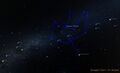 Argo stickfigure according to the Almagest (published in Stellarium 2021)
 -
 Argo stickfigure according to the Almagest and drawing from the contemporary Farnese marble Globe (both published in Stellarium 2021).
 -
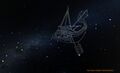 Argo as drawn on the Farnese Globe (Stellarium 2021).
 -
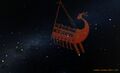 Argo in the Leiden Aratea (published in Stellarium 2022)
 -
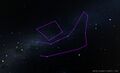 Argo early modern stick figure (here first published)
 -
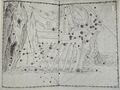 Argo drawn in Bayer (1603)
 -
 Argo drawn by Doppelmayr (1742)
 -
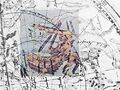 Argo drawn by Bode (1782)
 -
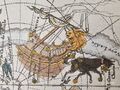 Argo in Fortin's Atlas Céleste, 3rd edition (1795).


Splitting Argo up into three constellations
In 1755, Nicolas Louis de Lacaille divided Argo into the three modern constellations that occupy much of the same area: Carina (the keel), Puppis (the poop deck or stern), and Vela (the sails).
In his 1768 Coelum Australe Stelliferum, Lacaille divided the more than 160 stars in the constellation into the regions Argûs in carina (Carina, the keel), Argûs in puppi (Puppis, the stern), and Argûs in velis (Vela, the sails).
Mythology
According to legend, the king's son Jason, accompanied by numerous other Greek heroes, set sail for Colchis, a region between the Caucasus and the Black Sea. From Thessaly in northern Greece, he chose his companions and made preparations for the journey, while a shipbuilder named Argos constructed the ship that was named after him. Argos went on board for the maiden voyage, and Jason's Argonauts to Colchis also included the twins Castor and Polydeuces (Latin: Pollux) and the musician Orpheus.
Their task was to capture the Golden Fleece of the flying and talking ram Chrysomeles. To do this, they sailed through the Isthmus, which until then had been reputed to be impassable for ships. The rocks on its shores are said to have moved whenever a ship approached them. The Argonauts outwitted the rocks with a trick by sending a dove ahead. The bird managed to escape the rocks, which then stopped shaking and allowed the Argo to pass.
The Argo is considered the first seaworthy ship. This can be reconciled with the legend by the fact that attempts had previously been made to cross the isthmus with river boats, which apparently failed.
The Argo then sailed across the Black Sea, reached Colchis, where Jason captured not only the Golden Fleece but also the king's daughter, and then continued on to new adventures for the Argonauts. After numerous other heroic deeds, the ship was initially erected as a monument. The elderly Jason then visited the rotting ship and lay down to rest in the wreck. As part of the mast broke off and killed him, he found his final resting place here. The remains of the ship were then placed in the sky by Poseidon.
Since the Greek Argo myth, like the Babylonian constellation Ship and Noah's Ark, also goes back to a Sumerian flood myth, it is worth mentioning what this ark might have looked like. A cuneiform text was discovered in the British Museum in London that describes in great detail the appearance of this monstrous ship that saved the animal world. In the mid-2010s, the media reported on the reconstruction of this huge round river boat. This shape (without sails and mast) impressively proves that the Argo really only has the mythological background in common with the ark and neither its shape nor its place in the sky.
References
- References (general)
- References (early modern)
- Ian Ridpath's website (Argo, Argo_2)
- ↑ Hoffmann, Susanne M. Wie der Löwe an den Himmel kam. Franckh Kosmos Verlag, Stuttgart 2021





