Pulcherrima: Difference between revisions
No edit summary |
|||
| Line 46: | Line 46: | ||
=== Note on the date of first appearance === | === Note on the date of first appearance === | ||
Some books claim that Struve invented this name in 1829, but the earliest we can find is on p.49 of his ''Stellarum duplicium multiplicium mensurae micrometricae'' of 1837. There he describes it as ''duplex pulcherrima'', “the most beautiful double”. The error seems to stem from Robert Burnham's well-known 3-volume ''Celestial Handbook: An Observer's Guide to the Universe Beyond'' ''the Solar System'' (1978): [https://archive.org/details/burnhams-celestial-handbook-volume-3/Burnhams%20Celestial%20Handbook%2C%20Volume%201/page/n155/mode/1u archive]. He may have obtained this date from Smyth who lists an observation of the separation and position angle of the pair by Struve in 1829. The erroneous attribution of the | Some books claim that Struve invented this name in 1829, but the earliest we can find is on p. 49 of his ''Stellarum duplicium multiplicium mensurae micrometricae'' of 1837. There he describes it as ''duplex pulcherrima'', “the most beautiful double”. The error seems to stem from Robert Burnham's well-known 3-volume ''Celestial Handbook: An Observer's Guide to the Universe Beyond'' ''the Solar System'' (1978): [https://archive.org/details/burnhams-celestial-handbook-volume-3/Burnhams%20Celestial%20Handbook%2C%20Volume%201/page/n155/mode/1u archive]. He may have obtained this date from Smyth who lists an observation of the separation and position angle of the pair by Struve in 1829. The erroneous attribution of the capitalised name "Pulcherrima" to Friedrich Georg Wilhelm von Struve also appears books by Darby (1864; "The Astronomical Observer") and Allen (1899; "Star-names and Their Meanings"). | ||
[[File:Herschel epsBoo double.png|thumb|Herschel, W. (1779). Catalogue of Double Stars, p 60]] | [[File:Herschel epsBoo double.png|thumb|Herschel, W. (1779). Catalogue of Double Stars, p 60]] | ||
Revision as of 13:48, 30 March 2026
Authors: Susanne M Hoffmann, Eric Mamajek, Youla Azkarrula, Ian Ridpath


The name Pulcherrima was given to the double star Epsilon Boötis (mags. 2.5 and 4.8) by Friedrich G. W. von Struve in 1837.[1] The Latin name translates to "most beautiful" or "loveliest," referring to its striking, contrasting colors — a bright yellow primary and a blue-white secondary star. The official IAU name for Epsilon Boötis A (ε Boo A) is Izar, adopted in 2016.
Concordance, Etymology, History

19th century German-Russian astronomer Friedrich Georg Wilhelm von Struve, known for his study of double stars, described the star as duplex pulcherrima, Latin for “the loveliest double”. Perhaps, Struve was inspired to write 'Duplex pulcherrima' based on Herschel highlighting it as his first double in 1782 'Catalog of Double Stars'[2]. Herschel wrote "A very beautiful object" and Struve Latinized Herschel's English "very beautiful" with the result of "pulcherrima". Struve himself appears not to convey any personal opinion on the star's beauty in his 1827 'Catalogus Novus'.
In lower case, i.e. as a description of the star, the term "pulcherrima" occurs occasionally in the 19th century, but in the capitalised form, it appeared later. Before Burnham, there are two other notable instances of mentions that Struve dubbed it with the capitalized form: mainly Allen (1899)[3] and Darby (1864)[4].
Concordance
Lower Case
- Struve (1837): "Duplex pulcherrima."
- Smyth (1844): "which Σ [Struve] calls "pulcherrima",..."
- Smyth (1860): "This beautiful star, the pulcherrima of Struve,..."
- Chambers (1881) revised version of Smyth ("This loverly object, which [Struve] calls "pulcherrima," is...")
- Higgins (1882): "Also Stellar pulcherrima = Very beautiful star."
- Clark & Sadler (1886): "Duplex pulcherrima"
Upper Case
- Darby (1864)[4]
see this assertion with the capitalized name repeated by Allen and Burnham. So far, this is the earliest instance we can find of the capitalization of the name."This beautiful star is the Pulcherrima of Professor Struve..."
- Proctor (1866) for name "Pulcherissima" states
However the spelling "Pulcherrima" appeared much more often after mid-19th century. Admiral Smyth (1844)[5] cites Struve as the source of the name."A name given by modern astronomers to express the extreme beauty of this double star (orange and green), viewed with a good telescope."
- Mary Proctor "A Romance of the Stars" in the Chautauquan 1896:
We can find no instance of Smyth capitalizing it."Epsilon Bootes, known also as Mirac, and called Pulcherrima by Admiral Smyth on account of its extreme beauty"
- Richard Proctor (1872) "and, on account of its extreme beauty, Pulcherrima."
This book (Essays on astronomy) is likely to have been strongly influential.
- Flammarion "Sideral Astronomy: Double Stars- Far-off Worlds" in Dobeck (1878), Flammarion (1882)
- Gore (1893)
"Pulcherrima. A name sometimes applied to the beautiful double star ε Bootis."
- Richard Proctor (1895) "A New Star Atlas for..."
- Allen (1899):[3]
[note this is most likely the source of Burnham's statement]"Why it was so favored in nomenclature is not known, for with us it is noticeable only from its exquisite beauty in the telescope, whence it is fast monopolizing the name Pulcherrima, given to it by the elder Struve."
The Norton Atlases (Norton 1910 (1st ed.), Norton 1964 (15th ed.), Ridpath 1989 (Norton 18th ed.), Ridpath 2003 (Norton 20th ed.)
- Becvar (1951, 1964), BSC (4th ed, 5th ed.), Kerhousse (1995), Kostjuk (2002), Kunitzsch & Smart (2006)
- Burnham (1978)
We have seen no evidence that Struve capitalized it. Ironically Herschel (1872)[2] stated: "A very beautiful object"!"The star was discovered by F.G.W.Struve in 1829, who honored it with the poetic title "Pulcherrima" in appreciation of the fine color contrast"
Note on the date of first appearance
Some books claim that Struve invented this name in 1829, but the earliest we can find is on p. 49 of his Stellarum duplicium multiplicium mensurae micrometricae of 1837. There he describes it as duplex pulcherrima, “the most beautiful double”. The error seems to stem from Robert Burnham's well-known 3-volume Celestial Handbook: An Observer's Guide to the Universe Beyond the Solar System (1978): archive. He may have obtained this date from Smyth who lists an observation of the separation and position angle of the pair by Struve in 1829. The erroneous attribution of the capitalised name "Pulcherrima" to Friedrich Georg Wilhelm von Struve also appears books by Darby (1864; "The Astronomical Observer") and Allen (1899; "Star-names and Their Meanings").

Burnham also errs in claiming that the binary character of Epsilon Boötis was first discovered by Wilhelm Struve; it was actually discovered by William Herschel in 1779. Indeed, it was the first double star listed in W. Herschel's first "Catalog of Double Stars" (1782) and he noted it as "a very beautiful object". As "very beautiful" can translate to "pulcherrima" in Latin, it is possible that Struve was simply acknowledging Herschel's description in his Latin notes on the system. Struve did not mention the "beauty" of the double in his original Catalogus Novus in 1827, but only described it as duplex pulcherrima in his 1837 work.
-
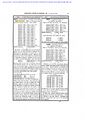 Struve 1837
 -
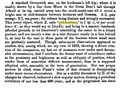 Smyth 1844
 -
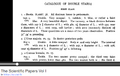 Herschel 1779
 -
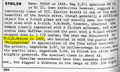 Burnham (1978) about Struve's name

Mythology
IAU Working Group on Star Names
In the course of the WGSN's research on historical star names, the name "Pulcherrima" is being considered for Epsilon Boötis B (HR 5505, HD 129988, HIP 72105 B), but has not been adopted as yet.
The companion star to Epsilon Boötis was unknown before its discovery by Herschel in the late 18th century, so it has no earlier cultural names, and the proposed name would recognize the descriptions by the famous double star observers W. Herschel and F.G.W. Struve.
Weblinks
Reference
- References (general)
- References (early modern)
- Ian Ridpath's Star Tales – Boötes([1])
- ↑ Struve (1837). Mensurae Micrometricae 1824-1837.
- ↑ 2.0 2.1 Herschel (1782). 'Catalog of Double Stars'. Philosophical Transactions of the Royal Society of London , 1785, Vol. 75 (1785), pp. 40-126 JSTOR-PDF
- ↑ 3.0 3.1 Allen, Richard Hinckley (1899). Star Names - Their Lore and Meaning. Dover Publications, Inc., New York
- ↑ 4.0 4.1 Darby (1864). The Astronomical Observer: A Handbook To The Observatory And The Common Telescope
- ↑ William Henry SMYTH (1844). A Cycle of Celestial Objects, for the use of naval, military and private astronomers, Volume 2, p 325





