Kala Sungsang: Difference between revisions
created the page |
IanRidpath (talk | contribs) →IAU Working Group on Star Names: Capitalization |
||
| (37 intermediate revisions by 2 users not shown) | |||
| Line 1: | Line 1: | ||
Kala Sungang is an Oceanic name from Bali (Indonesia). ... | Authors: {{PAGEAUTHORS}} | ||
---- | |||
[[File:KASU.jpg|thumb|Lintang Kala Sungsang in the cloth (CC-BY UPTD Museum Bali Inventary no. 09.752)]] | |||
[[File:Kala Sungsang.png|thumb|Lintang Kala Sungsang in lontar Prasi Palelintangan (CC-BY Alfred Maaß, (1929), Astrologische Kalender der Balinesen)]] | |||
[[File:Stellarium-20250917-124804432.png|thumb|Balinese constellation: Kala Sungsang (an inverted demon), re-drawn by Jessica Gullberg for the planetarium software Stellarium (CC-BY Youla Azkarrula & Jessica Gullberg)]] | |||
[[File:COLLECTIE TROPENMUSEUM De demon Kala Sungsang TMnr 1646-48.jpg|alt=image of the demon, historical depiction|thumb|De demon Kala Sungsang TMnr 1646-48 (CC-BY SA I. Dewa Gedé Soberat (Schilder)).]] | |||
Kala Sungang is an Oceanic name from Bali (Indonesia). "Kala" means "demon" and "sungsang" means "upside down". It is the demon who stole and drank the holy water of the gods that makes them immortal. The constellation (lintang) of kala sungsang is found in intersection of Redite (Sunday, in saptawara) and Umanis (in pancawara) in a series of palelintangan. Lintang kala sungsang means an upside-down demon constellation.<ref name=":1">Maass, Alfred, “Astrologische Kalender der Balinesen,” in ''Koninklijk Bataviaasch Genootschap van Kunsten en Wetenschappen, Feestbundel bij gelegenheid van zijn 150 jarig bestaan 1778-1928'', 2 vols. (Weltevreden, 1929), Vol. 2, 126-157.</ref> | |||
==Etymology and History== | ==Etymology and History== | ||
This constellation term is consisted of two words, "kala" (IPA: /kala/) and "sungsang" (IPA: /ˈsʊŋsaŋ/). | |||
=== Spelling Variants === | |||
* sungsang kala | |||
* antja-antja (old spelling) | |||
* anca-anca (enhanced spelling) | |||
=== Origin of Constellation === | === Origin of Constellation === | ||
Kala is derived from Sanskrit काल, that means time or death. Kala is son of the god Shiva who titled the god of time. The god Kala is often symbolized as a giant, with a scary face, dark in color and almost does not resemble a god. Kala is a symbol that no one can fight the law of karma. When it is time for someone to leave the mortal world, then at that time Kala will come to pick him up. If anyone insists on living along with their own will, then they will be destroyed by Kala. Therefore, Kala's face is very scary. But, in this case, kala sungsang is not the son of the god Shiva and goddess Durga. | |||
While "sungsang" is from Javanese which means upside-down. This word depicts an abnormal position, what is above becomes below or what is in front becomes behind. The other meaning of "sungsang" is return back, has a meaning whatever we think, say and do, the results will definitely come back to us according to our karma. | |||
Kala Sungsang is one of the demonic entities or negative forces that are considered to be present in traditional Balinese beliefs. He is often associated with the ''bala rencang'' at ''Pura Dalem'' and acts as a guard for Ida Bhatara Pengulun Setra. In the imagination of the Balinese people, Kala sungsang is depicted as a tall and large giant figure, with a scary face, and an upside-down body position, where his head is below and his feet are above. He walks using both hands. | |||
Kala Sungsang symbolizes the figure who is the cause of all times or conditions that are contrary to the conditions that should be, especially in the Kali Yuga era. This includes an abnormal natural phenomenon, such as weather that is not in accordance with the season, as well as human traits that are contrary to their nature. | |||
==== General information ==== | |||
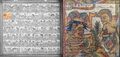
[[File:AlfredMaas1929 Astrologische Kalender der Balinesen ocr IdentTab cut.jpg|thumb|Identification of Balinese constellations (Maaß 1929, appendix). ]] | |||
The astronomical identification of the constellation is taken from Maaß (1929)<ref name=":1" /> who explains in general that these constellations and the according ritual practice <blockquote>"sind seit alten Zeiten in einem Werk ,,wariga" niedergelegt, in dem wir zwei Kulturschichten, nämlich indische unq malaio-polynesische Bestandteile wiederfinden." </blockquote><blockquote>'''English:''' "are written down in a work called "wariga" since old times; there we recognise two cultural layers, i.e. the Indian and the Malayo-Polynesian." </blockquote>He also quotes other scholars<ref>Friedrich, R. (1849). Voorloopig verslag van het eiland Bali, Batavia, Verb. Bat Gen. Deel 23, Nr. 13</ref><ref>HINLOOPEN LABBERT0N, D. VAN (1910). Geillustreerd handboek van Insulinde. Amsterdam: "Vivat"</ref><ref>PIGEAUD, TH. (1925). Een stuk over sterrenkunde uit het Anggastyaparwwa ...... Weltevreden: Albrecht. Tijdsch. v. lnd, T.-, L.- en Vk. deel LXV</ref><ref>Nieuwenkamp, W. O. J. (1905), Schetsen van Bali en Lombok. (Eigen Haard)</ref> and his earlier work<ref>MAASS, ALFRED (1920). Sterne und Sternbilder im malaiischen Archipel. Berlin. Zeitschrift für Ethnologie Jg. 1920/21, H. 1</ref><ref>MAASS, ALFRED (1924). Sternkunde und Sterndeuterei im malaiischen Archipel. Batavia, den Haag. Tijdsch. v. T.-, L.-en Vk. deel LX IV</ref> reporting that this work dates back to the 9th century CE when Bali was part of a Hindu empire on the neighbouring island of Java.<ref name=":1" /> Neubronner van der Tuuk even uses the Old Javanese spelling. | |||
==== Identification ==== | |||
The identifications, Maaß (1929) gives according to the aforementioned and his own studies during visits of the country and in European and Batavian libraries (p.150).<ref name=":1" /> | |||
[[File:Screenshot 2026-02-04 133652.png|center|thumb|800x800px|Kala Sungsang in the identification table by Maaß (1929). He mention "ein Stern im Sternbild des grossen Bären bei den Indern" in German means "a star in the constellation of the Great Bear among the Indians".]] | |||
The precise identification is mentioned by UPTD Museum Bali where Kala Sungsang is in the area of Bootes.<ref name=":0" /> | |||
Maaß's description (p. 140):<blockquote>Kala sungsang, ein auf Kopf und Händen stehender böser Geist; antja-antja, Figur, die auf Kopf und Händen steht; buta, ein böser Geist. Lippen krumm im Reden;</blockquote>'''English:''' Kala sungsang, an evil spirit standing on its head and hands; antja-antja, a figure standing on its head and hands; buta, an evil spirit. Lips twisted when speaking. | |||
=== Transfer and Transformation of the Constellation === | === Transfer and Transformation of the Constellation === | ||
== Mythology == | == Mythology / Religion == | ||
Based on the chronicle in the Purwa Bhumi Kamulan Lontar, Kala Sungsang was created when the goddess Durga was meditating. | |||
Based on Andhabhuwana lontar, it is mentioned that the origin of the existence of Dewi Uma changed into Dewi Durga (ruler of the grave) because she received a curse from Lord Shiva. The curse caused Dewi Uma, who was titled Dewi Durga, to stay in the world and would return to Siwa Loka after being purified. | |||
After descending to the world, she did a ritual. When Goddess Durga was meditating, various spirits and negative forces emerged from the hairs all over her body. These spirits, with their strange and scary appearances, have the task of misleading and testing the determination of humans in carrying out dharma. Among these creatures, '''Bhuta Sungsang''' has a special task of confusing the minds of humans so that they have difficulty distinguishing between reality and illusion and become reversed in their thoughts and actions. | |||
In the Nusa Penida chronicle, Goddess Durga resides as the ruling deity of the grave followed by 108 Bhuta-Bhuti. The following are the names of the butha kala and butha kali that accompany the presence of Goddess Durga in the grave, namely, bhùta banaspati, yamapati, mregapati, banaspatiraja, bhùta saliwah, bhùta salah rupa, bhùta Enjek-pupu, Tangan-tangan, '''[[Laweyan]]''', '''Kumangmang''', '''Anja-anja''', Mamedi, Bhùta Sungsang, Udug-Basur, Ileg-ileg, Papengkah, Barong Asepek, I Gagendu, Suku-tunggal, kakawa, Mretyu, Togtogsil, Raregek, Raparayu, Kala Ngadang, bhùta Tan-pakuping, bhùta Bungut-sasibak, and so on. The task of Dewa Durga and her 108 followers is to spread disease, create drought, disaster in the world. However, the main target is humans who forget to devote themselves to the Almighty God. | |||
Kala Sungsang is considered one of the 15 most powerful Bhutas among the soldiers. Kala Sungsang is believed to be the cause of human thoughts and behavior being reversed or not in accordance with the norms that should be. This is reflected in the decline of customary norms, religion, manners, and community ethics. | |||
=== Image Variants === | |||
<gallery> | |||
File:Kala Sungsang.png|Lintang Kala Sungsang (CC-BY Alfred Maaß, (1929), Astrologische Kalender der Balinesen) | |||
File:LinKALA.jpg|Lintang Kala Sungsang in the cloth (CC-BY UPTD Museum Bali Inventary no. 09.746) | |||
File:KASU.jpg|Lintang Kala Sungsang in the cloth (CC-BY UPTD Museum Bali Inventary no. 09.752) | |||
File:Lintang Sungsang Kala.jpg|Lintang Sungsang Kala (CC-BY Youla Azkarrula taken in the ceiling of Taman Gili Klungkung Palace Bali) | |||
</gallery> | |||
== Cultural Beliefs == | |||
=== Numerology (Neptu/Urip) === | |||
Redite (Sunday, in saptawara) has a value of 5 and Umanis (in pancawara) has a value of 5. Thus, the total urip on this lintang is 10.<ref name=":0">Tim Kajian Palelintangan, “Gabungan Kajian Palelintangan,” Museum Bali (2021), 1-149.</ref> | |||
=== Astrological Characteristics === | |||
Self-torture, often hit by disasters and misfortunes. Unable to heed people's advice, act as they please, act as if they can do any job, are brave towards their parents, often get hurt by people, are good at hiding their feelings, are good at expressing complicated problems, like to interfere in other people's business.<ref name=":0" /> | |||
=== Matching Gemstones === | |||
Osadi (Zambrut /emerald), Daluman (Giok/Jade), Ijo Gading (Peridot), Narigangga (Chrysoberyl cat’s eye).<ref name=":0" /> | |||
== Weblinks == | == Weblinks == | ||
| Line 17: | Line 72: | ||
* {{NAMESPACE}} | * {{NAMESPACE}} | ||
== All HIP Stars within this constellation == | |||
==== Stars within the Constellation Area ==== | |||
{| class="wikitable sortable mw-collapsible" | |||
|+ | |||
|- | |||
! id | |||
! Label | |||
! IAU design. | |||
! description | |||
! Vmag | |||
|- | |||
| 1 | |||
| Arcturus | |||
| HIP 69673 | |||
| within constellation lines | |||
| -0.05 | |||
|- | |||
| 2 | |||
| Izar | |||
| HIP 72105 | |||
| within constellation lines | |||
| 2.45 | |||
|- | |||
| 3 | |||
| Muphrid | |||
| HIP 67927 | |||
| within constellation lines | |||
| 2.68 | |||
|- | |||
| 4 | |||
| Seginus | |||
| HIP 71075 | |||
| within constellation lines | |||
| 3.02 | |||
|- | |||
| 5 | |||
| δ Boötis | |||
| HIP 74666 | |||
| within constellation lines | |||
| 3.49 | |||
|- | |||
| 6 | |||
| Nekkar | |||
| HIP 73555 | |||
| within constellation lines | |||
| 3.52 | |||
|- | |||
| 7 | |||
| ρ Boötis | |||
| HIP 71053 | |||
| Inside the Hull | |||
| 3.59 | |||
|- | |||
| 8 | |||
| Alkalurops | |||
| HIP 75411 | |||
| Inside the Hull | |||
| 4.31 | |||
|- | |||
| 9 | |||
| σ Boötis | |||
| HIP 71284 | |||
| Inside the Hull | |||
| 4.47 | |||
|- | |||
| 10 | |||
| * zet Boo B | |||
| HIP 71795 | |||
| within constellation lines | |||
| 4.51 | |||
|- | |||
| 11 | |||
| ο Boötis | |||
| HIP 72125 | |||
| Inside the Hull | |||
| 4.6 | |||
|- | |||
| 12 | |||
| W Boo | |||
| HIP 71995 | |||
| Inside the Hull | |||
| 4.79 | |||
|- | |||
| 13 | |||
| * eps Boo B | |||
| HR 5505 | |||
| Inside the Hull | |||
| 4.801 | |||
|- | |||
| 14 | |||
| 12 Boo | |||
| HIP 69226 | |||
| Inside the Hull | |||
| 4.83 | |||
|- | |||
| 15 | |||
| - | |||
| HIP 70027 | |||
| Inside the Hull | |||
| 4.85 | |||
|- | |||
| 16 | |||
| π 1 Boötis | |||
| HIP 71762 | |||
| Inside the Hull | |||
| 4.893 | |||
|- | |||
| 17 | |||
| 22 Boo | |||
| HIP 70602 | |||
| Inside the Hull | |||
| 5.394 | |||
|- | |||
| 18 | |||
| - | |||
| HIP 72582 | |||
| Inside the Hull | |||
| 5.48 | |||
|- | |||
| 19 | |||
| - | |||
| HIP 73634 | |||
| Inside the Hull | |||
| 5.513 | |||
|- | |||
| 20 | |||
| 40 Boo | |||
| HIP 73369 | |||
| Inside the Hull | |||
| 5.634 | |||
|- | |||
| 21 | |||
| * pi.02 Boo | |||
| HR 5476 | |||
| Inside the Hull | |||
| 5.761 | |||
|- | |||
| 22 | |||
| - | |||
| HIP 72552 | |||
| Inside the Hull | |||
| 5.8 | |||
|- | |||
| 23 | |||
| HP Boo | |||
| HIP 72567 | |||
| Inside the Hull | |||
| 5.867 | |||
|- | |||
| 24 | |||
| 26 Boo | |||
| HIP 71115 | |||
| Inside the Hull | |||
| 5.897 | |||
|- | |||
| 25 | |||
| - | |||
| HIP 71571 | |||
| Inside the Hull | |||
| 5.91 | |||
|- | |||
| 26 | |||
| V* CN Boo | |||
| HR 5343 | |||
| Inside the Hull | |||
| 5.957 | |||
|- | |||
| 27 | |||
| - | |||
| HIP 71277 | |||
| Inside the Hull | |||
| 5.999 | |||
|- | |||
| 28 | |||
| - | |||
| HIP 71094 | |||
| Inside the Hull | |||
| 6 | |||
|- | |||
| 29 | |||
| - | |||
| HIP 70892 | |||
| Inside the Hull | |||
| 6.05 | |||
|- | |||
| 30 | |||
| - | |||
| HIP 73068 | |||
| Inside the Hull | |||
| 6.122 | |||
|- | |||
| 31 | |||
| - | |||
| HIP 72469 | |||
| Inside the Hull | |||
| 6.13 | |||
|- | |||
| 32 | |||
| - | |||
| HIP 72139 | |||
| Inside the Hull | |||
| 6.145 | |||
|- | |||
| 33 | |||
| - | |||
| HIP 71729 | |||
| Inside the Hull | |||
| 6.15 | |||
|- | |||
| 34 | |||
| - | |||
| HIP 70762 | |||
| Inside the Hull | |||
| 6.2 | |||
|- | |||
| 35 | |||
| - | |||
| HIP 71490 | |||
| Inside the Hull | |||
| 6.2 | |||
|- | |||
| 36 | |||
| - | |||
| HIP 70310 | |||
| Inside the Hull | |||
| 6.2 | |||
|- | |||
| 37 | |||
| - | |||
| HIP 72124 | |||
| Inside the Hull | |||
| 6.28 | |||
|- | |||
| 38 | |||
| - | |||
| HIP 71243 | |||
| Inside the Hull | |||
| 6.306 | |||
|- | |||
| 39 | |||
| - | |||
| HIP 73941 | |||
| Inside the Hull | |||
| 6.351 | |||
|- | |||
| 40 | |||
| - | |||
| HIP 71406 | |||
| Inside the Hull | |||
| 6.37 | |||
|- | |||
| 41 | |||
| - | |||
| HIP 69592 | |||
| Inside the Hull | |||
| 6.377 | |||
|- | |||
| 42 | |||
| - | |||
| HIP 71168 | |||
| Inside the Hull | |||
| 6.39 | |||
|- | |||
| 43 | |||
| - | |||
| HIP 71857 | |||
| Inside the Hull | |||
| 6.4 | |||
|- | |||
| 44 | |||
| - | |||
| HR 5346 | |||
| Inside the Hull | |||
| 6.41 | |||
|- | |||
| 45 | |||
| - | |||
| HIP 70385 | |||
| Inside the Hull | |||
| 6.41 | |||
|- | |||
| 46 | |||
| - | |||
| HIP 70051 | |||
| Inside the Hull | |||
| 6.445 | |||
|} | |||
== IAU Working Group on Star Names == | |||
In November 2025, it has been proposed to use the name "Kalasungsang" for a star in the area to preserve the Balinese heritage. The star Delta Boo or HIP 74666 is in the demon's elbow which was selected because this is a sign of the meaning of sungsang, which is upside down. Constellation Kalasungsang is mentioned in Palelintangan Prasi, dating roughly 700 CE, and is still used in Bali. | |||
== References == | == References == | ||
| Line 22: | Line 367: | ||
[[Category: | [[Category:Indonesia]] [[Category:Asterism]] [[Category:Constellation]] | ||
[[Category:Balinese]] | [[Category:Balinese]] [[Category:Boo]] | ||
Latest revision as of 16:15, 25 February 2026
Authors: Youla Azkarrula, Susanne M Hoffmann


Kala Sungang is an Oceanic name from Bali (Indonesia). "Kala" means "demon" and "sungsang" means "upside down". It is the demon who stole and drank the holy water of the gods that makes them immortal. The constellation (lintang) of kala sungsang is found in intersection of Redite (Sunday, in saptawara) and Umanis (in pancawara) in a series of palelintangan. Lintang kala sungsang means an upside-down demon constellation.[1]
Etymology and History
This constellation term is consisted of two words, "kala" (IPA: /kala/) and "sungsang" (IPA: /ˈsʊŋsaŋ/).
Spelling Variants
- sungsang kala
- antja-antja (old spelling)
- anca-anca (enhanced spelling)
Origin of Constellation
Kala is derived from Sanskrit काल, that means time or death. Kala is son of the god Shiva who titled the god of time. The god Kala is often symbolized as a giant, with a scary face, dark in color and almost does not resemble a god. Kala is a symbol that no one can fight the law of karma. When it is time for someone to leave the mortal world, then at that time Kala will come to pick him up. If anyone insists on living along with their own will, then they will be destroyed by Kala. Therefore, Kala's face is very scary. But, in this case, kala sungsang is not the son of the god Shiva and goddess Durga.
While "sungsang" is from Javanese which means upside-down. This word depicts an abnormal position, what is above becomes below or what is in front becomes behind. The other meaning of "sungsang" is return back, has a meaning whatever we think, say and do, the results will definitely come back to us according to our karma.
Kala Sungsang is one of the demonic entities or negative forces that are considered to be present in traditional Balinese beliefs. He is often associated with the bala rencang at Pura Dalem and acts as a guard for Ida Bhatara Pengulun Setra. In the imagination of the Balinese people, Kala sungsang is depicted as a tall and large giant figure, with a scary face, and an upside-down body position, where his head is below and his feet are above. He walks using both hands.
Kala Sungsang symbolizes the figure who is the cause of all times or conditions that are contrary to the conditions that should be, especially in the Kali Yuga era. This includes an abnormal natural phenomenon, such as weather that is not in accordance with the season, as well as human traits that are contrary to their nature.
General information

The astronomical identification of the constellation is taken from Maaß (1929)[1] who explains in general that these constellations and the according ritual practice
"sind seit alten Zeiten in einem Werk ,,wariga" niedergelegt, in dem wir zwei Kulturschichten, nämlich indische unq malaio-polynesische Bestandteile wiederfinden."
English: "are written down in a work called "wariga" since old times; there we recognise two cultural layers, i.e. the Indian and the Malayo-Polynesian."
He also quotes other scholars[2][3][4][5] and his earlier work[6][7] reporting that this work dates back to the 9th century CE when Bali was part of a Hindu empire on the neighbouring island of Java.[1] Neubronner van der Tuuk even uses the Old Javanese spelling.
Identification
The identifications, Maaß (1929) gives according to the aforementioned and his own studies during visits of the country and in European and Batavian libraries (p.150).[1]

The precise identification is mentioned by UPTD Museum Bali where Kala Sungsang is in the area of Bootes.[8]
Maaß's description (p. 140):
Kala sungsang, ein auf Kopf und Händen stehender böser Geist; antja-antja, Figur, die auf Kopf und Händen steht; buta, ein böser Geist. Lippen krumm im Reden;
English: Kala sungsang, an evil spirit standing on its head and hands; antja-antja, a figure standing on its head and hands; buta, an evil spirit. Lips twisted when speaking.
Transfer and Transformation of the Constellation
Mythology / Religion
Based on the chronicle in the Purwa Bhumi Kamulan Lontar, Kala Sungsang was created when the goddess Durga was meditating.
Based on Andhabhuwana lontar, it is mentioned that the origin of the existence of Dewi Uma changed into Dewi Durga (ruler of the grave) because she received a curse from Lord Shiva. The curse caused Dewi Uma, who was titled Dewi Durga, to stay in the world and would return to Siwa Loka after being purified.
After descending to the world, she did a ritual. When Goddess Durga was meditating, various spirits and negative forces emerged from the hairs all over her body. These spirits, with their strange and scary appearances, have the task of misleading and testing the determination of humans in carrying out dharma. Among these creatures, Bhuta Sungsang has a special task of confusing the minds of humans so that they have difficulty distinguishing between reality and illusion and become reversed in their thoughts and actions.
In the Nusa Penida chronicle, Goddess Durga resides as the ruling deity of the grave followed by 108 Bhuta-Bhuti. The following are the names of the butha kala and butha kali that accompany the presence of Goddess Durga in the grave, namely, bhùta banaspati, yamapati, mregapati, banaspatiraja, bhùta saliwah, bhùta salah rupa, bhùta Enjek-pupu, Tangan-tangan, Laweyan, Kumangmang, Anja-anja, Mamedi, Bhùta Sungsang, Udug-Basur, Ileg-ileg, Papengkah, Barong Asepek, I Gagendu, Suku-tunggal, kakawa, Mretyu, Togtogsil, Raregek, Raparayu, Kala Ngadang, bhùta Tan-pakuping, bhùta Bungut-sasibak, and so on. The task of Dewa Durga and her 108 followers is to spread disease, create drought, disaster in the world. However, the main target is humans who forget to devote themselves to the Almighty God.
Kala Sungsang is considered one of the 15 most powerful Bhutas among the soldiers. Kala Sungsang is believed to be the cause of human thoughts and behavior being reversed or not in accordance with the norms that should be. This is reflected in the decline of customary norms, religion, manners, and community ethics.
Image Variants
-
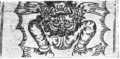 Lintang Kala Sungsang (CC-BY Alfred Maaß, (1929), Astrologische Kalender der Balinesen)
 -
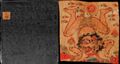 Lintang Kala Sungsang in the cloth (CC-BY UPTD Museum Bali Inventary no. 09.746)
 -
 Lintang Kala Sungsang in the cloth (CC-BY UPTD Museum Bali Inventary no. 09.752)
 -
 Lintang Sungsang Kala (CC-BY Youla Azkarrula taken in the ceiling of Taman Gili Klungkung Palace Bali)


Cultural Beliefs
Numerology (Neptu/Urip)
Redite (Sunday, in saptawara) has a value of 5 and Umanis (in pancawara) has a value of 5. Thus, the total urip on this lintang is 10.[8]
Astrological Characteristics
Self-torture, often hit by disasters and misfortunes. Unable to heed people's advice, act as they please, act as if they can do any job, are brave towards their parents, often get hurt by people, are good at hiding their feelings, are good at expressing complicated problems, like to interfere in other people's business.[8]
Matching Gemstones
Osadi (Zambrut /emerald), Daluman (Giok/Jade), Ijo Gading (Peridot), Narigangga (Chrysoberyl cat’s eye).[8]
Weblinks
All HIP Stars within this constellation
Stars within the Constellation Area
| id | Label | IAU design. | description | Vmag |
|---|---|---|---|---|
| 1 | Arcturus | HIP 69673 | within constellation lines | -0.05 |
| 2 | Izar | HIP 72105 | within constellation lines | 2.45 |
| 3 | Muphrid | HIP 67927 | within constellation lines | 2.68 |
| 4 | Seginus | HIP 71075 | within constellation lines | 3.02 |
| 5 | δ Boötis | HIP 74666 | within constellation lines | 3.49 |
| 6 | Nekkar | HIP 73555 | within constellation lines | 3.52 |
| 7 | ρ Boötis | HIP 71053 | Inside the Hull | 3.59 |
| 8 | Alkalurops | HIP 75411 | Inside the Hull | 4.31 |
| 9 | σ Boötis | HIP 71284 | Inside the Hull | 4.47 |
| 10 | * zet Boo B | HIP 71795 | within constellation lines | 4.51 |
| 11 | ο Boötis | HIP 72125 | Inside the Hull | 4.6 |
| 12 | W Boo | HIP 71995 | Inside the Hull | 4.79 |
| 13 | * eps Boo B | HR 5505 | Inside the Hull | 4.801 |
| 14 | 12 Boo | HIP 69226 | Inside the Hull | 4.83 |
| 15 | - | HIP 70027 | Inside the Hull | 4.85 |
| 16 | π 1 Boötis | HIP 71762 | Inside the Hull | 4.893 |
| 17 | 22 Boo | HIP 70602 | Inside the Hull | 5.394 |
| 18 | - | HIP 72582 | Inside the Hull | 5.48 |
| 19 | - | HIP 73634 | Inside the Hull | 5.513 |
| 20 | 40 Boo | HIP 73369 | Inside the Hull | 5.634 |
| 21 | * pi.02 Boo | HR 5476 | Inside the Hull | 5.761 |
| 22 | - | HIP 72552 | Inside the Hull | 5.8 |
| 23 | HP Boo | HIP 72567 | Inside the Hull | 5.867 |
| 24 | 26 Boo | HIP 71115 | Inside the Hull | 5.897 |
| 25 | - | HIP 71571 | Inside the Hull | 5.91 |
| 26 | V* CN Boo | HR 5343 | Inside the Hull | 5.957 |
| 27 | - | HIP 71277 | Inside the Hull | 5.999 |
| 28 | - | HIP 71094 | Inside the Hull | 6 |
| 29 | - | HIP 70892 | Inside the Hull | 6.05 |
| 30 | - | HIP 73068 | Inside the Hull | 6.122 |
| 31 | - | HIP 72469 | Inside the Hull | 6.13 |
| 32 | - | HIP 72139 | Inside the Hull | 6.145 |
| 33 | - | HIP 71729 | Inside the Hull | 6.15 |
| 34 | - | HIP 70762 | Inside the Hull | 6.2 |
| 35 | - | HIP 71490 | Inside the Hull | 6.2 |
| 36 | - | HIP 70310 | Inside the Hull | 6.2 |
| 37 | - | HIP 72124 | Inside the Hull | 6.28 |
| 38 | - | HIP 71243 | Inside the Hull | 6.306 |
| 39 | - | HIP 73941 | Inside the Hull | 6.351 |
| 40 | - | HIP 71406 | Inside the Hull | 6.37 |
| 41 | - | HIP 69592 | Inside the Hull | 6.377 |
| 42 | - | HIP 71168 | Inside the Hull | 6.39 |
| 43 | - | HIP 71857 | Inside the Hull | 6.4 |
| 44 | - | HR 5346 | Inside the Hull | 6.41 |
| 45 | - | HIP 70385 | Inside the Hull | 6.41 |
| 46 | - | HIP 70051 | Inside the Hull | 6.445 |
IAU Working Group on Star Names
In November 2025, it has been proposed to use the name "Kalasungsang" for a star in the area to preserve the Balinese heritage. The star Delta Boo or HIP 74666 is in the demon's elbow which was selected because this is a sign of the meaning of sungsang, which is upside down. Constellation Kalasungsang is mentioned in Palelintangan Prasi, dating roughly 700 CE, and is still used in Bali.
References
- References (general)
- ↑ 1.0 1.1 1.2 1.3 Maass, Alfred, “Astrologische Kalender der Balinesen,” in Koninklijk Bataviaasch Genootschap van Kunsten en Wetenschappen, Feestbundel bij gelegenheid van zijn 150 jarig bestaan 1778-1928, 2 vols. (Weltevreden, 1929), Vol. 2, 126-157.
- ↑ Friedrich, R. (1849). Voorloopig verslag van het eiland Bali, Batavia, Verb. Bat Gen. Deel 23, Nr. 13
- ↑ HINLOOPEN LABBERT0N, D. VAN (1910). Geillustreerd handboek van Insulinde. Amsterdam: "Vivat"
- ↑ PIGEAUD, TH. (1925). Een stuk over sterrenkunde uit het Anggastyaparwwa ...... Weltevreden: Albrecht. Tijdsch. v. lnd, T.-, L.- en Vk. deel LXV
- ↑ Nieuwenkamp, W. O. J. (1905), Schetsen van Bali en Lombok. (Eigen Haard)
- ↑ MAASS, ALFRED (1920). Sterne und Sternbilder im malaiischen Archipel. Berlin. Zeitschrift für Ethnologie Jg. 1920/21, H. 1
- ↑ MAASS, ALFRED (1924). Sternkunde und Sterndeuterei im malaiischen Archipel. Batavia, den Haag. Tijdsch. v. T.-, L.-en Vk. deel LX IV
- ↑ 8.0 8.1 8.2 8.3 Tim Kajian Palelintangan, “Gabungan Kajian Palelintangan,” Museum Bali (2021), 1-149.