MA2.GUR8: Difference between revisions
Created page with "<sup>mul</sup>MA2.GUR8 is an ancient Mesopotamian asterism. ==Dictionary== === Kurtik with Hilder, Hoffmann, Horowitz, Kim === [G. 88, 230], the name of Saturn and Libra. {| class="wikitable" |+ !Sources !Identifications |- |'''Lexic. texts.''' (1) Series Ḫg. B VI: <sup>mul</sup>gi.gi = mul kit-tu<sub>2</sub> u me-šar = <sup>d</sup>sag.uš <sup>d</sup>utu "Star gi.gi = Star of truth and justice = Saturn, Shamash" [MSL XI, 40:39], later parallel: <sup>mul</sup>gi.gi =..." |
|||
| (37 intermediate revisions by 5 users not shown) | |||
| Line 1: | Line 1: | ||
<sup>mul</sup> | {{DISPLAYTITLE:MA<sub>2</sub>.GUR<sub>8</sub>}} | ||
== | Authors: {{PAGEAUTHORS}} | ||
= | ---- | ||
[ | [[File:NeoAssyrian Ship WallPanel Nineveh.png|thumb|Neo-Assyrian Ship,Wall Panel from Nineveh (British Museum: BM 124774,a; [https://www.britishmuseum.org/collection/object/W_1851-0902-22-a?selectedImageId=1261294001 online])]] | ||
[[File:Quffah ancMesopot.jpg|thumb|ancient versus modern Quffah (CC BY Ensar Adıgüzel: both images CC0)]] | |||
<sup>mul</sup>MA<sub>2</sub>.GUR<sub>8</sub> (𒀯𒈣𒋽) = ''makurru,''<nowiki/>'the Barge' is a Mesopotamian asterism that is shaped like a river-barge in the area of [[Sagittarius]] and [[Corona Australis]] in the southern part of the Mesopotamian sky. Its shape can be verified by depictions of such barges in artwork, which show that both the prow and the bow of the barge might be pointed upwards at both ends, or decorated with a figurehead at the prow (at least in early times)<ref>Crossen, C. (2015) “The Very Ancient Origins of the Water Constellations”, Sky and Telescope, vol. 129, no. 3, p. 36.</ref>. The term is also used in astronomy for the gibbous Moon (CAD<ref>''The Assyrian Dictionary of the Oriental Institute of the University of Chicago.'' Chicago - Glückstadt, 1956 -...</ref> M<sub>I</sub> 142)'''''.''''' | |||
==Concordance, Etymology, History<ref>[[Mesopotamian (All Terms)|Planetarium Babylonicum 2.0]], All Skies Encyclopaedia.</ref>== | |||
MÁ.GUR<sub>8</sub> = ''makurru'' “The Barge”. <sup>mul</sup>MÁ.GUR<sub>8</sub> ''u'' <sup>mul</sup>SUḪUR.MÁŠ (Ea line 15left)<ref>Hoffmann, S. M. and Krebernik, M. (2023). What do deities tell us about the celestial positioning system, in: R. Rollinger, I. Madreiter, M. Lang, C. Pappi (eds.). The Intellectual Heritage of the Ancient Near East, Papers held at the 64th Rencontre Assyriologique International and 12th Melammu Symposium July 16-20 2018, Innsbruck. Austrian Academy of Sciences Press, 539-579</ref> | |||
Var. designations: | |||
* 1) = <sup>mul</sup>''Makurru'' "Barge, Ship, Vessel"; constellation or star in Sagittarius or Sacerdotal (Sagittarius or Ara) [Gössmann<ref name=":0">''Gössmann P.F''. Planetarium Babylonicum, Rom, 1950 (A. Deimel. Šumerisches Lexikon 4/2).</ref> 254]; | |||
* 2) epithet of the lunar deity Nanna [Steinkeller 2016<ref>Steinkeller, P. (2010). Nanna/Suen, the Shining Bowl. Alter Orient Und Altes Testament: Veröffentlichungen Zur Kultur Und Geschichte Des Alten Orients Und Des Alten Testaments.</ref>, 620-621; Laursen 2021<ref>Laursen, S. (2021). Dilmun Boat shaped votive bowls for the Moon-god Nanna? Arabian Archaeology and Epigraphy, 32(S1), 291-300.</ref>]'''''.''''' | |||
=== Sources and Identifications === | |||
{| class="wikitable" | {| class="wikitable" | ||
|+ | |+ | ||
!Sources | !Sources | ||
!Identifications | ! Identifications | ||
|- | |||
|'''MUL.APIN.''' | |||
List of the stars of Ea (nos. 14, 15): | |||
* <sup>mul</sup>MA<sub>2</sub>.GUR<sub>8</sub> ''u'' <sup>mul</sup>SUḪUR. MAŠ<sub>2</sub><sup>ku6</sup> "River Barge and Goat-Fish" (I ii 34) [MA<ref name=":1">Hunger, H. and Steele, J. M. (2019). The Babylonian Astronomical Compendium MUL.APIN, Routledge, NY</ref>, 39]. | |||
|[[File:Bab RiverBarge+GoatFish.png|thumb|Babylonian constellations River Barge and Goat-Fish interpreted by Jessica Gullberg for Stellarium (CC BY). ]] | |||
|- | |||
|'''List of stars V R, 46, 1:38.''' | |||
* <sup>mul</sup>ma<sub>2</sub>.gur<sub>8</sub> <sup>mul</sup>suḫur.maš<sub>2</sub> = <sup>d</sup>''Nabû''(pa) ''u'' <sup>d</sup>''Taš-me-tu''<sub>4</sub> "Ship (and) Goat-Fish = Nabû and Tashmetu" [HBA<ref>''Weidner E.'' Handbuch der babylonischen Astronomie. Bd. I. Leipzig, 1915.</ref>, 52:38; Wee 2016<ref>Wee, J. (2016). Virtual Moons over Babylonia: The Calendar Text System, Its Micro-Zodiac of 13, and the Making of Medical Zodiology. The Circulation of Astronomical Knowledge in the Ancient World, Ed. J. M. Steele, 139–229.</ref>, 162-3]. | |||
| | |||
|- | |- | ||
|''' | | '''GU text.''' | ||
( | *(Q) mul [''ša''<sub>2</sub> ''maš'']-˹''a-ti''˺ ˹kimin˺ murub<sub>4</sub> <sup>mul</sup>za.ba<sub>4</sub>.ba<sub>4</sub> ''šu šumēlû''(2,30) <sup>mul</sup>pa.bil<sub>2</sub>.sag ša<sub>2</sub> ''ina'' ugu / ban ''u'' [<sup>mul</sup>m]a<sub>2</sub>.gur<sub>8</sub> gu | ||
**"The Star of Gemini (ziqpu IV: β Her) or the middle of Zababa (ν Oph), | |||
**the left hand of Pabilsag, which is on the bow (δ Sag), | |||
**and the River-Barge (ε Sag), the rope" | |||
**[Pingree-Walker 1988<ref name=":2">''Pingree D., Walker C.'' A Babylonian Star-Catalogue: BM 78161 / Fs. Sachs, 1988. P. 313-322.</ref>, BM 78161:27-28; Hunger-Pingree 1999<ref name=":3">''Hunger H., Pingree D.'' Astral Sciences in Mesopotamia. Leiden-Boston-Köln, 1999.</ref>, 93]; | |||
*(S) <sup>mul</sup>pa.bil.sag ˹''ša''<sub>2</sub>˺ ''ina'' ugu ma<sub>2</sub>.˹gur<sub>8</sub>˺ | |||
*"(Asterism) Pabilsag, which is over the River-Barge" [Pingree-Walker 1988<ref name=":2" />, BM 78161:30-31], see also (Kurtik u31) [[UZ3|UZ<sub>3</sub>]]. | |||
| | | | ||
{| class="wikitable" | |||
!GU Q | |||
!GU R + S | |||
|- | |||
|[[File:GU_XVII.jpg|thumb|GU (Q) = GU XVII]] | |||
|[[File:GU_XVIII+GU_XIX.jpg|thumb|GU R+S = GU XVIII+GU XIX]] | |||
|} | |||
|} | |} | ||
=== | === Transformation === | ||
[[File:AncientEridu ArtistImpression.jpg|thumb|ancient Eridu, artist impression (CC0, Original image by Таис Гило, public domain).]] | |||
Based on very early sources that pre-date MUL.APIN, Crossen (2015) argues that <sup>mul</sup>MA<sub>2</sub>.GUR<sub>8</sub> originally, around 2000 BCE, was a huge constellation. According to him, it was a huge river boat in which the god Pabilsang (and perhaps some priests) sailed the Euphrates for ritual processions. At that time, the stars that are seen as the goat-head of Capricornus would have been the figurehead at the prow of this ship. | |||
In contrast, the circular zodiac in Dendera from Ptolemaic Era (1st century BCE) that displays the Babylonian zodiac constellations (while the rest of the uranography is mixed with Egyptian and Greek figures): there, the Boat is only a small barge beneath the front legs of Sagittarius, not even extending to his rear legs. (cf. Egyptian constellation [[Wia]], The Boat) | |||
For MUL.APIN, which dates around or short before 1000 BCE, we painted the god Pabilsang (Sagittarius) standing in the boat, which is meant as a compromise between these two extremes (much bigger around 2000 BCE, much smaller around 50 BCE). <gallery> | |||
File:MAGUR8 Stellarium sumer.jpg|MA<sub>2</sub>.GUR<sub>8</sub> as huge, long river boat with figurehead in Sumer ~2300 BCE (Crossen 2015): CC BY SMH. | |||
File:MAGUR8 Stellarium mulapin.jpg|MA<sub>2</sub>.GUR<sub>8</sub> as long river boat in MUL.APIN ~1100 BCE (Gullberg et al. 2022): CC BY SMH. | |||
File:MAGUR8 Stellarium dendera.jpg|MA<sub>2</sub>.GUR<sub>8</sub> as small river boat, quffah, in Dendera 50 BCE CC BY SMH. | |||
File:MAGUR8 Stellarium GIF.gif|MA<sub>2</sub>.GUR<sub>8</sub> - animater version of these three constellation versions (CC BY SMH) | |||
</gallery> | |||
==== Original Images of Boats/ Ships ==== | |||
<div style="float:right; margin:0 0 1em 1em;"> | |||
<youtube align=right>https://www.youtube.com/watch?v=jqBQKHl5PeA</youtube> | |||
</div> | |||
cf. Laursen 2021 for sea-faring ships suggestive of the shape of the waxing Moon. | |||
Dilmun Boat shaped votive bowls for the Moon-god Nanna?<gallery> | |||
File:Gypsum Relief of Gardens of Nineveh, North Palace, Nineveh, Iraq, 645-635 BC.jpg|'''Gypsum Relief of Gardens of Nineveh, North Palace, Nineveh, Iraq''' | |||
File:Rieten boot relief nineveh palace.jpg|'''Rieten boot relief nineveh palace''' | |||
File:Quffah ancMesopot.jpg|ancient versus modern Quffah (CC BY Ensar Adıgüzel: both images CC0) | |||
File:Kuphar Quffa Baghdad 1914.jpg|'''Quffa Baghdad 1914 (CC0)''' | |||
File:Guffa on the Tigris, Baghdad, 1932.jpg|'''Guffa on the Tigris, Baghdad, 1932''' | |||
</gallery> | |||
== Historical Dictionaries == | ===Additional=== | ||
==== Deity.==== | |||
The boat-deity or ship was among the sacred attributes of many gods [Salonen-Opificius 1969<ref>''Salonen A'', ''Opificius R.'' Götterboot // RlA. 1969. Bd. 3, Lief. 6. S. 463-466.</ref>; Tallqvist 1938<ref>''Tallqvist K''. Akkadische Götterepitheta. Helsingforsiae, 1938.</ref>, 360; Kurtik 1998, 34-35]. Festivals dedicated to them were already celebrated in the epoch of the III dynasty of Ur [Sallaberger I<ref>''Sallaberger W''. Der kultische Kalender der Ur III-Zeit. Teil 1-2. Berlin-N.Y., Walter de Gruyter, 1993.</ref>, 216-219]. To which exact deity the River-Barge constellation refers to, from the list of MUL.APIN, remains unclear. | |||
====Symbol.==== | |||
The River Barge. Numerous depictions of this type of vessel are present on seals, reliefs, and in pottery from the second half of the 3rd millennium BCE and later [Salonen-Opificius 1969<ref>''Salonen A'', ''Opificius R.'' Götterboot // RlA. 1969. Bd. 3, Lief. 6. S. 463-466.</ref>; Kurtik 1998, 34-37; Kurtik 2023]. ''<u>'''The outlines and the figure of the Ship constellation is not known.'''</u>'' | |||
==== Previous Identifications.==== | |||
according to [Koch 1992<ref name=":4">''Koch J.'' Der Sternenkatalog BM 78161 // WO. 1992. Bd. 23. S. 39-67.</ref>, 59:27-28] in the GU-text: mul [''ša''<sub>2</sub> ''maš'']-˹''a-ti''˺ — β Her, murub<sub>4</sub> <sup>mul</sup>''Za-ba''<sub>4</sub>''-ba''<sub>4</sub> — η Oph, ''šu šumēlû''(2,30) <sup>mul</sup>pa.bil<sub>2</sub>.sag ša<sub>2</sub> ''ina'' ugu ban — θ Oph and [<sup>mul</sup>m]a<sub>2</sub>.gur<sub>8</sub> — θ Arae. | |||
= α, β Capricorni [Gössmann<ref name=":0" /> 254]. | |||
= ε Sagittarii [MA<ref name=":1" />, 138; Pingree-Walker 1988<ref name=":2" />, 321, Q4; Hunger-Pingree 1999<ref name=":3" />, 271]. | |||
= θ Arae [Koch 1992<ref name=":4" />, 59]. | |||
==Historical Dictionaries== | |||
{| class="wikitable" | {| class="wikitable" | ||
|- | |- | ||
! scope="col" style="width: 60%;" | Kurtik (2022) | ! scope="col" style="width: 60%;" |Kurtik (2022, m01) | ||
! scope="col" style="width: 40%;" | Gössmann (1950) | ! scope="col" style="width: 40%;" |Gössmann (1950) | ||
|- | |- | ||
| [ | |1) = <sup>mul</sup>Makurru «Корабль, Судно»; созвездие или звезда в Стрельце или Жертвеннике (Sagittarius или Ara) [Gössmann 1950, 254]; 2) эпитет лунного божества Нанна [Steinkeller 2016, 620‒621]. | ||
I. Источники. | I. Источники. | ||
MUL.APIN. Список звезд Эа (№ 14, 15): <sup>mul</sup>MA<sub>2</sub>.GUR<sub>8</sub> u <sup>mul</sup>SUḪUR. MAŠ<sub>2</sub><sup>ku6</sup> «Корабль и Коза-Рыба» (I ii 34) [MA, 39]. Список звезд V R, 46, 1:38. <sup>mul</sup>ma<sub>2</sub>.gur<sub>8</sub> <sup>mul</sup>suḫur.maš<sub>2</sub> = <sup>d</sup>Nabû(pa) u <sup>d</sup>Taš-me-tu<sub>4</sub> «Корабль (и) Коза-рыба = Набу и Ташмету» [HBA, 52:38; Wee 2016, 162–3]. GU-текст. (Q) mul [ša<sub>2</sub> maš]-˹a-ti˺ ˹kimin˺ murub<sub>4</sub> <sup>mul</sup>za.ba<sub>4</sub>.ba<sub>4</sub> šu šumēlû(2,30) <sup>mul</sup>pa.bil<sub>2</sub>.sag ša<sub>2</sub> ina ugu / ban u [<sup>mul</sup>m]a<sub>2</sub>.gur<sub>8</sub> gu «Звезда Близнецов (ziqpu IV: β Her) или середина Забабы (ν Oph), левая рука Пабилсага, которая на луке (δ Sag), и Корабль (ε Sag) ― веревка» [Pingree–Walker 1988, BM 78161:27–28; Hunger-Pingree 1999, 93]; согласно [Koch 1992, 59:27–28], mul [ša<sub>2</sub> maš]-˹a-ti˺ — β Her, murub<sub>4</sub> <sup>mul</sup>Za-ba<sub>4</sub>-ba<sub>4</sub> — η Oph, šu šumēlû(2,30) <sup>mul</sup>pa.bil<sub>2</sub>.sag ša<sub>2</sub> ina ugu ban — θ Oph и [<sup>mul</sup>m]a<sub>2</sub>.gur<sub>8</sub> — θ Arae. (S) <sup>mul</sup>pa.bil.sag ˹ša<sub>2</sub>˺ ina ugu ma<sub>2</sub>.˹gur<sub>8</sub>˺ «(Звезда) Пабилсага, которая над Кораблем» [Pingree–Walker 1988, BM 78161:30–31], см. также u31UZ<sub>3</sub>. | |||
II. Божество. | |||
Лодка-божество или корабль входили в число священных атрибутов многих богов [Salonen–Opificius 1969; Tallqvist 1938, 360; Куртик 1998, 34–35]. Посвященные им праздники отмечались уже в эпоху III династии Ура [Sallaberger I, 216–219]. К какому именно божеству относится созвездие Корабль из списка MUL.APIN, остается невыясненным. Возможно, это корабль Энки, название которого присутствует в старовавилонском списке (см. m02), однако никаких твердых доказательств не существует. | |||
III. Символ. | |||
Корабль или лодка. Многочисленные изображения священной лодки представлены на печатях, рельефах и в керамике второй половины III тыс. до н.э. и более поздних [Salonen–Opificius 1969; Куртик 1998, 34–37; Куртик 2023]. Неизвестно, какие очертания имела фигура созвездия Корабль. | |||
IV. Отождествление. | |||
= α, β Capricorni [Gössmann 1950, 254]. | |||
= ε Sagittarii [MA, 138; Pingree–Walker 1988, 321, Q4; Hunger-Pingree 1999, 271]. | |||
= θ Arae [Koch 1992, 59]. | |||
| Example | |Example | ||
|} | |} | ||
== References == | ==References== | ||
* [[References (Babylonian)|Kurtik's references]] | *[[References (Babylonian)|Kurtik's references]] | ||
[[Category:Mesopotamian]] | [[Category:Mesopotamian]] | ||
[[Category:Sumerian]] | [[Category:Sumerian]] | ||
[[Category:West Asian]] | [[Category:West Asian]] [[Category:Asian]] | ||
[[Category:Eurasia]] | [[Category:Eurasia]] | ||
[[Category:Cuneiform]] | [[Category:Cuneiform]] | ||
[[Category:Constellation]] | [[Category:Constellation]] | ||
[[Category:Sgr]] [[Category:Cap]] [[Category:CrA]] | |||
Latest revision as of 19:16, 11 July 2026
Authors: Gennady E. Kurtik, Euin Choung Kim, David Hilder, Susanne M Hoffmann, Wayne Horowitz, Jan Safford, Youla Azkarrula


mulMA2.GUR8 (𒀯𒈣𒋽) = makurru,'the Barge' is a Mesopotamian asterism that is shaped like a river-barge in the area of Sagittarius and Corona Australis in the southern part of the Mesopotamian sky. Its shape can be verified by depictions of such barges in artwork, which show that both the prow and the bow of the barge might be pointed upwards at both ends, or decorated with a figurehead at the prow (at least in early times)[1]. The term is also used in astronomy for the gibbous Moon (CAD[2] MI 142).
Concordance, Etymology, History[3]
MÁ.GUR8 = makurru “The Barge”. mulMÁ.GUR8 u mulSUḪUR.MÁŠ (Ea line 15left)[4]
Var. designations:
- 1) = mulMakurru "Barge, Ship, Vessel"; constellation or star in Sagittarius or Sacerdotal (Sagittarius or Ara) [Gössmann[5] 254];
- 2) epithet of the lunar deity Nanna [Steinkeller 2016[6], 620-621; Laursen 2021[7]].
Sources and Identifications
| Sources | Identifications | ||||
|---|---|---|---|---|---|
| MUL.APIN.
List of the stars of Ea (nos. 14, 15):
|
 | ||||
| List of stars V R, 46, 1:38. | |||||
GU text.
|
|


Transformation

Based on very early sources that pre-date MUL.APIN, Crossen (2015) argues that mulMA2.GUR8 originally, around 2000 BCE, was a huge constellation. According to him, it was a huge river boat in which the god Pabilsang (and perhaps some priests) sailed the Euphrates for ritual processions. At that time, the stars that are seen as the goat-head of Capricornus would have been the figurehead at the prow of this ship.
In contrast, the circular zodiac in Dendera from Ptolemaic Era (1st century BCE) that displays the Babylonian zodiac constellations (while the rest of the uranography is mixed with Egyptian and Greek figures): there, the Boat is only a small barge beneath the front legs of Sagittarius, not even extending to his rear legs. (cf. Egyptian constellation Wia, The Boat)
For MUL.APIN, which dates around or short before 1000 BCE, we painted the god Pabilsang (Sagittarius) standing in the boat, which is meant as a compromise between these two extremes (much bigger around 2000 BCE, much smaller around 50 BCE).
-
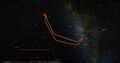 MA2.GUR8 as huge, long river boat with figurehead in Sumer ~2300 BCE (Crossen 2015): CC BY SMH.
 -
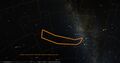 MA2.GUR8 as long river boat in MUL.APIN ~1100 BCE (Gullberg et al. 2022): CC BY SMH.
 -
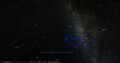 MA2.GUR8 as small river boat, quffah, in Dendera 50 BCE CC BY SMH.
 -
 MA2.GUR8 - animater version of these three constellation versions (CC BY SMH)


Original Images of Boats/ Ships
cf. Laursen 2021 for sea-faring ships suggestive of the shape of the waxing Moon.
Dilmun Boat shaped votive bowls for the Moon-god Nanna?
-
 Gypsum Relief of Gardens of Nineveh, North Palace, Nineveh, Iraq
 -
 Rieten boot relief nineveh palace
 -
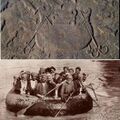 ancient versus modern Quffah (CC BY Ensar Adıgüzel: both images CC0)
 -
Quffa Baghdad 1914 (CC0)
-
Guffa on the Tigris, Baghdad, 1932


Additional
Deity.
The boat-deity or ship was among the sacred attributes of many gods [Salonen-Opificius 1969[13]; Tallqvist 1938[14], 360; Kurtik 1998, 34-35]. Festivals dedicated to them were already celebrated in the epoch of the III dynasty of Ur [Sallaberger I[15], 216-219]. To which exact deity the River-Barge constellation refers to, from the list of MUL.APIN, remains unclear.
Symbol.
The River Barge. Numerous depictions of this type of vessel are present on seals, reliefs, and in pottery from the second half of the 3rd millennium BCE and later [Salonen-Opificius 1969[16]; Kurtik 1998, 34-37; Kurtik 2023]. The outlines and the figure of the Ship constellation is not known.
Previous Identifications.
according to [Koch 1992[17], 59:27-28] in the GU-text: mul [ša2 maš]-˹a-ti˺ — β Her, murub4 mulZa-ba4-ba4 — η Oph, šu šumēlû(2,30) mulpa.bil2.sag ša2 ina ugu ban — θ Oph and [mulm]a2.gur8 — θ Arae.
= α, β Capricorni [Gössmann[5] 254].
= ε Sagittarii [MA[8], 138; Pingree-Walker 1988[11], 321, Q4; Hunger-Pingree 1999[12], 271].
= θ Arae [Koch 1992[17], 59].
Historical Dictionaries
| Kurtik (2022, m01) | Gössmann (1950) |
|---|---|
| 1) = mulMakurru «Корабль, Судно»; созвездие или звезда в Стрельце или Жертвеннике (Sagittarius или Ara) [Gössmann 1950, 254]; 2) эпитет лунного божества Нанна [Steinkeller 2016, 620‒621].
I. Источники. MUL.APIN. Список звезд Эа (№ 14, 15): mulMA2.GUR8 u mulSUḪUR. MAŠ2ku6 «Корабль и Коза-Рыба» (I ii 34) [MA, 39]. Список звезд V R, 46, 1:38. mulma2.gur8 mulsuḫur.maš2 = dNabû(pa) u dTaš-me-tu4 «Корабль (и) Коза-рыба = Набу и Ташмету» [HBA, 52:38; Wee 2016, 162–3]. GU-текст. (Q) mul [ša2 maš]-˹a-ti˺ ˹kimin˺ murub4 mulza.ba4.ba4 šu šumēlû(2,30) mulpa.bil2.sag ša2 ina ugu / ban u [mulm]a2.gur8 gu «Звезда Близнецов (ziqpu IV: β Her) или середина Забабы (ν Oph), левая рука Пабилсага, которая на луке (δ Sag), и Корабль (ε Sag) ― веревка» [Pingree–Walker 1988, BM 78161:27–28; Hunger-Pingree 1999, 93]; согласно [Koch 1992, 59:27–28], mul [ša2 maš]-˹a-ti˺ — β Her, murub4 mulZa-ba4-ba4 — η Oph, šu šumēlû(2,30) mulpa.bil2.sag ša2 ina ugu ban — θ Oph и [mulm]a2.gur8 — θ Arae. (S) mulpa.bil.sag ˹ša2˺ ina ugu ma2.˹gur8˺ «(Звезда) Пабилсага, которая над Кораблем» [Pingree–Walker 1988, BM 78161:30–31], см. также u31UZ3. II. Божество. Лодка-божество или корабль входили в число священных атрибутов многих богов [Salonen–Opificius 1969; Tallqvist 1938, 360; Куртик 1998, 34–35]. Посвященные им праздники отмечались уже в эпоху III династии Ура [Sallaberger I, 216–219]. К какому именно божеству относится созвездие Корабль из списка MUL.APIN, остается невыясненным. Возможно, это корабль Энки, название которого присутствует в старовавилонском списке (см. m02), однако никаких твердых доказательств не существует. III. Символ. Корабль или лодка. Многочисленные изображения священной лодки представлены на печатях, рельефах и в керамике второй половины III тыс. до н.э. и более поздних [Salonen–Opificius 1969; Куртик 1998, 34–37; Куртик 2023]. Неизвестно, какие очертания имела фигура созвездия Корабль. IV. Отождествление. = α, β Capricorni [Gössmann 1950, 254]. = ε Sagittarii [MA, 138; Pingree–Walker 1988, 321, Q4; Hunger-Pingree 1999, 271]. = θ Arae [Koch 1992, 59]. |
Example |
References
- ↑ Crossen, C. (2015) “The Very Ancient Origins of the Water Constellations”, Sky and Telescope, vol. 129, no. 3, p. 36.
- ↑ The Assyrian Dictionary of the Oriental Institute of the University of Chicago. Chicago - Glückstadt, 1956 -...
- ↑ Planetarium Babylonicum 2.0, All Skies Encyclopaedia.
- ↑ Hoffmann, S. M. and Krebernik, M. (2023). What do deities tell us about the celestial positioning system, in: R. Rollinger, I. Madreiter, M. Lang, C. Pappi (eds.). The Intellectual Heritage of the Ancient Near East, Papers held at the 64th Rencontre Assyriologique International and 12th Melammu Symposium July 16-20 2018, Innsbruck. Austrian Academy of Sciences Press, 539-579
- ↑ 5.0 5.1 Gössmann P.F. Planetarium Babylonicum, Rom, 1950 (A. Deimel. Šumerisches Lexikon 4/2).
- ↑ Steinkeller, P. (2010). Nanna/Suen, the Shining Bowl. Alter Orient Und Altes Testament: Veröffentlichungen Zur Kultur Und Geschichte Des Alten Orients Und Des Alten Testaments.
- ↑ Laursen, S. (2021). Dilmun Boat shaped votive bowls for the Moon-god Nanna? Arabian Archaeology and Epigraphy, 32(S1), 291-300.
- ↑ 8.0 8.1 Hunger, H. and Steele, J. M. (2019). The Babylonian Astronomical Compendium MUL.APIN, Routledge, NY
- ↑ Weidner E. Handbuch der babylonischen Astronomie. Bd. I. Leipzig, 1915.
- ↑ Wee, J. (2016). Virtual Moons over Babylonia: The Calendar Text System, Its Micro-Zodiac of 13, and the Making of Medical Zodiology. The Circulation of Astronomical Knowledge in the Ancient World, Ed. J. M. Steele, 139–229.
- ↑ 11.0 11.1 11.2 Pingree D., Walker C. A Babylonian Star-Catalogue: BM 78161 / Fs. Sachs, 1988. P. 313-322.
- ↑ 12.0 12.1 Hunger H., Pingree D. Astral Sciences in Mesopotamia. Leiden-Boston-Köln, 1999.
- ↑ Salonen A, Opificius R. Götterboot // RlA. 1969. Bd. 3, Lief. 6. S. 463-466.
- ↑ Tallqvist K. Akkadische Götterepitheta. Helsingforsiae, 1938.
- ↑ Sallaberger W. Der kultische Kalender der Ur III-Zeit. Teil 1-2. Berlin-N.Y., Walter de Gruyter, 1993.
- ↑ Salonen A, Opificius R. Götterboot // RlA. 1969. Bd. 3, Lief. 6. S. 463-466.
- ↑ 17.0 17.1 Koch J. Der Sternenkatalog BM 78161 // WO. 1992. Bd. 23. S. 39-67.