BALUM: Difference between revisions
No edit summary |
No edit summary |
||
| Line 28: | Line 28: | ||
|'''Lexical texts.''' | |'''Lexical texts.''' | ||
* Series Ḫg. B VI (in the list of Mars names): | * Series Ḫg. B VI (in the list of Mars names): | ||
** <sup>mul</sup>nu.me.a = ba-lum = min(=<sup>d</sup>ṣal-[bat-a-nu]) "Oblivion = lack (absence, lit. ʻ withoutʼ) = ditto (=Mars)" [MSL XI, 40:31]. | ** <sup>mul</sup>nu.me.a = ''ba-lum'' = min (= <sup>d</sup>''ṣal''-[''bat-a-nu]'') "Oblivion = lack (absence, lit. ʻ withoutʼ) = ditto (=Mars)" [MSL XI, 40:31]. | ||
| | | | ||
|- | |- | ||
|'''EAE.''' | |'''EAE.''' | ||
* Commentary: | * Commentary: | ||
** <sup>d</sup>ši<sub>2</sub>-mut <sup>mul</sup>ṣal-bat-a-nu ša<sub>2</sub>-niš <sup>d</sup>ba-lu šal-m[u] <sup>mul</sup>ud.ka.duḫ.a | ** <sup>d</sup>''ši''<sub>2</sub>-''mut'' <sup>mul</sup>''ṣal-bat-a-nu ša''<sub>2</sub>-''niš'' <sup>d</sup>''ba-lu šal-m''[''u''] <sup>mul</sup>ud.ka.duḫ.a | ||
** "Shimut, (first,) Mars, second, Balu, third, Demon with an Open Mouth." [ACh Suppl., 7:9; Reynolds 1998, 353]; | ** "Shimut, (first,) Mars, second, Balu, third, Demon with an Open Mouth." [ACh Suppl., 7:9; Reynolds 1998, 353]; | ||
** ba-lum and <sup>d</sup>ba-lu are probably one name. | ** ''ba-lum'' and <sup>d</sup>''ba-lu'' are probably one name. | ||
In another context (in an incantation) <sup>d</sup>ba-a-lum / bal-li apparently denotes a constellation close to the Pleiades (possibly Orion): | In another context (in an incantation) <sup>d</sup>''ba-a-lum'' / ''bal-li'' apparently denotes a constellation close to the Pleiades (possibly Orion): | ||
* ina bi-rit <sup>d</sup>Za-ap-pi u <sup>d</sup>Ba-a-lum (var. bi-rit zap-pi u bal-li [CT 51, 202 col. iv 5]) | * ''ina bi-rit'' <sup>d</sup>''Za-ap-pi u'' <sup>d</sup>''Ba-a-lum'' (var. ''bi-rit zap-pi u bal-li'' [CT 51, 202 col. iv 5]) | ||
* "Between the Pleiades and Balu" (referring to the position of Venus), quoted in [CAD B, 74], see also [Horowitz 1993, 152, note 6; Horowitz 2014, 245; Stol 1989, 262], cf. [Krebernik 1995, 366b]. | * "Between the Pleiades and Balu" (referring to the position of Venus), quoted in [CAD B, 74], see also [Horowitz 1993, 152, note 6; Horowitz 2014, 245; Stol 1989, 262], cf. [Krebernik 1995, 366b]. | ||
| | | | ||
| Line 45: | Line 45: | ||
|'''Hilprecht Text HS 245''' | |'''Hilprecht Text HS 245''' | ||
* Neo-Assyrian parallels Sm. 162 and Sm 1113 [Horowitz 2014 233-234] | * Neo-Assyrian parallels Sm. 162 and Sm 1113 [Horowitz 2014 233-234] | ||
* a name of an asterism behind/after the Pleiades, occurs at the place of SIPA.ZI.AN.NA | * a name of an asterism behind/after the Pleiades, occurs at the place of SIPA.ZI.AN.NA. | ||
This replaces the earlier idea in Horowitz (1993) quoted in Kurtik's work that the term relates to Taurus. | This replaces the earlier idea in Horowitz (1993) quoted in Kurtik's work that the term relates to Taurus. | ||
Revision as of 10:59, 10 May 2025

The Mesopotamian term mulBalu(m) in Akkadian is a name of Mars in the Great Star List and the lexical tradition. The name also occurs as an asterism in the vicinity of the Pleiades, replacing the name of Orion in two parallels to the Hilprecht Text (HS 245) from Assurbanipal's library. See [Horowitz 2014, 234]. This could have been understood as Mars in Orion.
Visibility & Appearance
Images of Mars
-
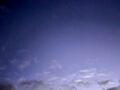 Close Conjunction of Jupiter (brighter) and Mars (reddish) under Orion (upper right), seen from Cape Town (SMH 2024)
 -
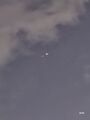 Closest Conjunction of Jupiter and Mars in 2024 (Cape Town, SMH).
 -
 Jupiter, Mars and Pleiades at Dawn (SMH 2024).
 -
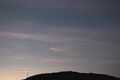 Jupiter, Mars, Pleiaden in a slightly cloudy morning twilight (SMH 2024).
 -
 Mars in the constellation Gemini, The Twins (SMH January 2025).
 -
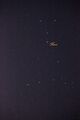 Mars in the constellation Gemini, The Twins (SMH February 2025).
 -
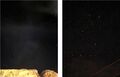 Mars extremly close to epsilon Geminorum (14 April 2023), seen from Petra, Jordan (SMH).
 -
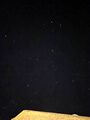 One day after the close conjunction of Mars with epsilon Geminorum; seen from Petra, Jordan (SMH 2023). The planet then had a visible separation from the star.
 -
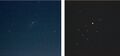 Mars in the Open Star Cluster Praesepe (M44) in Cancer (2023)
 -
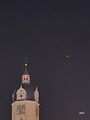 Mars next to a tower in Central Europe: its reddish colour is extraordinarily obvious (SMH 2025).
 -
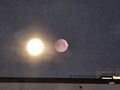 Mars two moon widths next to the Moon, photograph at full moon taken through a window in order to produce a dimmer image of the full moon next to Mars: the planet is at the right edge of the Moon. (SMH January 2025).


Dictionary
Kurtik with Hilder, Hoffmann, Horowitz, Kim
Variant readings:
- bālu,
- balû,
- ballu?
- ballû?
The variant writings of the name indicate uncertainties about its origin and identification.
An Akkadian parallel to mulNU.ME.A, "(Asterism) of Oblivion", lit. "having no me";
- 1) an epithet of Mars reflecting its nihilistic character as it was perceived in Mesopotamian astrology,
- 2) a constellation (?) [G. 304; AHw, 100; CAD B, 70; Reynolds 1998, 353].
| Sources | Identifications |
|---|---|
Lexical texts.
|
|
EAE.
In another context (in an incantation) dba-a-lum / bal-li apparently denotes a constellation close to the Pleiades (possibly Orion):
|
|
Hilprecht Text HS 245
This replaces the earlier idea in Horowitz (1993) quoted in Kurtik's work that the term relates to Taurus. |
Historical Dictionaries
| Kurtik (2022, a24 & b05) | Gössmann (1950) |
|---|---|
Kurtik (a24) Alû= «Бык», редко используемая аккадская параллель к mulGU4.AN.NA «Небесный Бык». Встречается только в новоассирийском тексте Sm. 162 rev. 4: …mu]la-li [Horowitz 1993, 154–156]. |
no entry |
Kurtik (b05) Bālu(m)аккадская параллель к mulNU.ME.A, «(Звезда) небытия», букв. «не имеющая ме»; 1) эпитет Марса, отражающий его нигилистический характер, как он воспринимался в месопотамской астрологии, 2) созвездие (?) [G. 304; AHw, 100; CAD B, 70; Reynolds 1998, 353]. I. Источники. Лексич. тексты. Cерия Ḫg. B VI (в списке имен Марса): mulnu.me.a = ba-lum = min(=dṣal-[bat-a-nu]) «Небытие = недостаток (отсутствие, букв. ʻбезʼ) = ditto (=Марс)» [MSL XI, 40:31]. EAE. Комментарий: dši2-mut mulṣal-bat-a-nu ša2-niš dba-lu šal-m[u] mulud.ka.duḫ.a «Шимут, (во-первых,) Марс, во-вторых, Балу, в третьих, Демон с Разинутой Пастью» [ACh Suppl., 7:9; Reynolds 1998, 353]; ba-lum и dba-lu, вероятно, одно название. В другом контексте (в заклинании) dba-а-lum / bal-li обозначает, по-видимому, созвездие, находящееся вблизи Плеяд (возможно, Орион): ina bi-rit dZa-ap-pi u dBa-a-lum (вар. bi-rit zap-pi u bal-li [CT 51, 202 col. iv 5]) «Между Плеядами и Балу» (речь идет о положении Венеры), цит. по [CAD B, 74], см. также [Horowitz 1993, 152, note 6; Horowitz 2014, 245; Stol 1989, 262], ср. [Krebernik 1995, 366b]. |
Gössmann (304) mulNU.ME.AAkk. etwa kakkabu la hasû. der nicht seiende Stern = Mars, II R 49 Nr 3, 71: mulNU·ME·A | ba-lum | (=ilṣal-bat-a-nu). |
Kurtik (b01) BA.LIM is a misreadingdBA-LIM(?); название содержится только в новоассирийском тексте Sm. 1113:6′ (см. a33AN.TA.GUB) как аккадская параллель к mulSIPA.AN.NA [Weidner 1957–1958, 393–4]. Смысл названия остается неясным; обсуждение проблемы см. [Horowitz 1993, 152, note 6; Reynolds 1998, 353] |
no entry |





