Ursa Minor: Difference between revisions
No edit summary |
|||
| (16 intermediate revisions by 3 users not shown) | |||
| Line 6: | Line 6: | ||
==Etymology and History== | ==Etymology and History== | ||
===Origin of Constellation=== | ===Origin of Constellation=== | ||
Homer, who mentions the Great Bear as early as 700 BC, does not mention a Little Bear. Either the constellation did not yet exist at that time or it was insignificant. Nevertheless, the Little Bear – like the Great Bear – is a Greek constellation. The Babylonian sky in the circumpolar region is very difficult to reconstruct because there are no rise and set dates for the constellations from which calculations could be made. German researchers like to assume that the German ‘Little Dipper’ is also the Babylonian ‘Chariot of Heaven’, but since the figure is neither particularly impressive to look at nor had any special function for navigation, this can be doubted. To be honest, we must say that, given the current state of the data, we cannot know exactly where the Babylonian ‘Wagon of Heaven’ was located. | <ref>Hoffmann, Susanne M. Wie der Löwe an den Himmel kam. Franckh Kosmos Verlag, Stuttgart 2021</ref>Homer, who mentions the Great Bear as early as 700 BC, does not mention a Little Bear. Either the constellation did not yet exist at that time or it was insignificant. Nevertheless, the Little Bear – like the Great Bear – is a Greek constellation. The Babylonian sky in the circumpolar region is very difficult to reconstruct because there are no rise and set dates for the constellations from which calculations could be made. German researchers like to assume that the German ‘Little Dipper’ is also the Babylonian ‘Chariot of Heaven’, but since the figure is neither particularly impressive to look at nor had any special function for navigation, this can be doubted. To be honest, we must say that, given the current state of the data, we cannot know exactly where the Babylonian ‘Wagon of Heaven’ was located. | ||
Aratos calls this figure ‘Helike’ (curl), which fits the curved shape formed by the brighter stars. The arc of stars runs close to the north celestial pole. | Aratos calls this figure ‘Helike’ (curl), which fits the curved shape formed by the brighter stars. The arc of stars runs close to the north celestial pole. | ||
| Line 13: | Line 13: | ||
==== Babylonian ==== | ==== Babylonian ==== | ||
see | |||
* Babylonian ‘Wagon of Heaven’ [[MAR.GID2.DA AN.NA|<sup>mul</sup>MAR.GID<sub>2</sub>.DA AN.NA]] | |||
==== Greco-Roman ==== | ==== Greco-Roman ==== | ||
| Line 20: | Line 23: | ||
===== Eratosthenes ===== | ===== Eratosthenes ===== | ||
<blockquote>'''Var. 1''' This is the one known as ‘the Little Bear’, and commonly known as ‘Phoinikè’ (the Phoenician). Artemis had esteemed her, but as she did not know that it was Zeus who had raped her, she made her wild. It is said that later Artemis, once the young girl was out of danger, increased her glory by placing a second figure among the constellations so that she was doubly honoured. Aglaosthenes , in his Naxica, says that this was Kynosoura, who nursed Zeus and was one of the nymphs of Ida. Her name is also found in the city called Histoi, founded by Nicostratus and his companions: the name Kynosoura refers to the port of this city and to a locality overlooking the town. | Pamias and Zucker (2013,<ref>Pamìas, Jordi und Zucker, Arnaud (2013). Ératosthènes de Cyrène: Catastérrismes, Belles Lettres, Paris</ref> 6-9)<blockquote></blockquote><blockquote>'''Var. 1''' This is the one known as ‘the Little Bear’, and commonly known as ‘Phoinikè’ (the Phoenician). Artemis had esteemed her, but as she did not know that it was Zeus who had raped her, she made her wild. It is said that later Artemis, once the young girl was out of danger, increased her glory by placing a second figure among the constellations so that she was doubly honoured. Aglaosthenes , in his Naxica, says that this was Kynosoura, who nursed Zeus and was one of the nymphs of Ida. Her name is also found in the city called Histoi, founded by Nicostratus and his companions: the name Kynosoura refers to the port of this city and to a locality overlooking the town. | ||
Aratos, for his part, calls it ‘Hélikè’ (Spiral), and says that she was from Crete; she nursed Zeus, and for this she obtained the privilege of being honoured in heaven. The Little Dipper has a shining star on each corner of the quadrilateral and three bright ones on the tail. In all, there are seven. Below the second of those which lead the movement the movement towards the west, there is another star placed called the Pole, and we get the impression that the whole universe revolves around it. </blockquote><blockquote>'''Var. 2:''' The Little Dipper is commonly known as ‘Phoinikè’ (the Phoenician). Artemis held her in high esteem, due to the adventures we recounted earlier but as she didn't know that it was Zeus who had raped her, she turned her into a wild beast. It is said later Artemis, having understood what had happened, placed a second figure among the constellations to highlight her constellations, so that she would be doubly honoured. Aglaosthenes, in his Naxica, says that the figure in question was Kynosoura, who nursed Zeus and was one of the nymphs of Ida. And we find her name in the city called Histoi, founded by Nicostratus and his companions: the name of Kynosoura is that of the port of this city and of a place overlooking the city. The nymph came with the Telchines, who were the servants of Rhea, like the Couretes and the Dactyls of Ida. Aratos, for his part, calls her ‘Hélikè’ (Spiral), and says that she was from Crete; she nursed Zeus, and to which she owes its honour in the heavens. The Little Dipper has a shining star on each corner of the quadrilateral and three bright stars on its tail.</blockquote>The equation of the Bear with a Wagon is a reminiscence of the unification of various astronomy cultures: the wagons are Mesopotamian names while the bears have a Mediterranean origin. | Aratos, for his part, calls it ‘Hélikè’ (Spiral), and says that she was from Crete; she nursed Zeus, and for this she obtained the privilege of being honoured in heaven. The Little Dipper has a shining star on each corner of the quadrilateral and three bright ones on the tail. In all, there are seven. Below the second of those which lead the movement the movement towards the west, there is another star placed called the Pole, and we get the impression that the whole universe revolves around it. </blockquote><blockquote>'''Var. 2:''' The Little Dipper is commonly known as ‘Phoinikè’ (the Phoenician). Artemis held her in high esteem, due to the adventures we recounted earlier but as she didn't know that it was Zeus who had raped her, she turned her into a wild beast. It is said later Artemis, having understood what had happened, placed a second figure among the constellations to highlight her constellations, so that she would be doubly honoured. Aglaosthenes, in his Naxica, says that the figure in question was Kynosoura, who nursed Zeus and was one of the nymphs of Ida. And we find her name in the city called Histoi, founded by Nicostratus and his companions: the name of Kynosoura is that of the port of this city and of a place overlooking the city. The nymph came with the Telchines, who were the servants of Rhea, like the Couretes and the Dactyls of Ida. Aratos, for his part, calls her ‘Hélikè’ (Spiral), and says that she was from Crete; she nursed Zeus, and to which she owes its honour in the heavens. The Little Dipper has a shining star on each corner of the quadrilateral and three bright stars on its tail.</blockquote>The equation of the Bear with a Wagon is a reminiscence of the unification of various astronomy cultures: the wagons are Mesopotamian names while the bears have a Mediterranean origin. | ||
'''Eratosthenes's star catalogue''' can be reconstructed from the list of stars he mentions in the last section of each of the constelllation descriptions. Hoffmann (2017)<ref name=":0">Hoffmann, S. M., <nowiki><i>Hipparchs Himmelsglobus</i></nowiki>. Springer Wiesbaden/ New York, 2017. doi:10.1007/978-3-658-18683-8.</ref> made such a catalogue and used it for computational comparison with Hipparchus's, Ptolemy's and Babylonian data; it is based on the edition and translation by Pamias and Geus (2007)<ref>Eratosthenes: Sternsagen, übersetzt von Pamìas, Jordi und Geus, Klaus, Verlag Utopica, Oberhaid 2007</ref> and presented here in English translation. | |||
{|class="wikitable" | |||
|+ | |||
!erat.Cat.ID | |||
!constStarID | |||
!starName | |||
!ident.Bayer | |||
!ident.HIP | |||
!certainty | |||
|- | |||
| 25 | |||
| 1 | |||
| one bright star at each corner of the quadrilateral | |||
| beta UMi | |||
| 72607 | |||
| 1 | |||
|- | |||
| 26 | |||
| 2 | |||
| one bright star at each corner of the quadrilateral | |||
| gam UMi | |||
| 75097 | |||
| 1 | |||
|- | |||
| 27 | |||
| 3 | |||
| one bright star at each corner of the quadrilateral | |||
| zeta UMi | |||
| 77055 | |||
| 1 | |||
|- | |||
| 28 | |||
| 4 | |||
| one bright star at each corner of the quadrilateral | |||
| eta UMi | |||
| 79822 | |||
| 1 | |||
|- | |||
| 29 | |||
| 5 | |||
| three bright ones on the tail | |||
| eps UMi | |||
| 82080 | |||
| 1 | |||
|- | |||
| 30 | |||
| 6 | |||
| three bright ones on the tail | |||
| delta UMi | |||
| 85822 | |||
| 1 | |||
|- | |||
| 31 | |||
| 7 | |||
| three bright ones on the tail | |||
| alpha UMi | |||
| 11767 | |||
| 1 | |||
|- | |||
| 32 | | |||
| 8 | |||
| below one of the preceding stars of the quadrilateral there is another, somewhat lower star, which is called the Pole Star | |||
| 5 UMi (or 4 UMi, fainter but closer to the pole -220, HIP 69112) | |||
| 70692 | |||
| 2 | |||
|} | |||
===== Hyginus, Astronomica ===== | ===== Hyginus, Astronomica ===== | ||
| Line 32: | Line 102: | ||
===== Hipparchus ===== | ===== Hipparchus ===== | ||
not a rising/ setting constellation | |||
====== Hipparchus's "lost" star Catalogue ====== | |||
The star catalogue of Hipparchus is not preserved. Yet, several scholars have reconstructed it in the past century: Vogt (1925)<ref>Vogt, H., “Versuch einer Wiederherstellung von Hipparchs Fixsternver zeichnis”, <nowiki><i>Astronomische Nachrichten</i></nowiki>, vol. 224, no. 2, Wiley, p. 17, 1925. doi:10.1002/asna.19252240202.</ref>, Grasshoff (1990)<ref>Graßhoff, G., <nowiki><i>The History of Ptolemy's Star Catalogue</i></nowiki>, Springer, New York, 1990 </ref>, Hoffmann (2017)<ref>Hoffmann, S. M., <nowiki><i>Hipparchs Himmelsglobus</i></nowiki>. Springer Wiesbaden/ New York, 2017. doi:10.1007/978-3-658-18683-8.</ref> and Glover (2026)<ref>Glover, E. (2026). ''The Astronomy of Hipparchus'', Cambridge University Press</ref>. Grasshoff's catalogue and computations are not published digitally, Hoffmann published three versions of the Manitius+Hoffmann<ref>Hipparchus's Lost Star Catalogue (1/2 reconstructed) (Hoffmann, 2017) in VizieR</ref> star lists in the CDS [https://vizier.unistra.fr/ VizieR] "catalog of catalogs", and Glover printed the star lists constellationwise in his book. | |||
{|class="wikitable" | |||
|+ Hipparchus's star in Aquarius (Glover 2026) | |||
!hipp.Cat.ID | |||
!constStarID | |||
!starName | |||
!ident.Bayer | |||
!ident.HIP | |||
!concordance | |||
|- | |||
|580 | |||
|1 | |||
| | |||
|α UMi | |||
|11767 | |||
|CPAE | |||
|- | |||
|581 | |||
|2 | |||
| | |||
|β UMi | |||
|72607 | |||
|CPAE | |||
|- | |||
|582 | |||
|3 | |||
| | |||
|γ UMi | |||
|75097 | |||
|CPAE | |||
|- | |||
|583 | |||
|4 | |||
| | |||
|δ UMi | |||
|85822 | |||
|CPAE | |||
|- | |||
|584 | |||
|5 | |||
| | |||
|ε UMi | |||
|82080 | |||
|CPAE | |||
|- | |||
|585 | |||
|6 | |||
| | |||
|ζ UMi | |||
|77055 | |||
|CPAE | |||
|- | |||
|586 | |||
|7 | |||
| | |||
|η UMi | |||
|79822 | |||
|CPAE | |||
|} | |||
===== Geminos ===== | ===== Geminos ===== | ||
| Line 79: | Line 213: | ||
|beta UMi | |beta UMi | ||
|- | |- | ||
| | |7 | ||
|τῆς αὐτῆς πλευρᾶς ὁ βόρειος | |τῆς αὐτῆς πλευρᾶς ὁ βόρειος | ||
|The northern one in the same side | |The northern one in the same side | ||
| Line 104: | Line 238: | ||
! | ! | ||
|- | |- | ||
| | |8 | ||
|ὁ τοῖς ἐν τῇ ἐπομένῃ πλευρᾷ ἐπ’ εὐθεύας καὶ νοτιώτερος | |ὁ τοῖς ἐν τῇ ἐπομένῃ πλευρᾷ ἐπ’ εὐθεύας καὶ νοτιώτερος | ||
|The star lying on a straight line with the stars in the rear side [of the rectangle] and south of them | |The star lying on a straight line with the stars in the rear side [of the rectangle] and south of them | ||
| Line 119: | Line 253: | ||
| | | | ||
|} | |} | ||
==== Medieval, Renaissance and Early Modern Sources ==== | |||
[[File:UrsaMinor Cynosura RudolphinTab1627.png|thumb|UMi in Rudolphine Tables (Kepler 1627).]] | |||
The Rudolphine Tables (Kepler 1627) bring back Aratus's name variant for the Lesser Bear with the long tail, Cynosura, the Dog-Tailed. | |||
===Transfer and Transformation of the Constellation=== | ===Transfer and Transformation of the Constellation=== | ||
<gallery> | |||
File:H.A. Rey's stick figure stellarium-081.png|H.A. Rey's stick figure of Ursa Minor (1952) | |||
File:O. Hlad's stick figure stellarium-082.png|O. Hlad's stick figure of Ursa Minor (1988) | |||
File:UrsaMinor Cynosura RudolphinTab1627.png|UMi in Rudolphine Tables (Kepler 1627). | |||
File:Stellarium-091-Alm.png|Reconstruction of Stickfigure based on the depiction of Almagest (100-170 CE). CC-BY Susanne Hoffmann in Stellarium. | |||
</gallery> | |||
==== Images from the Saxl Project ==== | |||
The Saxl Project<ref>Kristin Lippincott (2018-x). The Saxl Project; [https://www.thesaxlproject.com/the-saxl-project online] </ref> is the name of a project to have complete digital access to over 250 medieval and Renaissance illustrated astronomical and astrological manuscripts. It is intended to be a continuation and updating of Fritz Saxl's multi-volume work: ''Verzeichnis der astrologischen und mythologischen illustrierten Handschriften des lateinischen Mittelalters in römischen Bibliotheken'' (1915-1966, with the collaboration of Hans Meier and Patrick McGurk). | |||
The Project is led by Kristen Lippincott and run jointly with [https://warburg.sas.ac.uk/ The Warburg Institute], University of London. It has also benefitted greatly from previous collaborative research, which was carried out with Dr Elly Dekker of Utrecht University, between 1997 and 2007. | |||
===== Classical Image ===== | |||
<gallery> | |||
File:1a-classical_images-0-UMi.jpg|<big>Egyptian</big> Boston, MFA Egyptian figure of a bear New Kingdom, 1550-1070 BC Wood, acc no 72.4167 | |||
File:1a-classical_images-0-UMa.jpg|<big>Greek</big> Boston, MFA Hemidrachm of Mantineia with she-bear (minted in Arcadia, Peloponneosos) late Archaic (500-480 BC) Acc no 04.907 | |||
File:2a-classical_images-2-UMa.jpg|<big>Roman</big> Los Angeles, Getty Museum Marble statue of a bear Roman, c. 100-200 AD | |||
File:2b-classical_images-3-UMa.jpg|<big>Roman</big> Boston, MFA bronze statue of a bear (9 mm / 3” tall) late Hellenistic (possibly Egypt), 1st C BC acc. no 67.627 | |||
File:2c-classical_images-4-UMa.png|<big>Roman</big> London, British Museum Bronze figure of a bear or hound Roman, 1-3rd C AD Acc no 1873.0820.7 | |||
File:3-classical_images-5-UMa.jpg|<big>Roman</big> Miletus, Greek Theatre, the stage building Relief depicting Eros hunting c. 250-225 BC credit: Flickr (Carole Raddato) | |||
File:4a-classical_images-6-UMa.jpg|<big>Roman</big> London, British Museum Mould-made pottery lamp with running bear Found in Pozzuoli, 40-80 AD Acc no 1856,1226.498 | |||
File:4b-classical_images-7-UMa.jpg|<big>Roman</big> London, British Museum Mould-made pottery lamp with standing bear Roman, made in Cnidos, 2 C AD Acc no 1859,1226.117 | |||
File:4c-classical_images-8-UMa.jpg|<big>Roman</big> London, British Museum Mould-made pottery lamp with standing bear Roman, made by Augendus, c. 175-225 Acc no1756,0101.632 | |||
File:4d-classical_images-9-UMa.jpg|<big>Roman</big> Amsterdam, Allard Pierson Museum Two-handled jar with relief of a bear from Djerba, 3rd C AD Inv. 12.375 | |||
File:5a-classical_images-10-UMa.jpg|<big>Roman</big> North African redware | |||
File:5b-classical_images-11-UMa.jpg|<big>Roman</big> North African redware | |||
File:5c-classical_images-arezzo12-UMa.jpg|<big>Roman</big> Boston, MFA Fragment of mould for a bowl with youth attacking a bear from Arezzo Acc no 13.147 | |||
File:5d-classical_images-13-UMa.jpg|<big>Roman</big> Boston, MFA Fragment of mould for a bowl with youth attacking a bear from Arezzo Acc no 98.851 | |||
File:6e-classical_images-14-UMi.jpg|<big>Roman</big> Boston, MFA Red slipware bowl of Orpheus and the animals Late Roman (probl. Tunisia) Acc no 1981.658 | |||
File:6a-classical_images-15-UMa.jpg|<big>Roman (Callisto)</big> Los Angeles County Museum of Art / The Getty Villa Callisto and Diana with bear hunt in border From the Villa Laure Gallo-Roman, 3rd C A | |||
File:6b-classical_images-16-UMa.jpg|<big>Roman (Callisto)</big> Los Angeles County Museum of Art / The Getty Villa Callisto and Diana with bear hunt in border From the Villa Laure Gallo-Roman, 3rd C A | |||
File:7a-classical_images-17-UMa.jpg|<big>Roman</big> Vatican Museums From the Temple of Diana on the Aretine Hill, 1st C AD | |||
File:7b-classical_images-18-UMa.jpg|<big>Roman</big> Vatican Museums From the Temple of Diana on the Aretine Hill, 1st C AD | |||
File:7c-classical_images-19-UMa.jpg|<big>Roman</big> Damnatio ad bestias (source?) Credit: Wikimedia | |||
File:7d-classical_images-20-UMa.jpg|<big>Roman</big> Libya, Villa Selene Detail from decorative border 2nd C AD | |||
File:8a-classical_images-21-UMa.jpg|<big>Roman</big> Tunis, Bardo Museum | |||
File:8b-classical_images-23-UMa.jpg|<big>Roman</big> Tunis, Bardo Museum | |||
File:8c-classical_images-22-UMa.jpg|<big>Roman</big> Tunis, Bardo Museum | |||
File:9a-classical_images-27-UMa.jpg|<big>Roman</big> Los Angeles, Getty Museum Fragments of floor mosaic found between Bacoli and Pozzuoli, Italy 4th c AD | |||
File:9b-classical_images-26-UMa.jpg|<big>Roman</big> Los Angeles, Getty Museum Fragments of floor mosaic found between Bacoli and Pozzuoli, Italy 4th c AD | |||
File:9c-classical_images-24-UMa.jpg|<big>Roman</big> Los Angeles, Getty Museum Fragments of floor mosaic found between Bacoli and Pozzuoli, Italy 4th c AD | |||
File:9d-classical_images-25-UMa.jpg|<big>Roman</big> Los Angeles, Getty Museum Fragments of floor mosaic found between Bacoli and Pozzuoli, Italy 4th c AD | |||
File:10a-classical_images-29-UMa.jpg|<big>Roman</big> Paris, Musée du Louvre | |||
File:10b-classical_images-30-UMa.jpg|<big>Roman</big> Fribourg, Switzerland Beast hunt in an amphithatre from the Villa at Vallon, ea 3rd C AD Cf Ling, pp. 16-18 | |||
File:11-classical_images-31-UMa.jpg|<big>Roman</big> Leptis Magna, Amphitheatre The execution of Garamantes wall mosaic from the Villa Dar Buc Ammera, c. 70 AD | |||
File:12a-classical_images-32-UMa.jpg|<big>Roman</big> Cf. K. Dunbabin, Mosaic of the Ancient World, 1999. | |||
File:12b-classical_images-33-UMa.jpg|<big>Roman</big> Cf. K. Dunbabin, Mosaic of the Ancient World, 1999. | |||
File:13a-classical_images-34-UMa.jpg|<big>Roman (Orpheus with beasts)</big> Los Angeles, Getty Museum Orpheus with animals and 4 seasons Gallo-Roman (Saint-Romain-en-Gal ) c. 150-200 AD | |||
File:13b-classical_images-35-UMa.jpg|<big>Roman (Orpheus with beasts)</big> form. Dallas Museum of Art(returned to Turkey in 2012) Orpheus with animals | |||
File:13c-classical_images-37-UMa.jpg|<big>Roman (Orpheus with beasts)</big> Palermo, Museo regionale Antonia Salinas Orpheus and the animals from Building A, Piazza della Vittoria, c. 200-300 AD credit: Wikimedia (Marie-Lan Nguyen) | |||
File:13d-classical_images-36-UMa.jpg|<big>Roman (Orpheus with beasts)</big> Bristol Museum of Art (? - displayed there in 2013) Floor mosaic from Roman Villa in Newton St Loe, late 3rd-ea 4th C AD | |||
File:13e-classical_images-38-UMa.jpg|<big>Roman (Orpheus with beasts)</big> Cyprus, Paphos, House of Dionysus credit: a-picture-a-day.blogspot.co.uk /2005 (Rui Reino Bapista) | |||
File:14a-classical_images-39-UMa.jpg|<big>Roman (Orpheus with beasts)</big> Libya, Tripoli Archaeological Museum from Leptis Magna, Orpheus Mosaic Villa | |||
File:14b-classical_images-40-UMa.jpg|<big>Roman (Orpheus with beasts)</big> Libya, Tripoli Archaeological Museum from Leptis Magna, Orpheus Mosaic Villa | |||
File:15-classical_images-41-UMa.jpg|<big>Early Christian</big> Boston, MFA Bronze container (ampulla) in the form of a bear Late Imperial/ late antque (c. 4th / 5th C AD) Acc no 62.1203 | |||
File:16-classical_images-42-UMa.jpg|<big>late Roman/ ea. Christian</big> London, British Museum Papyrus fragment with bear Egyptian (?), 3-4th C AD cf. Age of Spirituality, cat 86. | |||
File:17a-classical_images-43-UMa.jpg|<big>Byzantine</big> Boston, MFA Silver ring engraved with a bear (and a lion on the reverse) Early Byzantine, 6-7th C AD Acc noo 2005. 291 | |||
File:17b-classical_images-44-UMa.jpg|<big>Byzantine</big> Libya, Qasr Museum mosiacs from Olbia (?), 5th C AD | |||
</gallery> | |||
===== Classical Globes ===== | |||
<gallery> | |||
File:Questions.png|Naples, Farnese Atlas: missing from globe | |||
File:18b-classical_globes-kugel45-UMa.jpg|Paris, Kugel Globe ''n.b. – smaller, in second loop of Draco’s tail, long tail '' | |||
File:18c-classical_globes-48-UMa.jpg|Mainz globe ''n.b. – slightly smaller, in second loop of Draco’s tail, long tail, back-to-back '' | |||
File:18d-classical_globes-mainz47-UMa.jpg| | |||
File:18e-classical_globes-kunzl46-UMa.png|(drawing © Kunzl) | |||
</gallery> | |||
===== Germanicus mss ===== | |||
<gallery> | |||
File:19a-germanicus_mss-49-UMa.jpg|Leiden, Univbibl Voss lat 4° 79 ''n.b. – inside second curve of Draco, short tail, facing outwards, foot-to-foot'' | |||
File:19b-germanicus_mss-50-UMa.jpg|Boulogne-sur-Mer, Bibl. Mun. Ms 188 ''Same, but slightly larger'' | |||
File:19c-germanicus_mss-51-UMa.jpg|vs. planisphere ''in third curve, facing inward, back-to-back'' | |||
File:19d-germanicus_mss-52-UMa.jpg|Bern, Burgerbibl, Ms 88 ''n.b. – same , but standing on hind feet '' | |||
File:19e-germanicus_mss-53-UMa.jpg|vs. planisphere ''same'' | |||
File:20a-germanicus_mss-55-UMa.jpg|Basle, OBU Ms AN.IV . 18 ''n.b. – same size, UMi towards Draco’s and slightly larger , butt-to-butt '' | |||
File:20b-germanicus_mss-54-UMa.jpg|vs. planisphere | |||
File:20c-germanicus_mss-58-UMa.jpg|Aberystwyth, NLW Ms 735 C ''n.b. – in second curve, both backs towards head of Draco'' | |||
File:20d-germanicus_mss-57-UMa.jpg|vs. planisphere ''n.b. – smaller one in second curve'' | |||
File:20e-germanicus_mss-56-UMa.jpg|vs. schema | |||
File:20f-germanicus_mss-60-UMa.jpg|vs. hemisphere ''similar to planisphere'' | |||
File:20g-germanicus_mss-59-UMa.jpg| | |||
File:21a-germanicus_mss-61-UMa.jpg|Madrid, Bib nac Ms 19 (16) ''n.b. – same size, fewer stars on one towards tail = UMi, back-to-back'' | |||
File:21b-germanicus_mss-62-UMa.jpg|Cologny, Bib Bodmer Cod lat 7 ''n.b. – slightly smaller one nr. tail'' | |||
File:21c-germanicus_mss-63-UMa.jpg|NY, Pierpont Morgan Libr Ms M 389 ''same'' | |||
File:21d-germanicus_mss-64-UMa.jpg|Vatican, BAV Barb lat 76 ''n.b. -- same'' | |||
File:22a-germanicus_mss-65-UMa.jpg|London BL Egerton 1050 ''n.b. – smaller one towards tail of Draco'' | |||
File:22b-germanicus_mss-66-UMa.jpg|London BL Add 15819 ''n.b. – same size'' | |||
File:22c-germanicus_mss-67-UMa.jpg|Naples, Bib naz XIV D 37 ''same'' | |||
File:23a-germanicus_mss-71-UMa.jpg|Madrid Bib Nac Ms 8282 ''n.b. – slightly smaller one towards tail of Draco'' | |||
File:23b-germanicus_mss-72-UMa.jpg|Vatican, BAV Barb lat 77 | |||
File:23c-germanicus_mss-68-UMa.jpg|Vienna, Schottenstift Ms 51 | |||
File:23d-germanicus_mss-73-UMa.jpg|Vatican,BAV Urb lat 1358 | |||
File:23e-germanicus_mss-69-UMa.jpg|Florence, Bibl Laurenziana Plut 89 sup 43 | |||
File:23f-germanicus_mss-70-UMa.jpg|Montpellier Ms H 452 ''n.b. – pig-like'' | |||
</gallery> | |||
===== Ps-Erathosthenes ===== | |||
<gallery> | |||
File:24a-ps_eratosthenes-74-UMa.jpg|Vatican BAV, Vat grec 1087 ''n.b. – smaller one in first curve of Draco’s body, longer tail, back-to back'' | |||
File:24b-ps_eratosthenes-75-UMa.png|Hemispheres ''– smaller bear (!) near tail'' | |||
File:24c-ps_eratosthenes-77-UMa.jpg|Planisphere '' – smaller bear in second curve of Draco'' | |||
</gallery> | |||
===== Cicero ===== | |||
<gallery> | |||
File:Questions.png|London, BL Harley 647: missing from manuscript | |||
File:25b-cicero-78-UMa.jpg|London, BL Harley 647 – planisphere '' bear in third loop labelled ‘Helix’'' | |||
File:Questions.png|London, BL Harley 2506: missing from manuscript | |||
File:Questions.png|London, BL Cotton ms Tib B.V., pars 1: missing from manuscript | |||
File:Questions.png|London, BL Cotton Ms Tib C. 1: missing from manuscript | |||
File:Questions.png|Gottweig, Stiftsbibl Ms 7: missing from manuscript | |||
</gallery> | |||
===== Revised Aratus Latinus ===== | |||
<gallery> | |||
File:26a-revised_aratus_latinus-81-UMa.jpg|Dresden, Landesbibl. Ms D C 183 ''n.b. – slightly smaller bear in second loop'' | |||
File:27b-revised_aratus_latinus-85-UMi.jpg|''standing to left'' | |||
File:26c-revised_aratus_latinus-79-UMa.png|Dresden – hemispheres ''n.b. – UMi near head of Draco '' | |||
File:26d-revised_aratus_latinus-88-UMa.jpg|globe on stand ''= UMa or UMi ?'' | |||
File:26e-revised_aratus_latinus-83-UMa.jpg|Paris BN Lat 12957 ''n.b. – similar '' | |||
File:27f-revised_aratus_latinus86-UMi.jpg|'' running to left, shaggy '' | |||
File:27g-revised_aratus_latinus-87-UMi.png|Paris – hemispheres ''leaping, UMi near mid-section of Draco'' | |||
File:26h-revised_aratus_latinus-87-UMa.jpg|globe on stand ''2 animals = UMa and UMi ?'' | |||
File:27a-revised_aratus_latinus-89-UMa.jpg|Prague, Univbibl Ms IX. C. 6 (1717) ''n.b. – smaller bear in second curve'' | |||
File:28b-revised_aratus_latinus-90-UMi.jpg|'' standing to left'' | |||
File:Questions.png|Prague – hemispheres: missing from ms? | |||
File:28a-revised_aratus_latinus-91-UMa.jpg|St Gallen, Stiftsbibl Ms 902 ''n.b. – same size, tongues out'' | |||
File:29b-revised_aratus_latinus-99-UMi.jpg|'' standing to left, tongue out, claws'' | |||
File:28c-revised_aratus_latinus-92-UMa.png|Hemispheres '' UMi at curl in Draco’s body '' | |||
File:28d-revised_aratus_latinus-99-UMa.jpg|globe on stand '' 2 animals = UMa and UMi?'' | |||
File:28e-revised_aratus_latinus-95-UMa.jpg|St Gallen, Stiftsbibl Ms 250 ''same size '' | |||
File:29f-revised_aratus_latinus-100-UMi.jpg|''standing to left'' | |||
File:28g-revised_aratus_latinus-93-UMa.png|Hemispheres '' UMi at curl in Draco’s body '' | |||
File:28h-revised_aratus_latinus-100-UMa.jpg|globe on stand '' 2 animals = UMa and UMi?'' | |||
File:29a-revised_aratus_latinus-101-UMa.jpg|Gottweig, Stiftsbibl. Ms 7 (146) ''n.b. – larger '' | |||
File:30b-revised_aratus_latinus-103-UMi.jpg|'' standing to left, tongue out, claws'' | |||
File:Questions.png|on hemisphere: missing in manuscript | |||
File:29d-revised_aratus_latinus-103-UMa.jpg|globe on stand ''rabbit = one of bears?'' | |||
File:Questions.png|Siena, Bib com Ms L. IV. 25: missing in manuscript | |||
File:Questions.png|: missing in manuscript | |||
File:Questions.png|on hemisphere: missing in manuscript | |||
File:30a-revised_aratus_latinus-104-UMa.jpg|Paris BN n.a. 1614 ''n.b. – bear in curve smaller '' | |||
File:31b-revised_aratus_latinus-106-UMi.jpg|''standing to left, claws'' | |||
File:30c-revised_aratus_latinus-107-UMa.png|Hemispheres '' n.b. – small bear under tail of Draco (= UMi?)'' | |||
File:Questions.png|Munich, Staatsbibl. Clm 560: image missing from manuscript | |||
File:Questions.png|: image missing from manuscript | |||
File:Questions.png|hemispheres: image missing from manuscript | |||
File:31a-revised_aratus_latinus-112-UMa.jpg|Vatican, BAV Reg lat 1324 ''n.b. – bear on tail slightly smaller'' | |||
File:32b-revised_aratus_latinus-111-UMi.jpg| | |||
File:31c-revised_aratus_latinus-108-UMa.png|Hemispheres '' UMi near Draco’s head'' | |||
File:31d-revised_aratus_latinus-110-UMa.jpg|globe on stand ''animal near Auriga as horse'' | |||
File:33a-revised_aratus_latinus-113-UMi.jpg|Cologne, Dombibliothek Ms 83.11 ''n.b. – stands to right, hunched'' | |||
File:Questions.png|hemipshere: missing from manuscript | |||
File:Questions.png|globe on stand: missing from manuscript | |||
</gallery> | |||
===== ps-Bede, De signis caeli ===== | |||
<gallery> | |||
File:34a-ps_bede,de_signis_caeli-116-UMi.jpg|Oxford, Bodleian Laud misc 644 ''n.b. – stands facing right, hunched'' | |||
File:34b-ps_bede,de_signis_caeli-117-UMi.jpg|Padua, Bibl Antoniona Ms Anton 27 ''same'' | |||
File:34c-ps_bede,de_signis_caeli-118-UMi.jpg|Venice, Bib Marciana Ms VIII, 22 ''n.b. – stands facing right, hunched and biting leg'' | |||
File:33d-ps_bede,de_signis_caeli-114-UMa.jpg|Draco inter arctos as part of zodiac rota | |||
File:33e-ps_bede,de_signis_caeli-118-UMa.jpg|Draco inter arctos as part of zodiac rota | |||
File:34f-ps_bede,de_signis_caeli-119-UMi.jpg|Paris BN lat. 14754 ''same'' | |||
File:34a-ps_bede,de_signis_caeli-120-UMa.jpg|Dijon Bib mun, Ms 488 ''n.b. – same size'' | |||
File:35b-ps_bede,de_signis_caeli-122-UMi.png|''walks to right'' | |||
File:34c-ps_bede,de_signis_caeli-121-UMa.jpg|Draco inter arctos as part of zodiac rota | |||
File:35d-ps_bede,de_signis_caeli-123-UMi.png|Draco inter arctos as part of zodiac rota | |||
File:35a-ps_bede,de_signis_caeli-124-UMa.jpg|Paris, BN Lat 5543 ''n.b. – runs to left, long tail ‘Felix arcturus minor’'' | |||
File:36b-ps_bede,de_signis_caeli-127-UMi.jpg|Paris, BN Lat 5543 ''n.b. – runs to left, long tail ‘Felix arcturus minor’'' | |||
File:35c-ps_bede,de_signis_caeli-125-UMa.jpg|Paris, BN Lat 5239 ''similar, note back fur'' | |||
File:36d-ps_bede,de_signis_caeli-126-UMi.jpg|Paris, BN Lat 5239 ''similar, note back fur'' | |||
File:36a-ps_bede,de_signis_caeli-128-UMa.jpg|Klosterneuburg, Stiftskirche, Ms 685 ''n.b. – runs to left, long tail'' | |||
File:37b-ps_bede,de_signis_caeli-130-UMi.jpg|Klosterneuburg, Stiftskirche, Ms 685 ''n.b. – runs to left, long tail'' | |||
File:36c-ps_bede,de_signis_caeli-133-UMa.jpg|Vatican, BAV Vat lat 643 | |||
File:37d-ps_bede,de_signis_caeli-132-UMi.jpg|Vatican, BAV Vat lat 643 | |||
File:36e-ps_bede,de_signis_caeli-129-UMa.jpg|Zwettl, Stiftskirche Ms 296 ''closer to Klosterneuberg'' | |||
File:37f-ps_bede,de_signis_caeli-131-UMi.jpg|Zwettl, Stiftskirche Ms 296 ''closer to Klosterneuberg'' | |||
File:38a-ps_bede,de_signis_caeli-134-UMi.jpg|Laon Bib mun, Ms 422 ''n.b. – walks to right, long tail, claws'' | |||
File:38b-ps_bede,de_signis_caeli-135-UMi.jpg|Rouen, Bibl mun, 26 ''similar, but more dog-like with tongue out'' | |||
File:Questions.png|Amiens Bibl mun, Ms 222: missing from manuscript | |||
File:Questions.png|Durham, Cathedral Libr Hunter 100: missing from manuscript | |||
File:39a-ps_bede,de_signis_caeli-136-UMa.jpg|Freiburg-im-Bresgau Ms 35 ''n.b. – stands to right, hunched'' | |||
File:40b-ps_bede,de_signis_caeli-138-UMi.jpg|Freiburg-im-Bresgau Ms 35 ''n.b. – stands to right, hunched'' | |||
File:39c-ps_bede,de_signis_caeli-137-UMa.jpg|Montecassino, Badia, Ms 3 ''n.b. – stand to left '' | |||
File:40d-ps_bede,de_signis_caeli-139-UMi.jpg|Montecassino, Badia, Ms 3 ''n.b. – stand to left '' | |||
</gallery> | |||
===== De ordine ac positione ===== | |||
<gallery> | |||
File:41a-de_ordine_ac_positione-141-UMi.jpg|Berlin, Staatsbibl Ms lat 130 (Phill 1832) ''n.b.– stands to the left'' | |||
File:40b-de_ordine_ac_positione-140-UMa.jpg|Berlin planisphere | |||
File:41c-de_ordine_ac_positione-142-UMi.jpg|Monza, Bib capit Ms F. 9/176 (246) ''stands to the left;; | |||
File:41d-de_ordine_ac_positione-143-UMi.jpg|Madrid, Bib Nac Ms 3307 ''similar'' | |||
File:42a-de_ordine_ac_positione-147-UMi.jpg|Vatican BAV, Vat lat 645 ''n.b. – walks to left, shaggy'' | |||
File:42b-de_ordine_ac_positione-145-UMi.jpg|Munich, Staatsbibl. Ms clm 210 ''n.b. – stands to right, long snout'' | |||
File:41c-de_ordine_ac_positione-144-UMa.jpg|planisphere | |||
File:42d-de_ordine_ac_positione-146-UMi.jpg|Vienna, ONB Vindob 387 ''same'' | |||
File:43a-de_ordine_ac_positione-148-UMi.jpg|Austin TX, Harry Ransom, Univ of Texas, Ms 29 ''n.b. – stands to left, claws'' | |||
File:43b-de_ordine_ac_positione-149-UMi.jpg|Paris BN lat n.a. 1614 ''similar'' | |||
File:43c-de_ordine_ac_positione-150-UMi.jpg|St Petersburg, Nat Libr Ms Q v IX, no 2 ''same'' | |||
File:42d-de_ordine_ac_positione-152-UMa.jpg|Paris BN lat 12117 ''n.b. – only as draco inter arctos'' | |||
File:42e-de_ordine_ac_positione-153-UMa.jpg|Vatican BAV, Reg lat 309 ''same'' | |||
File:44a-de_ordine_ac_positione-156-UMi.jpg|Los Angeles, Getty Mus Ludwig XII, 5 ''n.b. -- walking to right'' | |||
File:43b-de_ordine_ac_positione-154-UMa.jpg| | |||
File:44c-de_ordine_ac_positione-155-UMi.jpg|Paris BN, lat 8663 ''n.b. – stands to right, hunched'' | |||
File:43d-de_ordine_ac_positione-155-UMa.jpg| | |||
File:44e-de_ordine_ac_positione-157-UMi.jpg|Vienna, ONB Vindob 12600 ''n.b. – walks to right, large hump'' | |||
File:Questions.png|Reykjavik Ms 1812: missing from manuscript | |||
</gallery> | |||
===== Hyginus ===== | |||
<gallery> | |||
File:45a-hyginus-160-UMi.jpg|S Paul im Lavantthal Ms 16/1 (XXV. 4. 20) ''n.b. – stands to right'' | |||
File:44b-hyginus-159-UMa.jpg| | |||
File:45c-hyginus-162-UMi.jpg|Florence, Bibl Laurenziana Ms Plut 29.30 ''same'' | |||
File:44d-hyginus-160-UMa.jpg| | |||
File:45e-hyginus-161-UMi.jpg|Leiden, Univ-blbl Voss 8°18 ''n.b. – standing on water or draco (?)'' | |||
File:46a-hyginus-163-UMi.jpg|Wolfenbüttel, Herz Aug Ms 18. 16. Aug 4° ''n.b. – walking to left'' | |||
File:46b-hyginus-164-UMi.jpg|London BL Arundel 339 ''n.b. – walks to right'' | |||
File:47a-hyginus-165-UMi.jpg|Vienna ONB Vindob 51 ''n.b. – stands to right, hunched'' | |||
File:47b-hyginus-166-UMi.jpg|Leiden Univ-bibl Voss lat 4° 92 ''n.b. – stands to right, raised front foot '' | |||
File:47c-hyginus-167-UMi.jpg|Leiden Univ-bibl Voss lat 8° 15 ''n.b. – leaping to left'' | |||
File:47d-hyginus-170-UMi.jpg|Vatican BAV Reg lat 123 ''Leaps to left, short tail '' | |||
File:46e-hyginus-170-UMa.jpg| | |||
File:46f-hyginus-171-UMa.jpg|Vatican BAV Reg lat 123 - planisphere | |||
File:47a-hyginus-172-UMa.jpg|Oxford, Bodleian Libr Bodley 614 ''n.b. – only in draco inter arctos, bear towards end of Draco’s tail slightly smaller'' | |||
File:47b-hyginus-173-UMa.jpg|Oxford, Bodleian Libr Digby 83 (SC 1684) ''same'' | |||
File:48a-hyginus-174-UMa.jpg|Baltimore, Walters Art Gallery Ms 734 ''n.b. – only as part of draco inter arctos'' | |||
File:48b-hyginus-175-UMa.jpg| | |||
File:49a-hyginus-176-UMa.jpg|Berlin, Staatsbibl. Ms 8° 44 (Rose 962) ''n.b. – only as part of draco inter arctos'' | |||
File:Questions.png|Lyon, Bib mun, Pal des Arts 45 | |||
File:Questions.png|Lyon, Bib mun Ms 172 | |||
File:49d-hyginus-177-UMa.jpg|Munich, Staatsbibl Germ 595 ''angled'' | |||
File:49e-hyginus-178-UMa.jpg|Munich, Staatsbibl Clm 59 ''back-to-back, in circle'' | |||
File:49f-hyginus-179-UMa.jpg|Vatican BAV Pal.lat. 1369 ''angled'' | |||
File:49g-hyginus-180-UMa.jpg|Vatican BAV Pal.lat. 1389 ''angled'' | |||
File:Questions.png|Wolfenbüttel Herz Aug Guelf 81 24 Aug 1 | |||
File:50a-hyginus-181-UMa.jpg|London BL, Roy Ms 13. A. XI ''n.b. – only as draco inter arctos'' | |||
File:50b-hyginus-182-UMa.jpg|Munich, Staatsbibl. Clm 10270 ''n.b. – only as draco inter arctos, ‘Cynosura’ near Draco’s head'' | |||
File:Questions.png|Cambridge, Fitzwilliam Mus Ms 260: missing from manuscript | |||
File:51b-hyginus-183-UMa.jpg|Florence, BN Magl XI. 141 ''n.b. -- only as draco inter arctos'' | |||
File:51c-hyginus-184-UMa.jpg|Milan, Bibl. Ambrosiana T. 47 sup | |||
File:51d-hyginus-187-UMa.jpg|Oxford, Bodleian Libr Can. class lat 179 | |||
File:51e-hyginus-185-UMa.jpg|Siena, Bib com Ms L. VI. 25 | |||
File:51f-hyginus-188-UMa.jpg|Vatican, BAV Vat lat 3109 ''within tail'' | |||
File:51g-hyginus-189-UMa.jpg|Vatican, BAV Vat lat 3109 ''within tail'' | |||
File:51h-hyginus-186-UMa.jpg|Verona, Bibl capitolare Ms CCLXI | |||
File:52a-hyginus-190-UMa.jpg|Oxford, Bodleian Library Can misc 46 ''n.b. – only as draco inter arctos'' | |||
File:52b-hyginus-191-UMa.jpg|Milan, Bibl Trivulziana N. 690 (E 83) | |||
File:52c-hyginus-193-UMa.jpg|Vatican, BAV Vat lat 3110 | |||
File:52d-hyginus-192-UMa.jpg|Florence, BNC Magl XI. 114,1 | |||
File:53a-hyginus-194-UMa.jpg|Florence, Bibl Laurenziana Ashburnam1148 ''n.b. – only as draco inter arctos'' | |||
File:53b-hyginus-195-UMa.jpg|Pavia, Bibl Univ Aldini 490 | |||
File:53c-hyginus-197-UMa.jpg|Vatican., BAV Urb lat 1358 | |||
File:53d-hyginus-198-UMa.jpg|New York, Public Library Spencer Ms 28 | |||
File:Questions.png|Freiberg, Andreas-Möller-Bibl. Cl XI 4o 9 | |||
File:53f-hyginus-196-UMa.jpg|Florence, Bib Laurenziana Plut 89, sup 43 | |||
File:Questions.png|Vatican, BAV Chigi H. IV. 20: missing in manuscript | |||
File:54b-hyginus-199-UMa.jpg|Cortona, Lib del Comune Ms 184 (256) ''n.b. – only as draco inter arctos, smaller one near Draco’s head'' | |||
File:Questions.png|Cambrai, Bibl Mun. Ms 933 (832) | |||
File:Questions.png|Cambridge, Trinity College Ms R 15 32: missing from manuscript | |||
File:Questions.png|Leiden, Univ.-bibl. Gronovius 21: missing from manuscript | |||
File:56a-hyginus-200-UMa.jpg|Venice: Ratdolt, 1482 ''cf Michael Scot n.b. – only as draco inter arctos, smaller one near tail'' | |||
File:56b-hyginus-201-UMa.jpg|Vienna ÖNB Vindob 3111 ''same'' | |||
</gallery> | |||
===== Basinio da Parma ===== | |||
<gallery> | |||
File:57a-basinio_da_parma-202-UMa.jpg|Rimini, Cassa di Risparmio (London Sotheby’s sale 1992) ''n.b. – only as draco inter arctos'' | |||
File:57b-basinio_da_parma-203-UMa.jpg|Cambridge, CUL Dd IV 64 ''same'' | |||
File:57c-basinio_da_parma-204-UMa.jpg|Oxford, Bodleian Libr Bodley 646 | |||
File:57d-basinio_da_parma-205-UMa.jpg|Parma, Bib Palatina, Parm 1008 ''same'' | |||
File:Questions.png|Venice, Bibl Marciana XII, 194 (4148) | |||
File:58a-basinio_da_parma-206-UMa.jpg|Parma, Bibl Palatina Parm 27 ''n.b. – only as draco inter arctos'' | |||
File:58b-basinio_da_parma-207-UMa.jpg|Rome Bibl Casanatense Ms 4059 ''same'' | |||
File:58c-basinio_da_parma-208-UMa.jpg|Munich, BSB Clm 15743 ''same'' | |||
File:59a-basinio_da_parma-209-UMa.jpg|Bologna, Bibl Com Ms 173 ''n.b. – only as draco inter arctos'' | |||
File:59b-basinio_da_parma-210-UMa.jpg|London, Wellcome Coll WMS 122 | |||
File:59c-basinio_da_parma-211-UMa.jpg|Ravenna, Bib Classense Ms 120 | |||
File:59d-basinio_da_parma-212-UMa.jpg|Florence, Bibl Marucelliana Ms C. CCLI ''cf. Ratdolt/ Michael Scot'' | |||
File:Questions.png|Krakow, Rps BJ 3706 | |||
File:Questions.png|Padua, Bibl. Universitaria Cod 983 | |||
</gallery> | |||
===== Michael Scot ===== | |||
[1] In unoquoque est signum certa quantitate stellarum et utrumque dictur Arcturus, tamen unum est maius altero. At sicut Greci nominant dicta signa Arctores, ita nos Latini nominamus eadem signa Ursas seu Plaustra. | |||
[2] Ergo Ursarum una magna est et altera parva, et sibi sunt opposite, ut caput unius ad caudam alterius continuo persistens. Ursa quidem Minor est in parte septentrionis et minor est in parte meridiei. | |||
[6] RT tantum valet Arcton dicere, quantum Arctofilax seu Currum sive Ursa Minor. Item quandoque … nominatur Minor Fenix, ut reperitur in multis autoribus (ed. Ackermann 2009, p. 168 - 70). | |||
<gallery> | |||
File:61a-michael_scot-213-UMa.jpg|Munich, Staatsbibl Clm 10268 ''n.b. – only as draco inter arctos, smaller bear at tail'' | |||
File:61b-michael_scot-214-UMa.jpg|Oxford, Bodleian Libr Bodley Ms 266 ''same'' | |||
File:Questions.png|Vatican, BAV Vat lat 4087 A | |||
File:62b-michael_scot-215-UMa.jpg|St Petersburg, Nat Libr Ms lat F V IX, no. 1 ''n.b. – only as draco inter arctos'' | |||
File:Questions.png|Warsaw, BN, B Baw 46 | |||
File:63b-michael_scot-216-UMa.jpg|Vienna, ONB Vindob 3394 ''n.b. – only as draco inter arctos, smaller bear at tail'' | |||
File:63c-michael_scot-217-UMa.jpg|Padua, Bibl Seminario Cod. 48 ''same'' | |||
File:64a-michael_scot-218-UMa.jpg|London BL Add 41600 ''n.b. -- only as draco inter arctos, smaller bear with long tail at tail of Draco'' | |||
File:Questions.png|London, Wellcome Coll Ms 509: missing from manuscript | |||
File:64c-michael_scot-219-UMa.jpg|Milan, Ambrosiana Ms I 90 sup | |||
File:65a-michael_scot-220-UMa.jpg|Vienna, ONB Vindob 2352 ''n.b. – only as draco inter arctos, same size, UMi at tail of Draco'' | |||
File:65b-michael_scot-221-UMa.jpg|Vienna, ONB Vindob 2378 ''same, but smaller bear at tail'' | |||
File:Questions.png|Prague NK, Ms III. C. 2 | |||
File:66b-michael_scot-222-UMa.png|Paris BN lat 7408A | |||
File:67a-michael_scot-223-UMa.jpg|Vienna, ONB Vindob 5442 ''n.b. – only as draco inter arctos, smaller bear at tail of Draco'' | |||
File:Questions.png|Cambridge, MA Harvard, Houghton Libr., Typ 43: only zodiac signs | |||
File:Questions.png|Edinburgh, Royal Observatory Ms Cr 3. 23 | |||
File:Questions.png|Florence, BNC Magl. XXII, 22 | |||
File:68c-michael_scot-224-UMa.jpg|Klosterneuburg, Augustiner Ch-Stift, Ms CCI 125 ''n.b. – only as draco inter arctos, smaller bear at second curve, long tail'' | |||
File:Questions.png|Krakow, Bibl Jagiellonska Rps 573 | |||
File:69a-michael_scot-225-UMa.jpg|Prague, Narodni Knihova Ms XXVI A 3 ''n.b. – only as draco inter arctos, smaller bear at end of Draco’s tail'' | |||
File:69b-michael_scot-226-UMa.jpg|Seville, Bibl Columbina Ms. 7.7.1 ''n.b. – stands to right, tongue out'' | |||
File:70a-michael_scot-227-UMa.jpg|Darmstadt, Hess Hochschulbibl. Ms 266 ''n.b. – only as draco inter arctos '' | |||
File:70b-michael_scot-228-UMa.jpg|Berlin, Staatsbibl Ms germ fol 244 ''smaller bear near head of Draco'' | |||
File:70c-michael_scot-229-UMa.jpg|Salzburg, Studienbibl 2 G 8/13 ''smaller bear at tail of Draco'' | |||
File:70d-michael_scot-230-UMa.jpg|Vatican, BAV Pal lat 1370 | |||
File:71-michael_scot-231-UMa.jpg|Paris, BN Allem 106 ''smaller bear at tail of Draco'' | |||
File:72a-michael_scot-232-UMa.jpg|Tubingen Univ-bibl. Ms d 2 ''n.b. – smaller bear at tail of draco'' | |||
File:73b-michael_scot-233-UMi.jpg|smaller bear in paranatellonta rota near Pole Star | |||
File:72c-michael_scot-234-UMa.jpg|UMa and UMi as children of Luna | |||
File:Questions.png|Wolfenbüttel, Herz Aug Bibl Ms Guelph 29 14 Aug 4° | |||
File:Questions.png|Coburg, Bayerisches Landesbibl. Ms 5 | |||
File:Questions.png|Edinburgh, Royal Observatory Libr. Ms Cr 4 6 | |||
File:Questions.png|Freiburg, Univ-bibl. Ms 458 | |||
File:Questions.png|Heidelberg Univ-bibl. Pal germ 832 | |||
File:Questions.png|Karlsruhe, Badische Landesbibl. Ms K 2790 | |||
File:Questions.png|Nürnberg, Germanisches Nationalmus. Ms 7082 | |||
File:74a-michael_scot-235-UMa.jpg|Venice: Ratdolt, 1482 | |||
File:74b-michael_scot-236-UMa.jpg|Cambridge, Emmanuel College Ms 70 ''n.b. – only as draco inter arctos, UMi at tail of Draco'' | |||
File:Questions.png|Metz, Bibl mun Ms 287 | |||
File:75a-michael_scot-237-UMa.jpg|Paris, BN, Ital 81 ''n.b. – only as draco inter arctos, bear at Draco’s tail is labelled ‘Ursa minor’ '' | |||
File:75b-michael_scot-238-UMa.jpg|Modena, Bibl Estense Ital 483 (a. P. 47) ''n.b. – only as draco inter arctos'' | |||
File:77-michael_scot-238-UMi.jpg|London, BL Arundel Ms 66 ''n.b. – stands to right, wears a collar Stellacio urse minoris et dicitur helice'' | |||
File:77a-michael_scot-240-UMa.jpg|St Gallen, Vadianische Libr Ms 427 ''n.b. – only as draco inter arctos '' | |||
File:77b-michael_scot-241-UMa.jpg|Florence, Bibl. Riccardiana Ms 3011 ''n.b. – smaller bear at end of Draco’s tail'' | |||
File:77c-michael_scot-242-UMa.jpg|Madrid, BN Ms 9267 '' same (see label)'' | |||
File:78a-michael_scot-243-UMa.jpg|Paris BN Lat 6561 ''n.b. – only as draco inter arctos , smaller bear at end of Draco’s tail '' | |||
File:78b-michael_scot-244-UMa.jpg|Paris BN Fr 612 ''n.b. – smaller bear at second curve of Draco’s '' | |||
File:Questions.png|Paris BN Lat 7344 | |||
</gallery> | |||
===== Lambertus, Liber Floridus ===== | |||
<gallery> | |||
File:79a-lambertus-245-UMa.jpg|Hague Ms 72.A.83 ''n.b. – only as draco inter arctos; UMI near Draco’s tail (label)'' | |||
File:79b-lambertus-246-UMa.jpg|Hague Ms 128 C ''same'' | |||
File:79c-lambertus-247-UMa.jpg|Paris, BN Lat 8865 ''same'' | |||
File:79d-lambertus-248-UMa.jpg|Chantilly, Petit Château Ms 724 (1596) ''same'' | |||
File:Questions.png|Leiden, Univ-bibl Ms 1° 31 | |||
File:79f-lambertus-249-UMa.jpg|Ghent Ms 92 ''same'' | |||
File:Questions.png|Paris, BN Lat 9675 | |||
File:79h-lambertus-250-UMa.jpg|Wolfenbüttel, WDB, Ms Gud lat 1 ''same'' | |||
</gallery> | |||
===== Domenico d’Arezzo ===== | |||
<gallery> | |||
File:80a-domenico_d'arezzo-251-UMa.jpg|Vatican BAV Val Lat 3121 ''n.b. – only as draco inter arctos, smaller bear closer to end of Draco’s tail'' | |||
File:80b-domenico_d'arezzo-252-UMa.jpg|Madrid, BN Ms 1983 ''same, upper bear slightly smaller'' | |||
File:Questions.png|Fermo, Bibl. Com. Ms 4: missing from manuscript | |||
File:81b-domenico_d'arezzo-253-UMa.jpg|Florence, Bibl. Laurenziana Aedil 170 | |||
File:Questions.png|London, Lambeth Palace Ms 35: missing from manuscript | |||
</gallery> | |||
===== Matteo Palmieri, Città di Virtù ===== | |||
<gallery> | |||
File:82a-matteo-254-UMa.jpg|Florence, Bibl Laurenziana Plut 40 53 ''n.b. – only as draco inter arctos, bears same size'' | |||
File:82b-matteo-255-UMa.jpg|detail from planisphere ''bear near head slightly smaller '' | |||
</gallery> | |||
===== Eastern Globes ===== | |||
<gallery> | |||
File:83a-eastern_globes-256-UMa.jpg|Florence,Mus delle Scienze, no. 2712 dated 1025 AD ''in last curve of Draco’s tail '' | |||
File:83b-eastern_globes-257-UMa.jpg|Paris globe GA 325 | |||
File:84c-eastern_globes-260-UMi.jpg|Smithsonian Mus, no 72-3085 ''n.b. – above Draco’s tail, fox-like'' | |||
File:84d-eastern_globes-259-UMi.jpg|cf. Savage-Smith, Islamicate Globes, fig. 49 | |||
File:83d-eastern_globes-258-UMa.jpg|BM – Malcolm globe '' n.b. – long tail'' | |||
</gallery> | |||
===== non-Latin Eastern mss ===== | |||
<gallery> | |||
File:85-nonlatin_eastern_mss-261-UMi.jpg|<big>(al-Sufi, Kitab suwar al-kawakib al-ṯābita)</big> Doha, Mus of Islamic Art Ms 2. 1998. SO (= Sotheby’s 1998, lot 34) Dated April 1125 AD; Baghdad ''n.b. – long tail, feet cut-off (?)'' | |||
File:Questions.png|<big>(al-Sufi, Kitab suwar al-kawakib al-ṯābita)</big> Istanbul, Süleymaniye Libr Ms Fatih Kütüphanesi 3422 1125/26 AD; Mardin | |||
File:Questions.png|<big>(al-Sufi, Kitab suwar al-kawakib al-ṯābita)</big> Istanbul, Süleymaniye Libr Ms Fatih Kütüphanesi 3422 1125/26 AD; Mardin | |||
File:Questions.png|<big>(al-Sufi, Kitab suwar al-kawakib al-ṯābita)</big> Istanbul, Topkapi Sarayi Ahmet II 3493 1130-31 AD, Mayyafariqin, SE Turkey | |||
File:87b-nonlatin_eastern_mss-262-UMi.jpg|<big>(al-Sufi, Kitab suwar al-kawakib al-ṯābita)</big> Oxford, Bodleian Library Huntington Ms 212 1170/71 AD; Mosul ''n.b. – long tail, long snout, walking'' | |||
File:88a-nonlatin_eastern_mss-263-UMi.jpg|<big>(al-Sufi, Kitab suwar al-kawakib al-ṯābita)</big> Oxford, Bodleian Libr Ms Marsh 144 dated 1009-1010 AD / probl. end 12th C; Shiraz (?), Iran or Egypt (?) ''n.b. – head dipped, long tail'' | |||
File:Questions.png|<big>(al-Sufi, Kitab suwar al-kawakib al-ṯābita)</big> Oxford, Bodleian Libr Ms Marsh 144 dated 1009-1010 AD / probl. end 12th C; Shiraz (?), Iran or Egypt (?) | |||
File:Questions.png|<big>(al-Sufi, Kitab suwar al-kawakib al-ṯābita)</big> Berlin, Staatsbibl. Ms qu or 704 c. 1203 | |||
File:89a-nonlatin_eastern_mss-264-UMi.jpg|<big>(al-Sufi, Kitab suwar al-kawakib al-ṯābita)</big> Vatican, BAV Ross 1033 1224 AD, Ceuta (?) N Africa ''n.b. – long tail, round ears'' | |||
File:89b-nonlatin_eastern_mss-265-UMi.jpg|<big>(al-Sufi, Kitab suwar al-kawakib al-ṯābita)</big> Vatican, BAV Ross 1033 1224 AD, Ceuta (?) N Africa ''n.b. – long tail, round ears'' | |||
File:89c-nonlatin_eastern_mss-266-UMi.jpg|<big>(al-Sufi, Kitab suwar al-kawakib al-ṯābita)</big> Berlin, Staatsbibl. Landberg 71 Aug/Sept 1233; Mosul ''n.b. – long tail, collar, raised forefoot'' | |||
File:Questions.png|<big>(al-Sufi, Kitab suwar al-kawakib al-ṯābita)</big> Berlin, Staatsbibl. Landberg 71 Aug/Sept 1233; Mosul: missing from manuscript | |||
File:Questions.png|<big>(al-Sufi, Kitab suwar al-kawakib al-ṯābita)</big> Istanbul, Suleymanie Libr Ayasofia 2595 1249-50 AD; Alamut (?) Iran | |||
File:91a-nonlatin_eastern_mss-267-UMi.jpg|<big>(al-Sufi, Kitab suwar al-kawakib al-ṯābita)</big> Paris BN Arabe 2488 mid-13th C, Ceuta (?) N Africa ''n.b. – long tail'' | |||
File:91b-nonlatin_eastern_mss-268-UMi.jpg|<big>(al-Sufi, Kitab suwar al-kawakib al-ṯābita)</big> Paris BN Arabe 2488 mid-13th C, Ceuta (?) N Africa ''n.b. – long tail'' | |||
File:91c-nonlatin_eastern_mss-269-UMi.jpg|<big>(al-Sufi, Kitab suwar al-kawakib al-ṯābita)</big> Paris BN Arabe 2489 1266-67 AD; Syria? ''n.b. – long tail'' | |||
File:Questions.png|<big>(al-Sufi, Kitab suwar al-kawakib al-ṯābita)</big> London BL Or 5323 1260-80; Maragha (?), NW Iran | |||
File:Questions.png|<big>(al-Sufi, Kitab suwar al-kawakib al-ṯābita)</big> Cairo, National Libr Ms Dar al-Kutub miqãt 390 1300 AD | |||
File:Questions.png|<big>(al-Sufi, Kitab suwar al-kawakib al-ṯābita)</big> Oxford, Bodleian Libr Pococke 257 1303/04; Aleppo | |||
File:Questions.png|<big>(al-Sufi, Kitab suwar al-kawakib al-ṯābita)</big> Escorial Ms 915 20 March 1364 AD | |||
File:93b-nonlatin_eastern_mss-270-UMi.jpg|<big>(al-Sufi, Kitab suwar al-kawakib al-ṯābita)</big> NY, Metropolitan Mus Ms 13.160-10 (Rogers Fund 1913) c. 1400, Samarkand ''n.b. -- long tail, fox-like'' | |||
File:94a-nonlatin_eastern_mss-271-UMi.jpg|<big>(al-Sufi, Kitab suwar al-kawakib al-ṯābita)</big> Paris BN Ms arabe 5036 c. 1430-40, Samarkand ''n.b. – long tail, fox-like'' | |||
File:Questions.png|<big>(al-Sufi, Kitab suwar al-kawakib al-ṯābita)</big> Bologna, Bibl. Univ Ms 2953 8 Oct 1500 AD | |||
File:Questions.png|<big>(al-Sufi, Kitab suwar al-kawakib al-ṯābita)</big> Dublin, Chester Beatty Libr Ms Ar 4119 1504/05 AD | |||
File:95b-nonlatin_eastern_mss-272-UMi.jpg|<big>(al-Sufi, Kitab suwar al-kawakib al-ṯābita)</big> Paris BN Arabe 2490 1516/17 AD ''n.b. – shortish tail'' | |||
File:95c-nonlatin_eastern_mss-273-UMi.jpg|<big>(al-Sufi, Kitab suwar al-kawakib al-ṯābita)</big> Paris BN Arabe 2490 1516/17 AD ''n.b. – shortish tail'' | |||
File:96a-nonlatin_eastern_mss-274-UMi.jpg|<big>(al-Sufi, Kitab suwar al-kawakib al-ṯābita)</big> Paris BN Arabe 2491 1770 AD ''n.b. – long tail, hunched'' | |||
File:96b-nonlatin_eastern_mss-275-UMi.jpg|<big>(al-Sufi, Kitab suwar al-kawakib al-ṯābita)</big> Paris BN Arabe 2491 1770 AD ''n.b. – long tail, hunched'' | |||
File:96c-nonlatin_eastern_mss-276-UMi.jpg|<big>(al-Sufi, Kitab suwar al-kawakib al-ṯābita)</big> Paris BN Arabe 2492 18th C ''n.b. – long tail, like a wolverine'' | |||
File:Questions.png|<big>(al-Sufi, Kitab suwar al-kawakib al-ṯābita)</big> Dublin, Chester Beatty Libr Ms Ar 4222 16th C; Iran | |||
File:Questions.png|<big>(al-Sufi, Kitab suwar al-kawakib al-ṯābita)</big> London BL Add ms 7488 16th C | |||
File:Questions.png|<big>(al-Sufi, Kitab suwar al-kawakib al-ṯābita)</big> Istanbul, Perter Pasa Libr Ms 375 16th C | |||
File:97d-nonlatin_eastern_mss-277-UMi.jpg|<big>(al-Sufi, Kitab suwar al-kawakib al-ṯābita)</big> Copenhagen, Kong. Bibl. Ms arabe 83 25 May 1602 AD; Medina; copied from copy dated 1013/14 AD believed to be al-Sufi’s own copy | |||
File:98a-nonlatin_eastern_mss-278-UMi.jpg|<big>(al-Sufi, Kitab suwar al-kawakib al-ṯābita)</big> St Petersburg, Inst Or Studs Ms n.s. 191 16th C; Istanbul ? cf Schellerup | |||
File:Questions.png|<big>(al-Sufi, Kitab suwar al-kawakib al-ṯābita)</big> Princeton, Univ Libr Ms Garrett 2259 Yehuda al-Sufi, dated 3 Jan 1607 | |||
File:98c-nonlatin_eastern_mss-279-UMi.jpg|<big>(al-Sufi, Kitab suwar al-kawakib al-ṯābita)</big> Paris BN Arabe 6528 India, 1643-44 ''n.b. – shortish tail, nose and feet cut-off'' | |||
File:Questions.png|<big> al-Sufi translations, etc.</big> al-Sufi, at-Tusi transl??? | |||
File:Questions.png|<big> al-Sufi translations, etc.</big> Tehran, Riza ‘Abbasi Libr Ms M. 570 Ibn-al-Sufi (son) 1159-60 AD | |||
File:Questions.png|<big>Qazwini</big> St Petersburg, Ms E (?) Qazwini | |||
File:100b-nonlatin_eastern_mss-280-UMi.jpg|<big>Qazwini</big> Baltimore, Walters Art Gall Ms W 359 Qazwini - ''short tail, bear-like'' | |||
File:100c-nonlatin_eastern_mss-281-UMi.jpg|<big>Qazwini</big> Paris BN Arabe 2178 1762-63 AD – ''longer tail, rat-like '' | |||
File:100d-nonlatin_eastern_mss-282-UMi.jpg|<big>Qazwini</big> Washington DC, Freer Ms 1954 -52 (ex-Sarre) Qazwini ''n.b. – shortish tail, bear-like'' | |||
File:Questions.png|<big>Qazwini</big> Location unknown, Mughal, 17th c Qazwini | |||
</gallery> | |||
===== Sufi latinus ===== | |||
<gallery> | |||
File:101-sufi_latinus-283-UMi.jpg|Paris, Bibl Arsenal Ms 1036 ''n.b. – walking to right, long tail'' | |||
File:102a-sufi_latinus-284-UMi.jpg|Prague, Strahov DA. II. 33 ''same'' | |||
File:102b-sufi_latinus-285-UMi.jpg|Berlin, Staatsbibl, KK Ms 78 D 12 ''same'' | |||
File:103a-sufi_latinus-286-UMi.jpg|Munich, Staatsbibl Clm 826 ''same'' | |||
File:103b-sufi_latinus-287-UMi.jpg|Gotha, Forshungsbibl Membr II 141 ''same'' | |||
File:103a-sufi_latinus-298-UMa.jpg|Catania, Bibl Univ Ms Univ Ar, 387 ''n.b. – only as draco inter arctos, shorter tail'' | |||
File:104b-sufi_latinus-289-UMi.jpg|Vienna, ONB Cod 5318 ''similar, but on its own'' | |||
File:105-sufi_latinus-290-UMi.jpg|Bernkastel-Kues, Nicolaus hosp. Ms 207 ''n.b. – long tail, walking to right'' | |||
</gallery> | |||
===== Alfonsine ===== | |||
<gallery> | |||
File:106a-alfonsine-291-UMi.jpg|El Escorial Ms h 115 ''n.b. – no appreciable pictorial difference between bears, selection based on text'' | |||
File:106b-alfonsine-292-UMi.jpg|(no text for this image) | |||
File:106c-alfonsine-293-UMi.jpg| | |||
File:106d-alfonsine-294-UMi.jpg| | |||
File:Questions.png|Vatican BAV Reg lat 1283a | |||
File:106f-alfonsine-295-UMi.jpg|Vatican BAV Vat lat 8174 ''Orsa minore … in latino si dice e ursa minor e in arabico aldub alazgar'' | |||
File:106g-alfonsine-296-UMi.jpg|Los Angeles, Getty Mus Ms Ludwig XII, 7 ''figura constellationis ursa minoris qui vocatur in arabico aldub alazgar'' | |||
File:107a-alfonsine-298-UMi.jpg|Oxford, Bodleian Libr Rawl C 117 ''n.b. – shorter tail'' | |||
File:107b-alfonsine-299-UMi.jpg|Vatican, BAV Urb lat 1399 | |||
File:106c-alfonsine-308-UMa.jpg|Oxford, Bodleian Library Can misc 554 ''n.b. – only as draco inter arctos, same size'' | |||
File:108a-alfonsine-300-UMi.jpg|Bergamo, Bibl A Mai Ms S II 2 ''n.b. – faces to left, long hairy tail'' | |||
File:108b-alfonsine-301-UMi.jpg|Vatican, BAV Vat lat 3099 ''same'' | |||
</gallery> | |||
===== Ptolemaic ===== | |||
<gallery> | |||
File:109a-ptolemaic-302-UMi.jpg|Brussels, Bib Roy Ms 10117-26 ''n.b. – walks to left Ursa minor alio nomine dicitur cynos'' | |||
File:109b-ptolemaic-303-UMi.jpg|Vatican BAV Pal lat 1368 ''n.b. – short tail, walks to left'' | |||
File:Questions.png|Vatican BAV Pal lat 1377 | |||
File:109b-ptolemaic-315-UMa.jpg|Torun Ms 35 ''n.b. -- only as draco inter arctos, smaller one at Draco’s tail'' | |||
File:Questions.png|Augsburg, Univ-bibl. Cod II 1.2o 110 | |||
File:111-ptolemaic-316-UMa.jpg|Cambridge MA Houghton, Typ 43 ''n.b. – only as draco inter arctos, UMi in second curve of Draco'' | |||
File:113a-ptolemaic-306-UMi.jpg|Basle, Univ-Bib Ms F. II. 33 ''n.b. – longer tail'' | |||
File:113b-ptolemaic-307-UMi.jpg|Florence, BNC, Ms Angeli 1147 ''n.b. – crouching to left, long tail'' | |||
File:114a-ptolemaic-309-UMi.jpg|Vienna ONB Vienna 5415 ''n.b. – leaps to left, long tail'' | |||
File:113b-ptolemaic-319-UMa.jpg|Vienna ONB 5415 northern hemisphere ''same, but with short tail '' | |||
</gallery> | |||
===== Hebrew Stellar Tables ===== | |||
<gallery> | |||
File:115a-hebrew-311-UMi.jpg|Phildelphia, U Penn Ms LJS 57 ''n.b. – stands to right, short tail'' | |||
File:114b-hebrew-323-UMa.jpg|northern hemisphere | |||
File:115c-hebrew-312-UMi.jpg|Vienna, ONB Hebrew 132 ''same'' | |||
</gallery> | |||
===== Seneca, Tragedies (comm. Nicolas Trevet) ===== | |||
<gallery> | |||
File:Questions.png|Padua, Univ . Bibl. Cod 896 | |||
File:116b-seneca-313-UMi.jpg| | |||
File:115b-seneca-325-UMa.jpg|Vatican BAV Urb lat 355 ''n.b. – walking to left'' | |||
File:Questions.png|Vatican BAV Vat lat 1650 | |||
</gallery> | |||
===== Miscellaneous images ===== | |||
<gallery> | |||
File:116a-miscellanous_images-326-UMa.jpg|Bernkastel-Kues St Nicholas-Hospital Ms 212 (hemispheres) ''n.b. – smaller one in second curve of Draco'' | |||
File:116b-miscellanous_images-327-UMa.jpg|Darmstadt, Univ- and Landesbibl. Ms 1020 northern hemisphere ''n.b. – same size, Draco reversed'' | |||
File:116c-miscellanous_images-328-UMa.jpg|Darmstadt, Univ- and Landesbibl. Ms 1020 northern hemisphere ''n.b. – same size, Draco reversed'' | |||
File:118a-miscellanous_images-318-UMi.jpg|Cusanus globe | |||
File:118b-miscellanous_images-317-UMi.png|reconstruction © P. Hadrava | |||
File:119a-miscellanous_images-320-UMi.jpg|Parma, Battistero ''n.b. – hunched like De signis mss and RAL from Cologne'' | |||
File:118b-miscellanous_images-332-UMa.jpg|London, BL Burney ms 275 Marginalia of bear and ram using a quandrant | |||
File:119-miscellanous_images-333-UMa.jpg|Berlin, Islamisches Museum Sassanian plate from Iran 7th C | |||
</gallery> | |||
==Mythology== | ==Mythology== | ||
| Line 125: | Line 759: | ||
==Weblinks== | ==Weblinks== | ||
* | * [https://iconographic.warburg.sas.ac.uk/category/vpc-taxonomy-017039 Warburg Institute Iconographic Database – Ursa Minor] | ||
* Ian Ridpath's ''Star Tales'' – [http://www.ianridpath.com/startales/ursaminor.html Ursa Minor] | |||
==References== | ==References== | ||
| Line 135: | Line 770: | ||
[[Category:Eurasia]] | [[Category:Eurasia]] | ||
[[Category:Constellation]] | [[Category:Constellation]] [[Category:Asterism]] | ||
[[Category:Almagest]] | [[Category:Almagest]] | ||
[[Category:Mesopotamian]] | [[Category:Mesopotamian]] | ||
[[Category:West Asian]] | [[Category:West Asian]] [[Category:Asian]] | ||
[[Category:Modern]] | [[Category:Modern]] [[Category:UMi]] | ||
[[Category:88 IAU-Constellations]] | [[Category:88 IAU-Constellations]] | ||
[[Category:European]] | [[Category:European]] | ||
Latest revision as of 07:55, 24 November 2026
Authors: Kristin Lippincott, Susanne M Hoffmann, Doris Vickers, Youla Azkarrula, Ian Ridpath

One of the 88 IAU constellations. Ursa Minor, The Little Bear. The tail tip of Ursa Minor is the brightest star in the figure, but six of the seven stars in the Big Dipper are brighter – the star is only famous today because it is now almost exactly at the north celestial pole (Polaris). This was not the case for Greek and Phoenician navigation, nor for Babylonian astronomers, nor for the time of pyramid construction in Egypt. The greatest astronomer of antiquity, Hipparchus of Nicaea, even writes explicitly in the only surviving text he wrote that there is no North Star (Polaris). He writes to a student that there are people who speak of a star at the pole. Yet one should not be misled, he says, because the pole is ‘empty’ and only at some distance can one find four moderately bright stars.
Etymology and History
Origin of Constellation
[1]Homer, who mentions the Great Bear as early as 700 BC, does not mention a Little Bear. Either the constellation did not yet exist at that time or it was insignificant. Nevertheless, the Little Bear – like the Great Bear – is a Greek constellation. The Babylonian sky in the circumpolar region is very difficult to reconstruct because there are no rise and set dates for the constellations from which calculations could be made. German researchers like to assume that the German ‘Little Dipper’ is also the Babylonian ‘Chariot of Heaven’, but since the figure is neither particularly impressive to look at nor had any special function for navigation, this can be doubted. To be honest, we must say that, given the current state of the data, we cannot know exactly where the Babylonian ‘Wagon of Heaven’ was located.
Aratos calls this figure ‘Helike’ (curl), which fits the curved shape formed by the brighter stars. The arc of stars runs close to the north celestial pole.
However, the absence of a pole star may not have been of great significance: at that time, most shipping was coastal, sailing at best across the Mediterranean or Black Sea. Navigation consisted largely of sighting land from time to time. This is not comparable to the weeks-long voyages across the Atlantic or the voyages of discovery in the Pacific during the Renaissance and early modern period. In this respect, ancient navigators did not need an exact North Star (Polaris), but only an approximate direction – and that is what the Ursa Major constellation provides. If you wanted to know more precisely, e.g. when planning architecture, you measured the position of the sun during the day and not the stars at night. When building houses, it is sufficient if the sun terrace is not facing north, i.e. only very rough directions are needed here. If you wanted to build temples or pyramids more precisely in a north-south direction, the shadow stick or sundial indicated the direction perfectly. All you had to do was record the shadow cast from sunrise to sunset. The midpoint then indicates the south direction – much more accurately than the stars, as long as there is no North Star. Measured over the course of a year, the midpoint between all sunrise points indicates east and the midpoint between all sunset points indicates west. So you can determine the cardinal directions very accurately with a sundial or a simple shadow stick (or an obelisk).
Babylonian
see
- Babylonian ‘Wagon of Heaven’ mulMAR.GID2.DA AN.NA
Greco-Roman
Aratos
Two poles terminate it at the two ends; [25] but one is not visible, while the opposite one in the north is high above the horizon. On either side of it two Bears wheel in unison, and so they are called the Wagons. They keep their heads for ever pointing to each other’s loins, and for ever they move with shoulders leading, [30] aligned towards the shoulders, but in opposite directions. If the tale is true, these Bears ascended to the sky from Crete by the will of great Zeus, because when he was a child then in fragrant Lyctus near Mount Ida, they deposited him in a cave and tended him for the year, [35] while the Curetes of Dicte kept Cronus deceived. Now one of the Bears men call Cynosura by name, the other Helice. Helice is the one by which Greek men at sea judge the course to steer their ships, while Phoenicians cross the sea relying on the other. [40] Now the one is clear and easy to identify, Helice, being visible in all its grandeur as soon as night begins; the other is slight, yet a better guide to sailors, for it revolves entirely in a smaller circle: so by it the Sidonians sail the straightest course. (Kidd 1997)
Eratosthenes
Pamias and Zucker (2013,[2] 6-9)
Var. 1 This is the one known as ‘the Little Bear’, and commonly known as ‘Phoinikè’ (the Phoenician). Artemis had esteemed her, but as she did not know that it was Zeus who had raped her, she made her wild. It is said that later Artemis, once the young girl was out of danger, increased her glory by placing a second figure among the constellations so that she was doubly honoured. Aglaosthenes , in his Naxica, says that this was Kynosoura, who nursed Zeus and was one of the nymphs of Ida. Her name is also found in the city called Histoi, founded by Nicostratus and his companions: the name Kynosoura refers to the port of this city and to a locality overlooking the town. Aratos, for his part, calls it ‘Hélikè’ (Spiral), and says that she was from Crete; she nursed Zeus, and for this she obtained the privilege of being honoured in heaven. The Little Dipper has a shining star on each corner of the quadrilateral and three bright ones on the tail. In all, there are seven. Below the second of those which lead the movement the movement towards the west, there is another star placed called the Pole, and we get the impression that the whole universe revolves around it.
Var. 2: The Little Dipper is commonly known as ‘Phoinikè’ (the Phoenician). Artemis held her in high esteem, due to the adventures we recounted earlier but as she didn't know that it was Zeus who had raped her, she turned her into a wild beast. It is said later Artemis, having understood what had happened, placed a second figure among the constellations to highlight her constellations, so that she would be doubly honoured. Aglaosthenes, in his Naxica, says that the figure in question was Kynosoura, who nursed Zeus and was one of the nymphs of Ida. And we find her name in the city called Histoi, founded by Nicostratus and his companions: the name of Kynosoura is that of the port of this city and of a place overlooking the city. The nymph came with the Telchines, who were the servants of Rhea, like the Couretes and the Dactyls of Ida. Aratos, for his part, calls her ‘Hélikè’ (Spiral), and says that she was from Crete; she nursed Zeus, and to which she owes its honour in the heavens. The Little Dipper has a shining star on each corner of the quadrilateral and three bright stars on its tail.
The equation of the Bear with a Wagon is a reminiscence of the unification of various astronomy cultures: the wagons are Mesopotamian names while the bears have a Mediterranean origin.
Eratosthenes's star catalogue can be reconstructed from the list of stars he mentions in the last section of each of the constelllation descriptions. Hoffmann (2017)[3] made such a catalogue and used it for computational comparison with Hipparchus's, Ptolemy's and Babylonian data; it is based on the edition and translation by Pamias and Geus (2007)[4] and presented here in English translation.
| erat.Cat.ID | constStarID | starName | ident.Bayer | ident.HIP | certainty |
|---|---|---|---|---|---|
| 25 | 1 | one bright star at each corner of the quadrilateral | beta UMi | 72607 | 1 |
| 26 | 2 | one bright star at each corner of the quadrilateral | gam UMi | 75097 | 1 |
| 27 | 3 | one bright star at each corner of the quadrilateral | zeta UMi | 77055 | 1 |
| 28 | 4 | one bright star at each corner of the quadrilateral | eta UMi | 79822 | 1 |
| 29 | 5 | three bright ones on the tail | eps UMi | 82080 | 1 |
| 30 | 6 | three bright ones on the tail | delta UMi | 85822 | 1 |
| 31 | 7 | three bright ones on the tail | alpha UMi | 11767 | 1 |
| 8 | below one of the preceding stars of the quadrilateral there is another, somewhat lower star, which is called the Pole Star | 5 UMi (or 4 UMi, fainter but closer to the pole -220, HIP 69112) | 70692 | 2 |
Hyginus, Astronomica
Aglaosthenes, who wrote the Naxica, says that she is Cynosura, one of the nurses of Jove from the number of the Idaean nymphs. He says, too, that in the city called Histoe, founded by Nicostratus and his friends, both the harbour and the greater part of the land are called Cynosura from her name. She, too, was among the Curetes who were attendants of Jove. Some say that the nymphs Helice and Cynosura were nurses of Jove, and so for gratitude were placed in the sky, both being called Bears. We call them Septentriones.
But many have said that the Great Bear is like a wagon, and the Greeks do call it amaza. This reason has been handed down: Those who, at the beginning, observed the stars and supposed the number of stars into the several constellations, called this group no “Bear” but “Wain,” because two of the seven stars which seemed of equal size and closest together were considered oxen, and the other five were like the figure of a wagon. And so the sign which is nearest to this they wished to be called Boötes. We shall speak of him later on. Aratus, indeed, says that neither Boötes nor the Wain has these names for the reason above, but because the Bear seems, wagon-like, to wheel around the pole which is called North, and Boötes, is said to drive her. In this he seems to be considerably in error, for later, in connection with the seven stars, as Parmeniscus says, twenty-five were grouped by certain astronomers to complete the form of the Bear, not seven. And so the one that followed the wagon and was formerly called Boötes, was now called Arctophylax [Bear Watchter], and she, at the same time that Homer lived, was called Bear. About the Septentriones Homer says that she was called both Bear and Wain; nowhere does he mention that Boötes was called Arctophylax.
There is a great diversity of opinion, too, as to why the Lesser Bear is called Phoenice, and why those who observe her are said to navigate more exactly and carefully; why, also, if she is more reliable than the Great Bear, al do not watch her. These people do not seem to realize the reason for her being called Phoenice. Thales of Miletus, who searched into these matters carefully, and first called her Bear, was by birth a Phoenician, as Herodotus says. Therefore all those in the Peloponnesus use the first Arctos; the Phoenicians, however, observe the one they received from her discoverer, and by watching her carefully, are thought to navigate more exactly, and suitably call her Phoenice from the race of her discoverer. (Mary Ward 1960)
Hipparchus
not a rising/ setting constellation
Hipparchus's "lost" star Catalogue
The star catalogue of Hipparchus is not preserved. Yet, several scholars have reconstructed it in the past century: Vogt (1925)[5], Grasshoff (1990)[6], Hoffmann (2017)[7] and Glover (2026)[8]. Grasshoff's catalogue and computations are not published digitally, Hoffmann published three versions of the Manitius+Hoffmann[9] star lists in the CDS VizieR "catalog of catalogs", and Glover printed the star lists constellationwise in his book.
| hipp.Cat.ID | constStarID | starName | ident.Bayer | ident.HIP | concordance |
|---|---|---|---|---|---|
| 580 | 1 | α UMi | 11767 | CPAE | |
| 581 | 2 | β UMi | 72607 | CPAE | |
| 582 | 3 | γ UMi | 75097 | CPAE | |
| 583 | 4 | δ UMi | 85822 | CPAE | |
| 584 | 5 | ε UMi | 82080 | CPAE | |
| 585 | 6 | ζ UMi | 77055 | CPAE | |
| 586 | 7 | η UMi | 79822 | CPAE |
Geminos
Almagest άρκτος μεκρά
| id | Greek
(Heiberg 1898) |
English
(Toomer 1984) |
ident. |
|---|---|---|---|
| Ἄρκτου μικρᾶς ἀστερισμός. | |||
| 1 | ὁ ἐπ’ ἄκρας τῆς οὐρᾶς. | The star on the end of the tail | alf UMi |
| 2 | ὁ μετ’ αὐτὸν ἐπὶ τῆς οὐρᾶς. | The one next to it on the tail | del UMi |
| 3 | ὁ μετ’ αὐτὸν πρὸ τῆς ἐκφύσεως τῆς οὐρᾶς. | The one next to that, before the place where the tail joins [the body] | eps UMi |
| 4 | τῆς προηγουμένης τοῦ πλιυθύου πλευρᾶς ὁ φότιος | The southernmost of the stars in the advance side of the rectangle | zet UMi |
| 5 | τῆς αὐτῆς πλευρᾶς ὁ βόρειος | The northernmost of [those in] the same side | eta UMi |
| 6 | τῶν ἐν τῇ ἐπομένῃ πλευρᾷ ὁ νότιος | The southern star in the rear side | beta UMi |
| 7 | τῆς αὐτῆς πλευρᾶς ὁ βόρειος | The northern one in the same side | gam UMi |
| ἀστέρερ ξ, ὥν β’ μεγέθους β, γα, δ’ ὅ. | 7 stars, 2 of the second magnitude, 1 of the third, 4 of the fourth | ||
| ὁ περὶ αὐτὴν ἀμόρφωτος | Nearby star outside the constellation: | ||
| 8 | ὁ τοῖς ἐν τῇ ἐπομένῃ πλευρᾷ ἐπ’ εὐθεύας καὶ νοτιώτερος | The star lying on a straight line with the stars in the rear side [of the rectangle] and south of them | 5 UMi |
| ἀστὴρ ἂ μεγέδους δ’ | 1 star of the fourth magnitude |
Medieval, Renaissance and Early Modern Sources

The Rudolphine Tables (Kepler 1627) bring back Aratus's name variant for the Lesser Bear with the long tail, Cynosura, the Dog-Tailed.
Transfer and Transformation of the Constellation
-
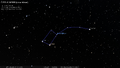 H.A. Rey's stick figure of Ursa Minor (1952)
-
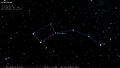 O. Hlad's stick figure of Ursa Minor (1988)
-
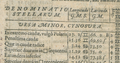 UMi in Rudolphine Tables (Kepler 1627).
-
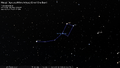 Reconstruction of Stickfigure based on the depiction of Almagest (100-170 CE). CC-BY Susanne Hoffmann in Stellarium.


Images from the Saxl Project
The Saxl Project[10] is the name of a project to have complete digital access to over 250 medieval and Renaissance illustrated astronomical and astrological manuscripts. It is intended to be a continuation and updating of Fritz Saxl's multi-volume work: Verzeichnis der astrologischen und mythologischen illustrierten Handschriften des lateinischen Mittelalters in römischen Bibliotheken (1915-1966, with the collaboration of Hans Meier and Patrick McGurk).
The Project is led by Kristen Lippincott and run jointly with The Warburg Institute, University of London. It has also benefitted greatly from previous collaborative research, which was carried out with Dr Elly Dekker of Utrecht University, between 1997 and 2007.
Classical Image
-
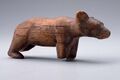 Egyptian Boston, MFA Egyptian figure of a bear New Kingdom, 1550-1070 BC Wood, acc no 72.4167
-
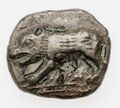 Greek Boston, MFA Hemidrachm of Mantineia with she-bear (minted in Arcadia, Peloponneosos) late Archaic (500-480 BC) Acc no 04.907
-
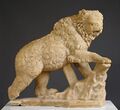 Roman Los Angeles, Getty Museum Marble statue of a bear Roman, c. 100-200 AD
-
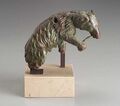 Roman Boston, MFA bronze statue of a bear (9 mm / 3” tall) late Hellenistic (possibly Egypt), 1st C BC acc. no 67.627
-
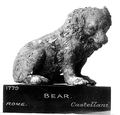 Roman London, British Museum Bronze figure of a bear or hound Roman, 1-3rd C AD Acc no 1873.0820.7
-
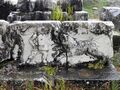 Roman Miletus, Greek Theatre, the stage building Relief depicting Eros hunting c. 250-225 BC credit: Flickr (Carole Raddato)
-
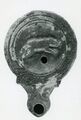 Roman London, British Museum Mould-made pottery lamp with running bear Found in Pozzuoli, 40-80 AD Acc no 1856,1226.498
-
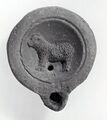 Roman London, British Museum Mould-made pottery lamp with standing bear Roman, made in Cnidos, 2 C AD Acc no 1859,1226.117
-
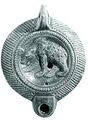 Roman London, British Museum Mould-made pottery lamp with standing bear Roman, made by Augendus, c. 175-225 Acc no1756,0101.632
-
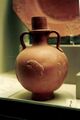 Roman Amsterdam, Allard Pierson Museum Two-handled jar with relief of a bear from Djerba, 3rd C AD Inv. 12.375
-
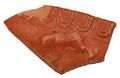 Roman North African redware
-
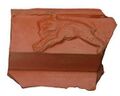 Roman North African redware
-
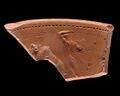 Roman Boston, MFA Fragment of mould for a bowl with youth attacking a bear from Arezzo Acc no 13.147
-
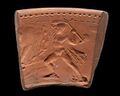 Roman Boston, MFA Fragment of mould for a bowl with youth attacking a bear from Arezzo Acc no 98.851
-
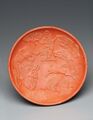 Roman Boston, MFA Red slipware bowl of Orpheus and the animals Late Roman (probl. Tunisia) Acc no 1981.658
-
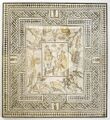 Roman (Callisto) Los Angeles County Museum of Art / The Getty Villa Callisto and Diana with bear hunt in border From the Villa Laure Gallo-Roman, 3rd C A
-
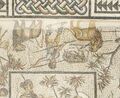 Roman (Callisto) Los Angeles County Museum of Art / The Getty Villa Callisto and Diana with bear hunt in border From the Villa Laure Gallo-Roman, 3rd C A
-
 Roman Vatican Museums From the Temple of Diana on the Aretine Hill, 1st C AD
-
 Roman Vatican Museums From the Temple of Diana on the Aretine Hill, 1st C AD
-
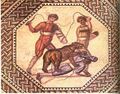 Roman Damnatio ad bestias (source?) Credit: Wikimedia
-
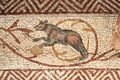 Roman Libya, Villa Selene Detail from decorative border 2nd C AD
-
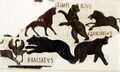 Roman Tunis, Bardo Museum
-
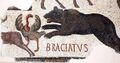 Roman Tunis, Bardo Museum
-
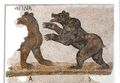 Roman Tunis, Bardo Museum
-
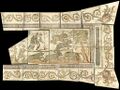 Roman Los Angeles, Getty Museum Fragments of floor mosaic found between Bacoli and Pozzuoli, Italy 4th c AD
-
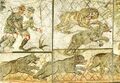 Roman Los Angeles, Getty Museum Fragments of floor mosaic found between Bacoli and Pozzuoli, Italy 4th c AD
-
 Roman Los Angeles, Getty Museum Fragments of floor mosaic found between Bacoli and Pozzuoli, Italy 4th c AD
-
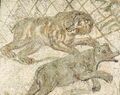 Roman Los Angeles, Getty Museum Fragments of floor mosaic found between Bacoli and Pozzuoli, Italy 4th c AD
-
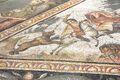 Roman Paris, Musée du Louvre
-
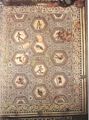 Roman Fribourg, Switzerland Beast hunt in an amphithatre from the Villa at Vallon, ea 3rd C AD Cf Ling, pp. 16-18
-
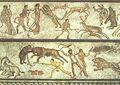 Roman Leptis Magna, Amphitheatre The execution of Garamantes wall mosaic from the Villa Dar Buc Ammera, c. 70 AD
-
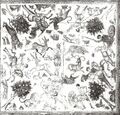 Roman Cf. K. Dunbabin, Mosaic of the Ancient World, 1999.
-
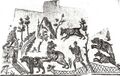 Roman Cf. K. Dunbabin, Mosaic of the Ancient World, 1999.
-
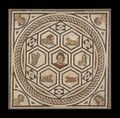 Roman (Orpheus with beasts) Los Angeles, Getty Museum Orpheus with animals and 4 seasons Gallo-Roman (Saint-Romain-en-Gal ) c. 150-200 AD
-
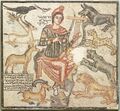 Roman (Orpheus with beasts) form. Dallas Museum of Art(returned to Turkey in 2012) Orpheus with animals
-
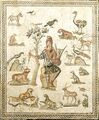 Roman (Orpheus with beasts) Palermo, Museo regionale Antonia Salinas Orpheus and the animals from Building A, Piazza della Vittoria, c. 200-300 AD credit: Wikimedia (Marie-Lan Nguyen)
-
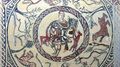 Roman (Orpheus with beasts) Bristol Museum of Art (? - displayed there in 2013) Floor mosaic from Roman Villa in Newton St Loe, late 3rd-ea 4th C AD
-
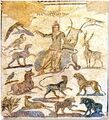 Roman (Orpheus with beasts) Cyprus, Paphos, House of Dionysus credit: a-picture-a-day.blogspot.co.uk /2005 (Rui Reino Bapista)
-
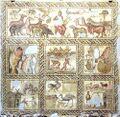 Roman (Orpheus with beasts) Libya, Tripoli Archaeological Museum from Leptis Magna, Orpheus Mosaic Villa
-
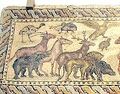 Roman (Orpheus with beasts) Libya, Tripoli Archaeological Museum from Leptis Magna, Orpheus Mosaic Villa
-
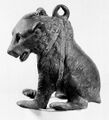 Early Christian Boston, MFA Bronze container (ampulla) in the form of a bear Late Imperial/ late antque (c. 4th / 5th C AD) Acc no 62.1203
-
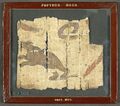 late Roman/ ea. Christian London, British Museum Papyrus fragment with bear Egyptian (?), 3-4th C AD cf. Age of Spirituality, cat 86.
-
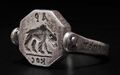 Byzantine Boston, MFA Silver ring engraved with a bear (and a lion on the reverse) Early Byzantine, 6-7th C AD Acc noo 2005. 291
-
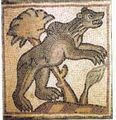 Byzantine Libya, Qasr Museum mosiacs from Olbia (?), 5th C AD


Classical Globes
-
 Naples, Farnese Atlas: missing from globe
-
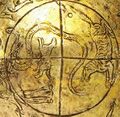 Paris, Kugel Globe n.b. – smaller, in second loop of Draco’s tail, long tail
-
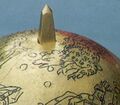 Mainz globe n.b. – slightly smaller, in second loop of Draco’s tail, long tail, back-to-back
-
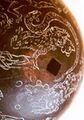
-
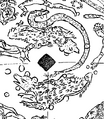 (drawing © Kunzl)


Germanicus mss
-
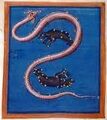 Leiden, Univbibl Voss lat 4° 79 n.b. – inside second curve of Draco, short tail, facing outwards, foot-to-foot
-
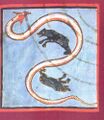 Boulogne-sur-Mer, Bibl. Mun. Ms 188 Same, but slightly larger
-
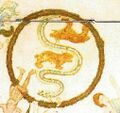 vs. planisphere in third curve, facing inward, back-to-back
-
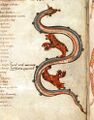 Bern, Burgerbibl, Ms 88 n.b. – same , but standing on hind feet
-
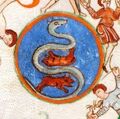 vs. planisphere same
-
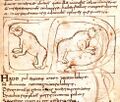 Basle, OBU Ms AN.IV . 18 n.b. – same size, UMi towards Draco’s and slightly larger , butt-to-butt
-
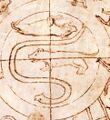 vs. planisphere
-
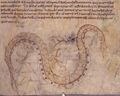 Aberystwyth, NLW Ms 735 C n.b. – in second curve, both backs towards head of Draco
-
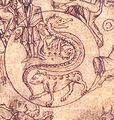 vs. planisphere n.b. – smaller one in second curve
-
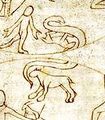 vs. schema
-
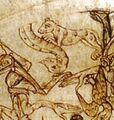 vs. hemisphere similar to planisphere
-
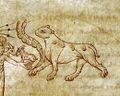
-
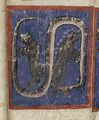 Madrid, Bib nac Ms 19 (16) n.b. – same size, fewer stars on one towards tail = UMi, back-to-back
-
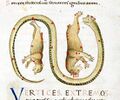 Cologny, Bib Bodmer Cod lat 7 n.b. – slightly smaller one nr. tail
-
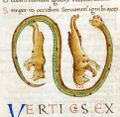 NY, Pierpont Morgan Libr Ms M 389 same
-
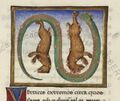 Vatican, BAV Barb lat 76 n.b. -- same
-
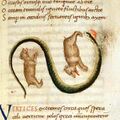 London BL Egerton 1050 n.b. – smaller one towards tail of Draco
-
 London BL Add 15819 n.b. – same size
-
 Naples, Bib naz XIV D 37 same
-
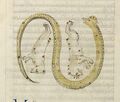 Madrid Bib Nac Ms 8282 n.b. – slightly smaller one towards tail of Draco
-
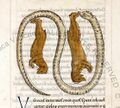 Vatican, BAV Barb lat 77
-
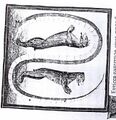 Vienna, Schottenstift Ms 51
-
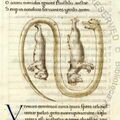 Vatican,BAV Urb lat 1358
-
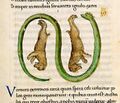 Florence, Bibl Laurenziana Plut 89 sup 43
-
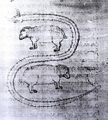 Montpellier Ms H 452 n.b. – pig-like


Ps-Erathosthenes
-
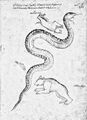 Vatican BAV, Vat grec 1087 n.b. – smaller one in first curve of Draco’s body, longer tail, back-to back
-
 Hemispheres – smaller bear (!) near tail
-
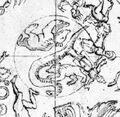 Planisphere – smaller bear in second curve of Draco


Cicero
-
London, BL Harley 647: missing from manuscript
-
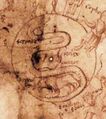 London, BL Harley 647 – planisphere bear in third loop labelled ‘Helix’
-
London, BL Harley 2506: missing from manuscript
-
London, BL Cotton ms Tib B.V., pars 1: missing from manuscript
-
London, BL Cotton Ms Tib C. 1: missing from manuscript
-
Gottweig, Stiftsbibl Ms 7: missing from manuscript

Revised Aratus Latinus
-
 Dresden, Landesbibl. Ms D C 183 n.b. – slightly smaller bear in second loop
-
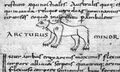 standing to left
-
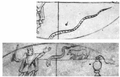 Dresden – hemispheres n.b. – UMi near head of Draco
-
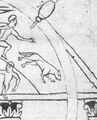 globe on stand = UMa or UMi ?
-
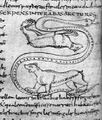 Paris BN Lat 12957 n.b. – similar
-
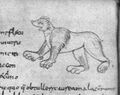 running to left, shaggy
-
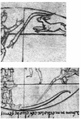 Paris – hemispheres leaping, UMi near mid-section of Draco
-
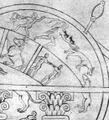 globe on stand 2 animals = UMa and UMi ?
-
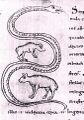 Prague, Univbibl Ms IX. C. 6 (1717) n.b. – smaller bear in second curve
-
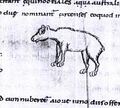 standing to left
-
Prague – hemispheres: missing from ms?
-
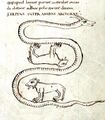 St Gallen, Stiftsbibl Ms 902 n.b. – same size, tongues out
-
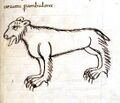 standing to left, tongue out, claws
-
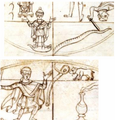 Hemispheres UMi at curl in Draco’s body
-
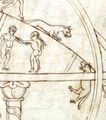 globe on stand 2 animals = UMa and UMi?
-
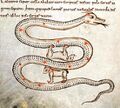 St Gallen, Stiftsbibl Ms 250 same size
-
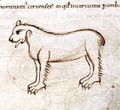 standing to left
-
 Hemispheres UMi at curl in Draco’s body
-
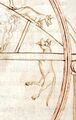 globe on stand 2 animals = UMa and UMi?
-
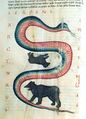 Gottweig, Stiftsbibl. Ms 7 (146) n.b. – larger
-
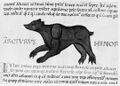 standing to left, tongue out, claws
-
on hemisphere: missing in manuscript
-
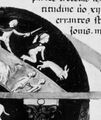 globe on stand rabbit = one of bears?
-
Siena, Bib com Ms L. IV. 25: missing in manuscript
-
: missing in manuscript
-
on hemisphere: missing in manuscript
-
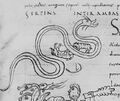 Paris BN n.a. 1614 n.b. – bear in curve smaller
-
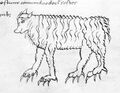 standing to left, claws
-
 Hemispheres n.b. – small bear under tail of Draco (= UMi?)
-
Munich, Staatsbibl. Clm 560: image missing from manuscript
-
: image missing from manuscript
-
hemispheres: image missing from manuscript
-
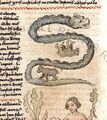 Vatican, BAV Reg lat 1324 n.b. – bear on tail slightly smaller
-
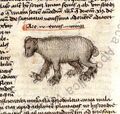
-
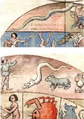 Hemispheres UMi near Draco’s head
-
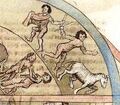 globe on stand animal near Auriga as horse
-
 Cologne, Dombibliothek Ms 83.11 n.b. – stands to right, hunched
-
hemipshere: missing from manuscript
-
globe on stand: missing from manuscript


ps-Bede, De signis caeli
-
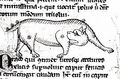 Oxford, Bodleian Laud misc 644 n.b. – stands facing right, hunched
-
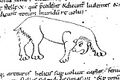 Padua, Bibl Antoniona Ms Anton 27 same
-
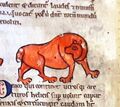 Venice, Bib Marciana Ms VIII, 22 n.b. – stands facing right, hunched and biting leg
-
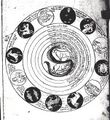 Draco inter arctos as part of zodiac rota
-
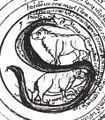 Draco inter arctos as part of zodiac rota
-
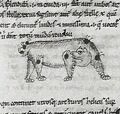 Paris BN lat. 14754 same
-
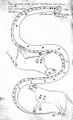 Dijon Bib mun, Ms 488 n.b. – same size
-
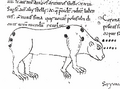 walks to right
-
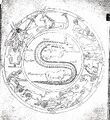 Draco inter arctos as part of zodiac rota
-
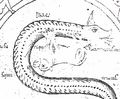 Draco inter arctos as part of zodiac rota
-
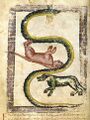 Paris, BN Lat 5543 n.b. – runs to left, long tail ‘Felix arcturus minor’
-
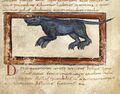 Paris, BN Lat 5543 n.b. – runs to left, long tail ‘Felix arcturus minor’
-
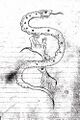 Paris, BN Lat 5239 similar, note back fur
-
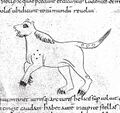 Paris, BN Lat 5239 similar, note back fur
-
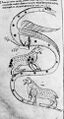 Klosterneuburg, Stiftskirche, Ms 685 n.b. – runs to left, long tail
-
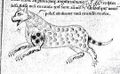 Klosterneuburg, Stiftskirche, Ms 685 n.b. – runs to left, long tail
-
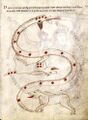 Vatican, BAV Vat lat 643
-
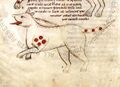 Vatican, BAV Vat lat 643
-
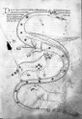 Zwettl, Stiftskirche Ms 296 closer to Klosterneuberg
-
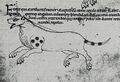 Zwettl, Stiftskirche Ms 296 closer to Klosterneuberg
-
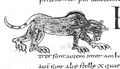 Laon Bib mun, Ms 422 n.b. – walks to right, long tail, claws
-
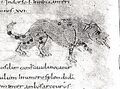 Rouen, Bibl mun, 26 similar, but more dog-like with tongue out
-
Amiens Bibl mun, Ms 222: missing from manuscript
-
Durham, Cathedral Libr Hunter 100: missing from manuscript
-
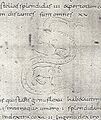 Freiburg-im-Bresgau Ms 35 n.b. – stands to right, hunched
-
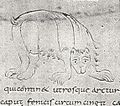 Freiburg-im-Bresgau Ms 35 n.b. – stands to right, hunched
-
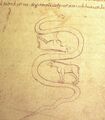 Montecassino, Badia, Ms 3 n.b. – stand to left
-
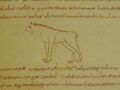 Montecassino, Badia, Ms 3 n.b. – stand to left


De ordine ac positione
-
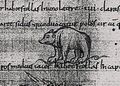 Berlin, Staatsbibl Ms lat 130 (Phill 1832) n.b.– stands to the left
-
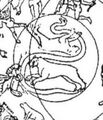 Berlin planisphere
-
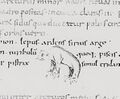 Monza, Bib capit Ms F. 9/176 (246) stands to the left;;
-
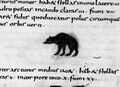 Madrid, Bib Nac Ms 3307 similar
-
 Vatican BAV, Vat lat 645 n.b. – walks to left, shaggy
-
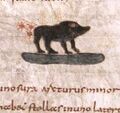 Munich, Staatsbibl. Ms clm 210 n.b. – stands to right, long snout
-
 planisphere
-
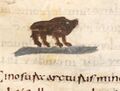 Vienna, ONB Vindob 387 same
-
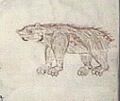 Austin TX, Harry Ransom, Univ of Texas, Ms 29 n.b. – stands to left, claws
-
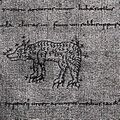 Paris BN lat n.a. 1614 similar
-
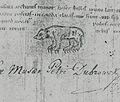 St Petersburg, Nat Libr Ms Q v IX, no 2 same
-
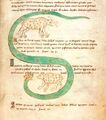 Paris BN lat 12117 n.b. – only as draco inter arctos
-
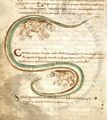 Vatican BAV, Reg lat 309 same
-
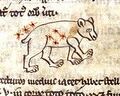 Los Angeles, Getty Mus Ludwig XII, 5 n.b. -- walking to right
-
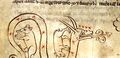
-
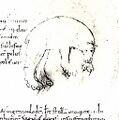 Paris BN, lat 8663 n.b. – stands to right, hunched
-
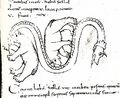
-
 Vienna, ONB Vindob 12600 n.b. – walks to right, large hump
-
Reykjavik Ms 1812: missing from manuscript


Hyginus
-
 S Paul im Lavantthal Ms 16/1 (XXV. 4. 20) n.b. – stands to right
-
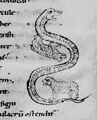
-
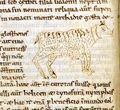 Florence, Bibl Laurenziana Ms Plut 29.30 same
-
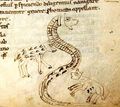
-
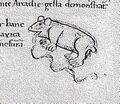 Leiden, Univ-blbl Voss 8°18 n.b. – standing on water or draco (?)
-
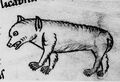 Wolfenbüttel, Herz Aug Ms 18. 16. Aug 4° n.b. – walking to left
-
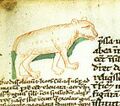 London BL Arundel 339 n.b. – walks to right
-
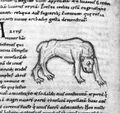 Vienna ONB Vindob 51 n.b. – stands to right, hunched
-
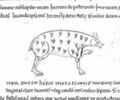 Leiden Univ-bibl Voss lat 4° 92 n.b. – stands to right, raised front foot
-
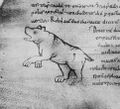 Leiden Univ-bibl Voss lat 8° 15 n.b. – leaping to left
-
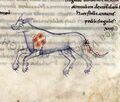 Vatican BAV Reg lat 123 Leaps to left, short tail
-
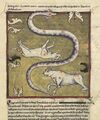
-
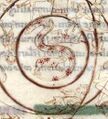 Vatican BAV Reg lat 123 - planisphere
-
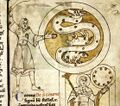 Oxford, Bodleian Libr Bodley 614 n.b. – only in draco inter arctos, bear towards end of Draco’s tail slightly smaller
-
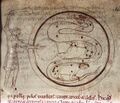 Oxford, Bodleian Libr Digby 83 (SC 1684) same
-
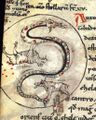 Baltimore, Walters Art Gallery Ms 734 n.b. – only as part of draco inter arctos
-
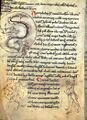
-
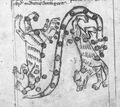 Berlin, Staatsbibl. Ms 8° 44 (Rose 962) n.b. – only as part of draco inter arctos
-
Lyon, Bib mun, Pal des Arts 45
-
Lyon, Bib mun Ms 172
-
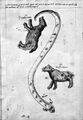 Munich, Staatsbibl Germ 595 angled
-
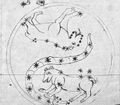 Munich, Staatsbibl Clm 59 back-to-back, in circle
-
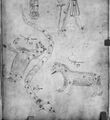 Vatican BAV Pal.lat. 1369 angled
-
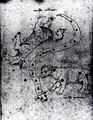 Vatican BAV Pal.lat. 1389 angled
-
Wolfenbüttel Herz Aug Guelf 81 24 Aug 1
-
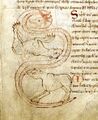 London BL, Roy Ms 13. A. XI n.b. – only as draco inter arctos
-
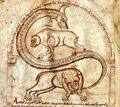 Munich, Staatsbibl. Clm 10270 n.b. – only as draco inter arctos, ‘Cynosura’ near Draco’s head
-
Cambridge, Fitzwilliam Mus Ms 260: missing from manuscript
-
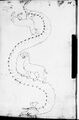 Florence, BN Magl XI. 141 n.b. -- only as draco inter arctos
-
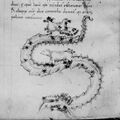 Milan, Bibl. Ambrosiana T. 47 sup
-
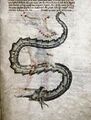 Oxford, Bodleian Libr Can. class lat 179
-
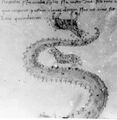 Siena, Bib com Ms L. VI. 25
-
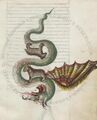 Vatican, BAV Vat lat 3109 within tail
-
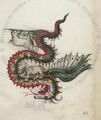 Vatican, BAV Vat lat 3109 within tail
-
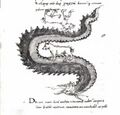 Verona, Bibl capitolare Ms CCLXI
-
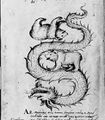 Oxford, Bodleian Library Can misc 46 n.b. – only as draco inter arctos
-
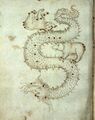 Milan, Bibl Trivulziana N. 690 (E 83)
-
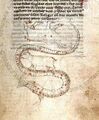 Vatican, BAV Vat lat 3110
-
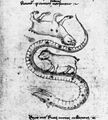 Florence, BNC Magl XI. 114,1
-
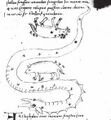 Florence, Bibl Laurenziana Ashburnam1148 n.b. – only as draco inter arctos
-
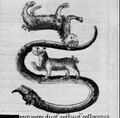 Pavia, Bibl Univ Aldini 490
-
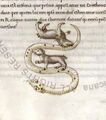 Vatican., BAV Urb lat 1358
-
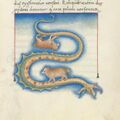 New York, Public Library Spencer Ms 28
-
Freiberg, Andreas-Möller-Bibl. Cl XI 4o 9
-
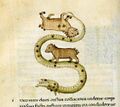 Florence, Bib Laurenziana Plut 89, sup 43
-
Vatican, BAV Chigi H. IV. 20: missing in manuscript
-
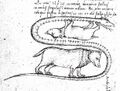 Cortona, Lib del Comune Ms 184 (256) n.b. – only as draco inter arctos, smaller one near Draco’s head
-
Cambrai, Bibl Mun. Ms 933 (832)
-
Cambridge, Trinity College Ms R 15 32: missing from manuscript
-
Leiden, Univ.-bibl. Gronovius 21: missing from manuscript
-
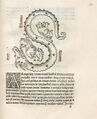 Venice: Ratdolt, 1482 cf Michael Scot n.b. – only as draco inter arctos, smaller one near tail
-
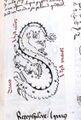 Vienna ÖNB Vindob 3111 same


Basinio da Parma
-
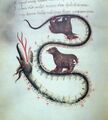 Rimini, Cassa di Risparmio (London Sotheby’s sale 1992) n.b. – only as draco inter arctos
-
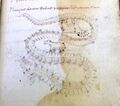 Cambridge, CUL Dd IV 64 same
-
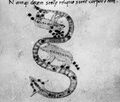 Oxford, Bodleian Libr Bodley 646
-
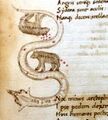 Parma, Bib Palatina, Parm 1008 same
-
Venice, Bibl Marciana XII, 194 (4148)
-
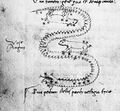 Parma, Bibl Palatina Parm 27 n.b. – only as draco inter arctos
-
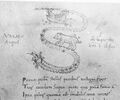 Rome Bibl Casanatense Ms 4059 same
-
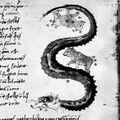 Munich, BSB Clm 15743 same
-
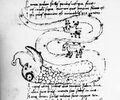 Bologna, Bibl Com Ms 173 n.b. – only as draco inter arctos
-
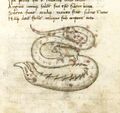 London, Wellcome Coll WMS 122
-
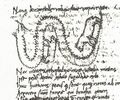 Ravenna, Bib Classense Ms 120
-
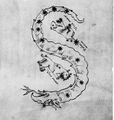 Florence, Bibl Marucelliana Ms C. CCLI cf. Ratdolt/ Michael Scot
-
Krakow, Rps BJ 3706
-
Padua, Bibl. Universitaria Cod 983


Michael Scot
[1] In unoquoque est signum certa quantitate stellarum et utrumque dictur Arcturus, tamen unum est maius altero. At sicut Greci nominant dicta signa Arctores, ita nos Latini nominamus eadem signa Ursas seu Plaustra. [2] Ergo Ursarum una magna est et altera parva, et sibi sunt opposite, ut caput unius ad caudam alterius continuo persistens. Ursa quidem Minor est in parte septentrionis et minor est in parte meridiei. [6] RT tantum valet Arcton dicere, quantum Arctofilax seu Currum sive Ursa Minor. Item quandoque … nominatur Minor Fenix, ut reperitur in multis autoribus (ed. Ackermann 2009, p. 168 - 70).
-
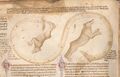 Munich, Staatsbibl Clm 10268 n.b. – only as draco inter arctos, smaller bear at tail
-
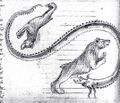 Oxford, Bodleian Libr Bodley Ms 266 same
-
Vatican, BAV Vat lat 4087 A
-
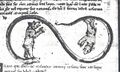 St Petersburg, Nat Libr Ms lat F V IX, no. 1 n.b. – only as draco inter arctos
-
Warsaw, BN, B Baw 46
-
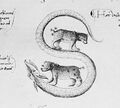 Vienna, ONB Vindob 3394 n.b. – only as draco inter arctos, smaller bear at tail
-
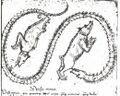 Padua, Bibl Seminario Cod. 48 same
-
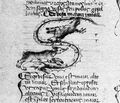 London BL Add 41600 n.b. -- only as draco inter arctos, smaller bear with long tail at tail of Draco
-
London, Wellcome Coll Ms 509: missing from manuscript
-
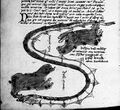 Milan, Ambrosiana Ms I 90 sup
-
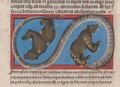 Vienna, ONB Vindob 2352 n.b. – only as draco inter arctos, same size, UMi at tail of Draco
-
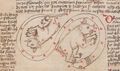 Vienna, ONB Vindob 2378 same, but smaller bear at tail
-
Prague NK, Ms III. C. 2
-
 Paris BN lat 7408A
-
 Vienna, ONB Vindob 5442 n.b. – only as draco inter arctos, smaller bear at tail of Draco
-
Cambridge, MA Harvard, Houghton Libr., Typ 43: only zodiac signs
-
Edinburgh, Royal Observatory Ms Cr 3. 23
-
Florence, BNC Magl. XXII, 22
-
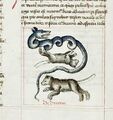 Klosterneuburg, Augustiner Ch-Stift, Ms CCI 125 n.b. – only as draco inter arctos, smaller bear at second curve, long tail
-
Krakow, Bibl Jagiellonska Rps 573
-
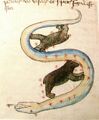 Prague, Narodni Knihova Ms XXVI A 3 n.b. – only as draco inter arctos, smaller bear at end of Draco’s tail
-
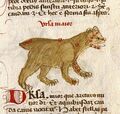 Seville, Bibl Columbina Ms. 7.7.1 n.b. – stands to right, tongue out
-
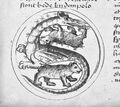 Darmstadt, Hess Hochschulbibl. Ms 266 n.b. – only as draco inter arctos
-
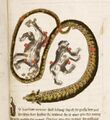 Berlin, Staatsbibl Ms germ fol 244 smaller bear near head of Draco
-
 Salzburg, Studienbibl 2 G 8/13 smaller bear at tail of Draco
-
 Vatican, BAV Pal lat 1370
-
 Paris, BN Allem 106 smaller bear at tail of Draco
-
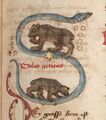 Tubingen Univ-bibl. Ms d 2 n.b. – smaller bear at tail of draco
-
 smaller bear in paranatellonta rota near Pole Star
-
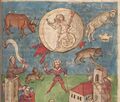 UMa and UMi as children of Luna
-
Wolfenbüttel, Herz Aug Bibl Ms Guelph 29 14 Aug 4°
-
Coburg, Bayerisches Landesbibl. Ms 5
-
Edinburgh, Royal Observatory Libr. Ms Cr 4 6
-
Freiburg, Univ-bibl. Ms 458
-
Heidelberg Univ-bibl. Pal germ 832
-
Karlsruhe, Badische Landesbibl. Ms K 2790
-
Nürnberg, Germanisches Nationalmus. Ms 7082
-
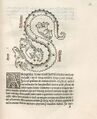 Venice: Ratdolt, 1482
-
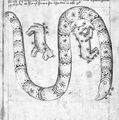 Cambridge, Emmanuel College Ms 70 n.b. – only as draco inter arctos, UMi at tail of Draco
-
Metz, Bibl mun Ms 287
-
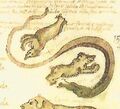 Paris, BN, Ital 81 n.b. – only as draco inter arctos, bear at Draco’s tail is labelled ‘Ursa minor’
-
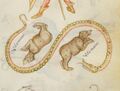 Modena, Bibl Estense Ital 483 (a. P. 47) n.b. – only as draco inter arctos
-
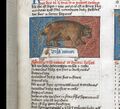 London, BL Arundel Ms 66 n.b. – stands to right, wears a collar Stellacio urse minoris et dicitur helice
-
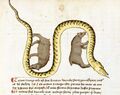 St Gallen, Vadianische Libr Ms 427 n.b. – only as draco inter arctos
-
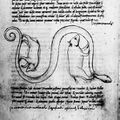 Florence, Bibl. Riccardiana Ms 3011 n.b. – smaller bear at end of Draco’s tail
-
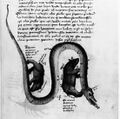 Madrid, BN Ms 9267 same (see label)
-
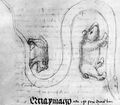 Paris BN Lat 6561 n.b. – only as draco inter arctos , smaller bear at end of Draco’s tail
-
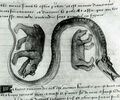 Paris BN Fr 612 n.b. – smaller bear at second curve of Draco’s
-
Paris BN Lat 7344


Lambertus, Liber Floridus
-
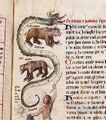 Hague Ms 72.A.83 n.b. – only as draco inter arctos; UMI near Draco’s tail (label)
-
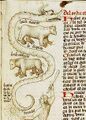 Hague Ms 128 C same
-
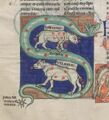 Paris, BN Lat 8865 same
-
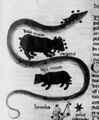 Chantilly, Petit Château Ms 724 (1596) same
-
Leiden, Univ-bibl Ms 1° 31
-
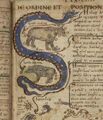 Ghent Ms 92 same
-
Paris, BN Lat 9675
-
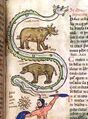 Wolfenbüttel, WDB, Ms Gud lat 1 same


Domenico d’Arezzo
-
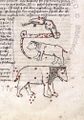 Vatican BAV Val Lat 3121 n.b. – only as draco inter arctos, smaller bear closer to end of Draco’s tail
-
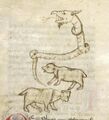 Madrid, BN Ms 1983 same, upper bear slightly smaller
-
Fermo, Bibl. Com. Ms 4: missing from manuscript
-
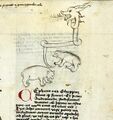 Florence, Bibl. Laurenziana Aedil 170
-
London, Lambeth Palace Ms 35: missing from manuscript


Matteo Palmieri, Città di Virtù
-
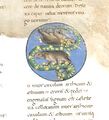 Florence, Bibl Laurenziana Plut 40 53 n.b. – only as draco inter arctos, bears same size
-
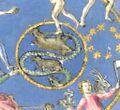 detail from planisphere bear near head slightly smaller


Eastern Globes
-
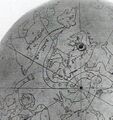 Florence,Mus delle Scienze, no. 2712 dated 1025 AD in last curve of Draco’s tail
-
 Paris globe GA 325
-
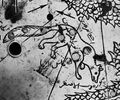 Smithsonian Mus, no 72-3085 n.b. – above Draco’s tail, fox-like
-
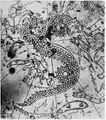 cf. Savage-Smith, Islamicate Globes, fig. 49
-
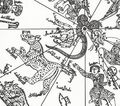 BM – Malcolm globe n.b. – long tail


non-Latin Eastern mss
-
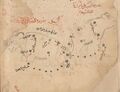 (al-Sufi, Kitab suwar al-kawakib al-ṯābita) Doha, Mus of Islamic Art Ms 2. 1998. SO (= Sotheby’s 1998, lot 34) Dated April 1125 AD; Baghdad n.b. – long tail, feet cut-off (?)
-
(al-Sufi, Kitab suwar al-kawakib al-ṯābita) Istanbul, Süleymaniye Libr Ms Fatih Kütüphanesi 3422 1125/26 AD; Mardin
-
(al-Sufi, Kitab suwar al-kawakib al-ṯābita) Istanbul, Süleymaniye Libr Ms Fatih Kütüphanesi 3422 1125/26 AD; Mardin
-
(al-Sufi, Kitab suwar al-kawakib al-ṯābita) Istanbul, Topkapi Sarayi Ahmet II 3493 1130-31 AD, Mayyafariqin, SE Turkey
-
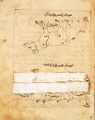 (al-Sufi, Kitab suwar al-kawakib al-ṯābita) Oxford, Bodleian Library Huntington Ms 212 1170/71 AD; Mosul n.b. – long tail, long snout, walking
-
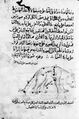 (al-Sufi, Kitab suwar al-kawakib al-ṯābita) Oxford, Bodleian Libr Ms Marsh 144 dated 1009-1010 AD / probl. end 12th C; Shiraz (?), Iran or Egypt (?) n.b. – head dipped, long tail
-
(al-Sufi, Kitab suwar al-kawakib al-ṯābita) Oxford, Bodleian Libr Ms Marsh 144 dated 1009-1010 AD / probl. end 12th C; Shiraz (?), Iran or Egypt (?)
-
(al-Sufi, Kitab suwar al-kawakib al-ṯābita) Berlin, Staatsbibl. Ms qu or 704 c. 1203
-
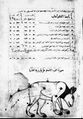 (al-Sufi, Kitab suwar al-kawakib al-ṯābita) Vatican, BAV Ross 1033 1224 AD, Ceuta (?) N Africa n.b. – long tail, round ears
-
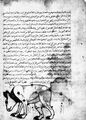 (al-Sufi, Kitab suwar al-kawakib al-ṯābita) Vatican, BAV Ross 1033 1224 AD, Ceuta (?) N Africa n.b. – long tail, round ears
-
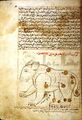 (al-Sufi, Kitab suwar al-kawakib al-ṯābita) Berlin, Staatsbibl. Landberg 71 Aug/Sept 1233; Mosul n.b. – long tail, collar, raised forefoot
-
(al-Sufi, Kitab suwar al-kawakib al-ṯābita) Berlin, Staatsbibl. Landberg 71 Aug/Sept 1233; Mosul: missing from manuscript
-
(al-Sufi, Kitab suwar al-kawakib al-ṯābita) Istanbul, Suleymanie Libr Ayasofia 2595 1249-50 AD; Alamut (?) Iran
-
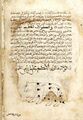 (al-Sufi, Kitab suwar al-kawakib al-ṯābita) Paris BN Arabe 2488 mid-13th C, Ceuta (?) N Africa n.b. – long tail
-
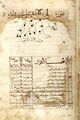 (al-Sufi, Kitab suwar al-kawakib al-ṯābita) Paris BN Arabe 2488 mid-13th C, Ceuta (?) N Africa n.b. – long tail
-
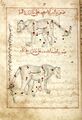 (al-Sufi, Kitab suwar al-kawakib al-ṯābita) Paris BN Arabe 2489 1266-67 AD; Syria? n.b. – long tail
-
(al-Sufi, Kitab suwar al-kawakib al-ṯābita) London BL Or 5323 1260-80; Maragha (?), NW Iran
-
(al-Sufi, Kitab suwar al-kawakib al-ṯābita) Cairo, National Libr Ms Dar al-Kutub miqãt 390 1300 AD
-
(al-Sufi, Kitab suwar al-kawakib al-ṯābita) Oxford, Bodleian Libr Pococke 257 1303/04; Aleppo
-
(al-Sufi, Kitab suwar al-kawakib al-ṯābita) Escorial Ms 915 20 March 1364 AD
-
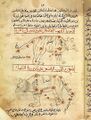 (al-Sufi, Kitab suwar al-kawakib al-ṯābita) NY, Metropolitan Mus Ms 13.160-10 (Rogers Fund 1913) c. 1400, Samarkand n.b. -- long tail, fox-like
-
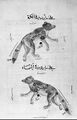 (al-Sufi, Kitab suwar al-kawakib al-ṯābita) Paris BN Ms arabe 5036 c. 1430-40, Samarkand n.b. – long tail, fox-like
-
(al-Sufi, Kitab suwar al-kawakib al-ṯābita) Bologna, Bibl. Univ Ms 2953 8 Oct 1500 AD
-
(al-Sufi, Kitab suwar al-kawakib al-ṯābita) Dublin, Chester Beatty Libr Ms Ar 4119 1504/05 AD
-
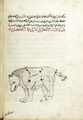 (al-Sufi, Kitab suwar al-kawakib al-ṯābita) Paris BN Arabe 2490 1516/17 AD n.b. – shortish tail
-
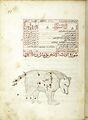 (al-Sufi, Kitab suwar al-kawakib al-ṯābita) Paris BN Arabe 2490 1516/17 AD n.b. – shortish tail
-
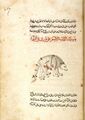 (al-Sufi, Kitab suwar al-kawakib al-ṯābita) Paris BN Arabe 2491 1770 AD n.b. – long tail, hunched
-
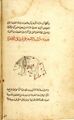 (al-Sufi, Kitab suwar al-kawakib al-ṯābita) Paris BN Arabe 2491 1770 AD n.b. – long tail, hunched
-
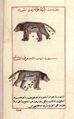 (al-Sufi, Kitab suwar al-kawakib al-ṯābita) Paris BN Arabe 2492 18th C n.b. – long tail, like a wolverine
-
(al-Sufi, Kitab suwar al-kawakib al-ṯābita) Dublin, Chester Beatty Libr Ms Ar 4222 16th C; Iran
-
(al-Sufi, Kitab suwar al-kawakib al-ṯābita) London BL Add ms 7488 16th C
-
(al-Sufi, Kitab suwar al-kawakib al-ṯābita) Istanbul, Perter Pasa Libr Ms 375 16th C
-
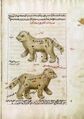 (al-Sufi, Kitab suwar al-kawakib al-ṯābita) Copenhagen, Kong. Bibl. Ms arabe 83 25 May 1602 AD; Medina; copied from copy dated 1013/14 AD believed to be al-Sufi’s own copy
-
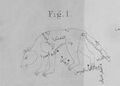 (al-Sufi, Kitab suwar al-kawakib al-ṯābita) St Petersburg, Inst Or Studs Ms n.s. 191 16th C; Istanbul ? cf Schellerup
-
(al-Sufi, Kitab suwar al-kawakib al-ṯābita) Princeton, Univ Libr Ms Garrett 2259 Yehuda al-Sufi, dated 3 Jan 1607
-
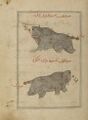 (al-Sufi, Kitab suwar al-kawakib al-ṯābita) Paris BN Arabe 6528 India, 1643-44 n.b. – shortish tail, nose and feet cut-off
-
al-Sufi translations, etc. al-Sufi, at-Tusi transl???
-
al-Sufi translations, etc. Tehran, Riza ‘Abbasi Libr Ms M. 570 Ibn-al-Sufi (son) 1159-60 AD
-
Qazwini St Petersburg, Ms E (?) Qazwini
-
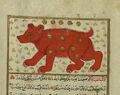 Qazwini Baltimore, Walters Art Gall Ms W 359 Qazwini - short tail, bear-like
-
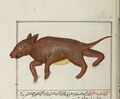 Qazwini Paris BN Arabe 2178 1762-63 AD – longer tail, rat-like
-
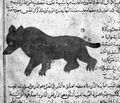 Qazwini Washington DC, Freer Ms 1954 -52 (ex-Sarre) Qazwini n.b. – shortish tail, bear-like
-
Qazwini Location unknown, Mughal, 17th c Qazwini


Sufi latinus
-
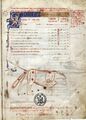 Paris, Bibl Arsenal Ms 1036 n.b. – walking to right, long tail
-
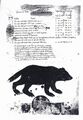 Prague, Strahov DA. II. 33 same
-
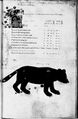 Berlin, Staatsbibl, KK Ms 78 D 12 same
-
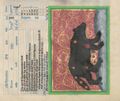 Munich, Staatsbibl Clm 826 same
-
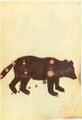 Gotha, Forshungsbibl Membr II 141 same
-
 Catania, Bibl Univ Ms Univ Ar, 387 n.b. – only as draco inter arctos, shorter tail
-
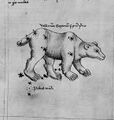 Vienna, ONB Cod 5318 similar, but on its own
-
 Bernkastel-Kues, Nicolaus hosp. Ms 207 n.b. – long tail, walking to right


Alfonsine
-
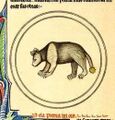 El Escorial Ms h 115 n.b. – no appreciable pictorial difference between bears, selection based on text
-
 (no text for this image)
-
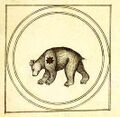
-
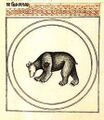
-
Vatican BAV Reg lat 1283a
-
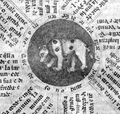 Vatican BAV Vat lat 8174 Orsa minore … in latino si dice e ursa minor e in arabico aldub alazgar
-
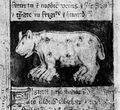 Los Angeles, Getty Mus Ms Ludwig XII, 7 figura constellationis ursa minoris qui vocatur in arabico aldub alazgar
-
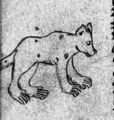 Oxford, Bodleian Libr Rawl C 117 n.b. – shorter tail
-
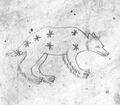 Vatican, BAV Urb lat 1399
-
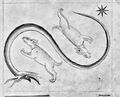 Oxford, Bodleian Library Can misc 554 n.b. – only as draco inter arctos, same size
-
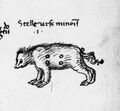 Bergamo, Bibl A Mai Ms S II 2 n.b. – faces to left, long hairy tail
-
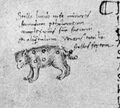 Vatican, BAV Vat lat 3099 same


Ptolemaic
-
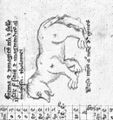 Brussels, Bib Roy Ms 10117-26 n.b. – walks to left Ursa minor alio nomine dicitur cynos
-
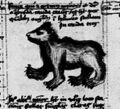 Vatican BAV Pal lat 1368 n.b. – short tail, walks to left
-
Vatican BAV Pal lat 1377
-
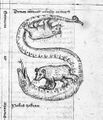 Torun Ms 35 n.b. -- only as draco inter arctos, smaller one at Draco’s tail
-
Augsburg, Univ-bibl. Cod II 1.2o 110
-
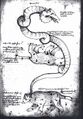 Cambridge MA Houghton, Typ 43 n.b. – only as draco inter arctos, UMi in second curve of Draco
-
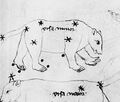 Basle, Univ-Bib Ms F. II. 33 n.b. – longer tail
-
 Florence, BNC, Ms Angeli 1147 n.b. – crouching to left, long tail
-
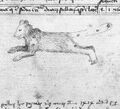 Vienna ONB Vienna 5415 n.b. – leaps to left, long tail
-
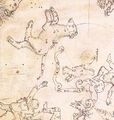 Vienna ONB 5415 northern hemisphere same, but with short tail


Hebrew Stellar Tables
-
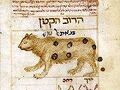 Phildelphia, U Penn Ms LJS 57 n.b. – stands to right, short tail
-
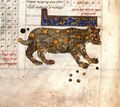 northern hemisphere
-
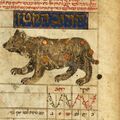 Vienna, ONB Hebrew 132 same


Seneca, Tragedies (comm. Nicolas Trevet)
-
Padua, Univ . Bibl. Cod 896
-
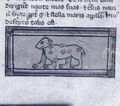
-
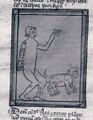 Vatican BAV Urb lat 355 n.b. – walking to left
-
Vatican BAV Vat lat 1650


Miscellaneous images
-
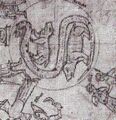 Bernkastel-Kues St Nicholas-Hospital Ms 212 (hemispheres) n.b. – smaller one in second curve of Draco
-
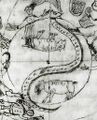 Darmstadt, Univ- and Landesbibl. Ms 1020 northern hemisphere n.b. – same size, Draco reversed
-
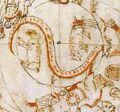 Darmstadt, Univ- and Landesbibl. Ms 1020 northern hemisphere n.b. – same size, Draco reversed
-
 Cusanus globe
-
 reconstruction © P. Hadrava
-
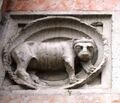 Parma, Battistero n.b. – hunched like De signis mss and RAL from Cologne
-
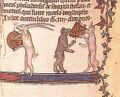 London, BL Burney ms 275 Marginalia of bear and ram using a quandrant
-
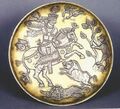 Berlin, Islamisches Museum Sassanian plate from Iran 7th C


Mythology
Weblinks
- Warburg Institute Iconographic Database – Ursa Minor
- Ian Ridpath's Star Tales – Ursa Minor
References
- ↑ Hoffmann, Susanne M. Wie der Löwe an den Himmel kam. Franckh Kosmos Verlag, Stuttgart 2021
- ↑ Pamìas, Jordi und Zucker, Arnaud (2013). Ératosthènes de Cyrène: Catastérrismes, Belles Lettres, Paris
- ↑ Hoffmann, S. M., <i>Hipparchs Himmelsglobus</i>. Springer Wiesbaden/ New York, 2017. doi:10.1007/978-3-658-18683-8.
- ↑ Eratosthenes: Sternsagen, übersetzt von Pamìas, Jordi und Geus, Klaus, Verlag Utopica, Oberhaid 2007
- ↑ Vogt, H., “Versuch einer Wiederherstellung von Hipparchs Fixsternver zeichnis”, <i>Astronomische Nachrichten</i>, vol. 224, no. 2, Wiley, p. 17, 1925. doi:10.1002/asna.19252240202.
- ↑ Graßhoff, G., <i>The History of Ptolemy's Star Catalogue</i>, Springer, New York, 1990
- ↑ Hoffmann, S. M., <i>Hipparchs Himmelsglobus</i>. Springer Wiesbaden/ New York, 2017. doi:10.1007/978-3-658-18683-8.
- ↑ Glover, E. (2026). The Astronomy of Hipparchus, Cambridge University Press
- ↑ Hipparchus's Lost Star Catalogue (1/2 reconstructed) (Hoffmann, 2017) in VizieR
- ↑ Kristin Lippincott (2018-x). The Saxl Project; online