All Skies Encyclopaedia:About: Difference between revisions
No edit summary |
No edit summary |
||
| (4 intermediate revisions by the same user not shown) | |||
| Line 7: | Line 7: | ||
ÖAW_engl.jpg|Austrian Academy of Science | ÖAW_engl.jpg|Austrian Academy of Science | ||
Fnje_2025_300dpi_trans_512pxl.png|Stiftung FNJE | Fnje_2025_300dpi_trans_512pxl.png|Stiftung FNJE | ||
</gallery> | </gallery> | ||
It began with a project on Mesopotamian names of stars and constellations and some adaptations to produce a similar dictionary for Chinese terms: | It began with a project on Mesopotamian names of stars and constellations and some adaptations to produce a similar dictionary for Chinese terms: | ||
<gallery> | <gallery> | ||
Goessmann1950.JPG|Gössmann (1950) | |||
Logo-mscj-combined.jpg|Michael Stifel Center Jena | Kurtik_title.JPG|Kurtik (2007) | ||
Wort-Bildmarke_Universität_Jena.jpg|FSU Jena | Logo-mscj-combined.jpg|Michael Stifel Center Jena (Preliminary Studies 2020-2023) | ||
Logo ltr.png|HU Jerusalem | Wort-Bildmarke_Universität_Jena.jpg|FSU Jena (Plan.Bab. 2020-2023) | ||
Logo of University of Science and Technology of China.svg.png|USTC Hefei | Logo ltr.png|HU Jerusalem (initial project Plan.Bab. 2020-2025) | ||
Logo of University of Science and Technology of China.svg.png|USTC Hefei (Plan.Sin. 2024-) | |||
ÖAW_engl.jpg|Austrian Academy of Science (Plan.Bab. 2024-2027) | |||
</gallery> | </gallery> | ||
== Preparation == | |||
The preparation (2020-2023) and initial set up (2024-2025) were | |||
* gently supported by the [https://www.fmi.uni-jena.de/en Faculty of Mathematics and Computer Science (FMI]) of the [https://www.uni-jena.de/en Friedrich Schiller University of Jena], Germany, with a temporary postdoc position for teaching and independent research, and eventually by providing a virtual machine for some test set ups, | |||
* by the President and Vice President for ECRs of the University of Jena (2020/1) and the "virtual institute" Michael Stifel Center Jena (2022/3) with three Grants for organising a [https://exopla.net/the-artifical-sky-jena-2023/ workshop The Artifical Sky (Jena 2023)] to discuss the needs and requirements of researchers in cultural astronomy (i.e. ethnology, anthropology, history of knowledge, archaeology ...), | |||
* by the Research Center for History and Heritage of Science and Technology, [https://en.ustc.edu.cn/ University of Science and Technology of China] (Hefei) by sponsoring guest stays of the PI in Hefei in 2024, and by an agreement on technical collaboration. | |||
== Predecessors == | == Predecessors == | ||
Latest revision as of 08:00, 26 September 2026
This encyclopaedia is meant to become a global knowledgebase for names in the sky. It stores philological, historical, and image information.
-
 Working Group Star Names
 -
 International Astronomical Union
 -
 Austrian Academy of Science
 -
 Stiftung FNJE


It began with a project on Mesopotamian names of stars and constellations and some adaptations to produce a similar dictionary for Chinese terms:
-
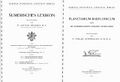 Gössmann (1950)
 -
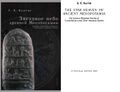 Kurtik (2007)
 -
 Michael Stifel Center Jena (Preliminary Studies 2020-2023)
 -
 FSU Jena (Plan.Bab. 2020-2023)
 -
 HU Jerusalem (initial project Plan.Bab. 2020-2025)
 -
 USTC Hefei (Plan.Sin. 2024-)
 -
Austrian Academy of Science (Plan.Bab. 2024-2027)


Preparation
The preparation (2020-2023) and initial set up (2024-2025) were
- gently supported by the Faculty of Mathematics and Computer Science (FMI) of the Friedrich Schiller University of Jena, Germany, with a temporary postdoc position for teaching and independent research, and eventually by providing a virtual machine for some test set ups,
- by the President and Vice President for ECRs of the University of Jena (2020/1) and the "virtual institute" Michael Stifel Center Jena (2022/3) with three Grants for organising a workshop The Artifical Sky (Jena 2023) to discuss the needs and requirements of researchers in cultural astronomy (i.e. ethnology, anthropology, history of knowledge, archaeology ...),
- by the Research Center for History and Heritage of Science and Technology, University of Science and Technology of China (Hefei) by sponsoring guest stays of the PI in Hefei in 2024, and by an agreement on technical collaboration.
Predecessors
This project is a standalone research project that was set up in the spirit of the WGSN thanks to generous funding of the project "Planetarium Babylonicum" by the Austrian Academy of Science.
However, of course, there had been earlier (less successful) attempts to create such a global repository. In particular, the project "Ancient Skies" by two amateur astronomers, Doris Vickers and Rüdiger Schultz, in Vienna aimed at producing such a collection. We particularly acknowledge it, as D. Vickers is one of our authors.






