Mesopotamian (Technical Remarks): Difference between revisions
No edit summary |
No edit summary |
||
| (2 intermediate revisions by the same user not shown) | |||
| Line 1: | Line 1: | ||
The Mesopotamian Dictionary of names of stars and constellations is the first one of its type. The first one was published in 1950, handwritten in German by Felix Gössmann and entitled "Planetarium Babylonicum". An updated and enriched edition of it was published by Gennady Kurtik (2007) in Russian. Here we present a revisited English translation of it, for the first time enriched with images and star maps. <gallery> | Authors: {{PAGEAUTHORS}} | ||
---- | |||
The Mesopotamian Dictionary of names of stars and constellations is the first one of its type. The first one was published in 1950, handwritten in German by Felix Gössmann and entitled "Planetarium Babylonicum". An updated and enriched edition of it was published by Gennady Kurtik (2007) in Russian. Here we present a revisited English translation of it, for the first time enriched with images and star maps. <gallery> | |||
File:Goessmann1950.JPG|Gössmann (1950) | File:Goessmann1950.JPG|Gössmann (1950) | ||
File:Kurtik title.JPG|Kurtik (2007) | File:Kurtik title.JPG|Kurtik (2007) | ||
</gallery> | </gallery> | ||
see | |||
* [https://sepoa.fr/nabu/nabu-index/ NABU] 2026 #02 82 | |||
* [https://sepoa.fr/nabu/nabu-index/ NABU] 2026 #02 83 | |||
== Technical Remarks on Assyriology == | == Technical Remarks on Assyriology == | ||
| Line 12: | Line 19: | ||
Above the tables of his references, we add others (e.g. newly appeared literature after his publication). | Above the tables of his references, we add others (e.g. newly appeared literature after his publication). | ||
=== Current Unfinished State === | |||
Kurtik’s original text wasn’t entirely consistent (keep in mind: we were working with an unfinished version, he passed away during the process of reworking). So the Russian-English translation team had agreed that we shouldn’t waste time on formatting in the first step, but instead only translate very quickly to allow other experts (Assyriologists, historians, cultural astronomers) continue working on it. | |||
The first team who intensively worked on the project (Horowitz, Hunger, Hoffmann) has corrected quite a few things in the meantime during weekly meetings, but they targeted the bigger content problems first and no one has ever done this systematically. | |||
Furthermore, the cited editions and translations might not be the standard translation (e.g. for MUL.APIN). This will be improved in the future: Currently, it predomininantly consists of Kurtik’s translation from some language (cuneiform, English, German, or whatever) into Russian. It’s quite possible, then, that we now have a translation from English to Russian to English… (in some cases). We aim at successively copying in the standard translation. The same applies, of course, to editions: MUL.APIN 1989 and 2018 sometimes differ, and Kurtik only had the earlier one, since his book was published as early as 2007. For these reasons as well, the decision not to spend much time on formatting when translating Kurtik was the right one. | |||
Please give us time to fix it or offer help and ask the editors for an account. :-) | |||
==== Format Convention ==== | |||
# Akkadian transliteration in italics | |||
# Sumerograms in Akkadian transliteration in caps (not italicized) | |||
# Sumerian in Sumerian | |||
## lower case roman = readings, | |||
## upper case Roman = signs (without certainty regarding reading) | |||
# Always dots in Sumerian, hyphens in Akkadian | |||
## Example: ''a-na'' LUGAL.MUL LUGAL-''ia'' | |||
=== Abbreviations === | === Abbreviations === | ||
| Line 118: | Line 144: | ||
אֲדָר שֵׁנִי | אֲדָר שֵׁנִי | ||
|} | |} | ||
[[Category:Service]] | |||
Latest revision as of 15:58, 5 August 2026
Authors: Susanne M Hoffmann
The Mesopotamian Dictionary of names of stars and constellations is the first one of its type. The first one was published in 1950, handwritten in German by Felix Gössmann and entitled "Planetarium Babylonicum". An updated and enriched edition of it was published by Gennady Kurtik (2007) in Russian. Here we present a revisited English translation of it, for the first time enriched with images and star maps.
-
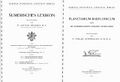 Gössmann (1950)
 -
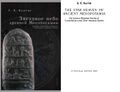 Kurtik (2007)


see
Technical Remarks on Assyriology
The page hyperlinked in the header is a separate page with all references given by Kurtik himself. The list is largely published by him in Kurtik (2007) but as he had been reworking his material in preparation of new (revisited) edition, some references in his list might be incomplete. The material was handed to us by his family after his death in early 2023.
For the time being, as long as we are still working on it, we keep his original page structure in the presentation of his references.
Above the tables of his references, we add others (e.g. newly appeared literature after his publication).
Current Unfinished State
Kurtik’s original text wasn’t entirely consistent (keep in mind: we were working with an unfinished version, he passed away during the process of reworking). So the Russian-English translation team had agreed that we shouldn’t waste time on formatting in the first step, but instead only translate very quickly to allow other experts (Assyriologists, historians, cultural astronomers) continue working on it.
The first team who intensively worked on the project (Horowitz, Hunger, Hoffmann) has corrected quite a few things in the meantime during weekly meetings, but they targeted the bigger content problems first and no one has ever done this systematically.
Furthermore, the cited editions and translations might not be the standard translation (e.g. for MUL.APIN). This will be improved in the future: Currently, it predomininantly consists of Kurtik’s translation from some language (cuneiform, English, German, or whatever) into Russian. It’s quite possible, then, that we now have a translation from English to Russian to English… (in some cases). We aim at successively copying in the standard translation. The same applies, of course, to editions: MUL.APIN 1989 and 2018 sometimes differ, and Kurtik only had the earlier one, since his book was published as early as 2007. For these reasons as well, the decision not to spend much time on formatting when translating Kurtik was the right one.
Please give us time to fix it or offer help and ask the editors for an account. :-)
Format Convention
- Akkadian transliteration in italics
- Sumerograms in Akkadian transliteration in caps (not italicized)
- Sumerian in Sumerian
- lower case roman = readings,
- upper case Roman = signs (without certainty regarding reading)
- Always dots in Sumerian, hyphens in Akkadian
- Example: a-na LUGAL.MUL LUGAL-ia
Abbreviations
...
Month Names
| Sumerian | Sumerian (alternate) | Akkadian | Hebrew | |
|---|---|---|---|---|
| Month I | ITIBARA2.ZAG(.GAR)
Month (images) placed by throne |
ITI.BAR(.SAG.SAG) | Nisānu | Nisan נִיסָן |
| Month II | ITI(EZEM.)GU4.SI.SU
Month horned oxen marched forth |
ITI.GU4(.SI.SÁ) | Ayyāru | Iyar אִייָר |
| Month III | ITISIG4.U5.ŠUB.BA.GÁ.GAR
Month the brick is placed in the mold |
ITI.SIG4.A | simānu | Sivan סִיוָן |
| Month IV | ITIŠU.NUMUN
Month preparing seed |
ITI.ŠU(.NUMUN.A/NA);
ITI.ŠU.GAR.NUMUN.NA |
Dûzu | Tammuz תַּמּוּז |
| Month V | ITINE.IZI.GAR
Month braziers are lit |
ITI.NE(.NE.GAR) | Abu | Av אָב |
| Month VI | ITIKIN.dINANNA
Month of rectification of Inanna |
ITI.KIN | Ulūlu / Elūlu | Elul אֱלוּל |
| Month VII | ITIDU6.KÙ
Month of Sacred Mound |
ITI.DU6/DUL(.KÙ) | tašrītu | Tishrei תִּשְׁרֵי |
| Month VIII | ITI(GIŠ)APIN.DU8.A
Month the plow is let go |
ITI.APIN(.DU8.A) | Arahsamnu | (Mar)Cheshvan
מַרְחֶשְׁוָן/חֶשְׁוָן |
| Month IX | ITIGAN.GAN.(MU.)E3
Month when the clouds(?) come out |
ITI.GAN(.GAN.NA) | Kisilīmu | Kislev כִּסְלֵו |
| Month X | ITIAB.E3
Month of the father |
ITI.AB(.BA.È) | ṭebētu | Tevet טֵבֵת |
| Month XI | ITIZIZ2.A
Month for emmer |
ITI.ZÍZ(.A.AN) | Šabāṭu | Shevat שְׁבָט |
| Month XII | ITIŠE.KIN.KU5
Month of the cutting of barley |
ITI.ŠE(.KIN.TAR) | Ad(d)aru | Adar אֲדָר |
| Intercalary
Month XIII |
ITIDIRI.ŠE.KIN.KU5 Additional harvest month | ITI.DIRIG.ŠE(.KIN.TAR) | Adaru arkû | Adar II
אֲדָר שֵׁנִי |