Pleiades: Difference between revisions
| Line 29: | Line 29: | ||
* [[Zappu|''zappu'']] | * [[Zappu|''zappu'']] | ||
Renzi- | Renzi-Sepe (2023)<ref>Maria Teresa Renzi-Sepe (2023). The Perception of the Pleiades in Mesopotamian Culture, LAOS 15, Harrassowitz, Wiesbaden</ref> summarises on p.29 that MUL.MUL in the OB period "indicates a brilliance or group of brilliant stars", but states on p.27-28 that it was not used as a name: <blockquote>In the lexical lists dating to the Old Babylonian period (ca. 2000–1500 BC), no reading of MUL.MUL as celestial bodies is attested. The Akkadian equivalents of the signs MUL.MUL show that these logograms are understood as forms of the verb ''napāḫu'' and ''nabāṭu'' (see 2.2.1.), as can be seen from the entries of the bilingual lexical list Proto Izi I. </blockquote><blockquote>(...) </blockquote><blockquote>The earliest attestation of MUL.MUL as the name of the Pleiades appears in the bilingual lexical list Ura = ''ḫubullu'' 22 dating to the Middle Assyrian period (ca. 1400–1100 BC). | ||
MUL.MUL ⸢za⸣-[á]p-⸢pu⸣ Bristle | MUL.MUL ⸢za⸣-[á]p-⸢pu⸣ Bristle | ||
Latest revision as of 10:50, 26 November 2026
Authors: Susanne M Hoffmann, Doris Vickers, Ian Ridpath, Youla Azkarrula


"Pleiades" is the common name for the open star cluster M45. The name is ancient Greek; it derives from πλέω (pleiu), meaning ‘to sail’. In the Mediterranean, the sailing season (gentle winds and warm weather) was given from the heliacal rise to the opposition of this star cluster. The association of "seven" with the cluster is of unknown origin, but it is a fact that (a) Greek mythology created a tale of seven daughters of the nymph Pleione (the sailing nymph), that (b) Mesopotamian religions even before this had associated seven (male) gods with the cluster, and that (c) Indian religion considers them the seven nurses of Lord Shiva's baby.[1]
However, the number "seven" has never been part of the name of the cluster (unlike modern English "Seven Sisters"); ancient depictions always show six stars which are connected to seven deities - except the Maori star lore which sees nine (deified?) stars with sacred realms.[1]
Etymology and History
Calendar Function
The significance of the cluster in almost all cultures on Earth is related to its usefulness in several calendar functions: Due to the different length of the solar year (365 days) and the lunar year (354 days), a leap month had to be inserted approximately every three years in Mesopotamia, but regular leaping is only preserved in the later half of the first millennium. Before these leap years could be set regularly, the rising of bright stars was consistently observed.
The Babylonian compendium MUL.APIN contains seven intercalation rules, among which three deal with the Pleiades.[2] The so-called Pleiades leap rule is not preserved in the original text (Hunger and Steele 2019,[3] 209-212), but it is possible to reconstruct the (broken) first rule in MUL.APIN as a predecessor of the Arab Pleiades leap rule, which says that a month must be inserted as soon as the Pleiades rise at the beginning of the third month (heliacal), as they should normally do so in the second month. Yet for MUL.APIN, it is also possible to reconstruct the broken line in different ways.[3][2]
-
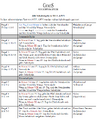 all leap rules in MUL.APIN - overview in Hoffmann and Hunger (2023)[2].
-
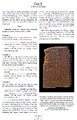 First leap rule in MUL.APIN - options for the reconstruction (Hoffmann and Hunger 2023)[2].
-
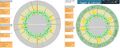 Visualisation of control observations for the leap month in ancient Mesopotamia according to MUL.APIN (SMH 2025).


For the Phoenicians and Greeks, shipping between the numerous islands was of enormous importance. The Greeks therefore understood the name of the star ‘Pleias’ from πλέω (pleiu), meaning ‘to sail’, and Hesiod and Eratosthenes mention its significance as an indicator of the shipping season in the farming calendar.
The alternative name ‘Heptaster’ (seven stars) is also documented by Eratosthenes, who states: ‘One does not see seven stars, but only six.’ Aratus, likewise, claims, ‘Seven in number they are in the lore of men, although there are only six apparent to the eye. No star at all has been lost from our ken in Zeus since our oral tradition began.’ Hence, Greek mythology invents an unconvincing story of seven sisters, one of whom hid or left the group. Although the sisters have proper names in mythology, these names were not applied to the stars of the star cluster in ancient times. The modern naming is also confusing because two of the free-eyed stars were named after their parents, Pleione and Atlas.
Origin of Constellation
Babylonian
The standard name of the star in mathematical astronomy is a Sumerian loanword indicating an indefinite number of stars - loosely translated as ‘the star cluster’. However, the Old Babylonian font cuneiform sign has three stars for "MUL" which makes six for MUL.MUL (𒀯𒀯). Lexical lists equate this Sumerian term with Akkadian "zappu" which means "bristle" or "bunch of hair" and is not a literale translation of MUL.MUL; the two cuneiform languages, Sumerian and Akkadian, obviously have different names for the object; see:
Renzi-Sepe (2023)[4] summarises on p.29 that MUL.MUL in the OB period "indicates a brilliance or group of brilliant stars", but states on p.27-28 that it was not used as a name:
In the lexical lists dating to the Old Babylonian period (ca. 2000–1500 BC), no reading of MUL.MUL as celestial bodies is attested. The Akkadian equivalents of the signs MUL.MUL show that these logograms are understood as forms of the verb napāḫu and nabāṭu (see 2.2.1.), as can be seen from the entries of the bilingual lexical list Proto Izi I.
(...)
The earliest attestation of MUL.MUL as the name of the Pleiades appears in the bilingual lexical list Ura = ḫubullu 22 dating to the Middle Assyrian period (ca. 1400–1100 BC).
MUL.MUL ⸢za⸣-[á]p-⸢pu⸣ Bristle
(KAL 8, 97 rev. i 15)
In MUL.APIN (compiled before 1000 BCE, but parts might be older than the compendium), which is already written in Akkadian, only this Sumerian name is used, but later astronomical texts of the -1st millennium pass on ‘the bristle hair’ of the bull as the Akkadian name. In MUL.APIN, where (almost) all celestial bodies are assigned to a deity, the Pleiades are associated with the so-called Seven Gods. These are seven sacred weapons that can speak and are perceived as deities. They are sometimes associated with the underworld. A relatively recently discovered fragment of the Gilgamesh Epic fits in with this, according to which seven underworld deities are the sons of Gilgamesh's first defeated opponent and the historical fact that before the earthly king Gilgamesh (with G) there was a god of the dead called Bilgamesh (with B). He was one of seven underworld gods before the myth of the king eclipsed this figure in importance. To summarise: We don't know, but a connection between the number seven and an early Sumerian death cult is obvious.
Egyptian
Belmonte and Lull (2023, tab. 4.7) summarise their identifications of terms in hieroglyphs with stars:
| Name | Possible Transalation | Exact Identification or approximate location | |
|---|---|---|---|
 |
Khau | Myriad or Flock | The Pleiades Cluster |
Greco-Roman
Homer
Iliad, verse 485
And all the stars that circle the heavens and illuminate them, the Pleiades and the Hyades, and the great power of Orion, and the Bear, otherwise known as the Celestial Chariot, which turns there and always keeps Orion in sight, and never, on its own, dives into the waters of Oceanus.
However, we learn nothing here about the Pleiades, especially not about their cultural significance. It is merely stated that they, along with the Hyades and Orion (and other celestial bodies), were created by the god Hephaestus.[5]
Hesiod, Work and Days
The preserved poem does not mention any name of the Hyades, but only states (verse 617)[6]:
.... But when the Pleiades and Hyades and strong Orion begin to set [Feb./March][7][5], then remember to plough in season: and so the completed year [constellation cycle] will fitly pass beneath the earth.
Hesiod, writing from Aeolis (Anatolia), advises sowing when the Pleiades “set.” At first glance, it is not clear what this means. It is often interpreted to mean that the “rising” refers to the evening rising (i.e., the opposition in November) and that the “setting” refers to the evening setting in March. However, there is also nothing to rule out the opposite interpretation, namely that the “rising” refers to the heliacal rising (early May) and the “setting” to the morning setting (at opposition in November) or the heliacal evening setting in March. In the first case, one would expect the growing season to occur in winter; in the second case, in summer. The last version makes most sense and we could rephrase the farmer's rule: 'if you want to harvest when the Pleiades rise (heliacally in early May), then you have to saw when they set (heliacally in March)', as 40 or 50 days is sufficient to grow barley for the first harvest of the year. In the Levant and Anatolia, it is possible to have several harvests a year.[5]

Aratos
Near his left knee all in a cluster [255] the Pleiades move. The space that holds them all is not great, and they are individually faint to observe. Seven in number they are in the lore of men, although there are only six apparent to the eye. No star at all has been lost from our ken in Zeus [260] since our oral tradition began, but this is just what is said. Those seven are called by name Alcyone, Merope, Celaeno and Electra, Sterope, Taygete and honoured Maia. All alike they are small and faint, but they are famous [265] in their movements at morning and evening, and Zeus is the cause, in that he authorised them to mark the beginnings of summer and winter and the onset of ploughing time. (Kidd 1997)
Eratosthenes
according to the reconstruction of the Greek text by Pamias and Zucker (2013)
Var 1 (after Perseus: Pamias and Zucker (2013,[8] 72)
It is located on what is known as the break in the bull's spine. It consists of a cluster of seven stars, which are said to be the daughters of Atlas, which is why it is also called ‘Heptaster’ (The Seven Stars). However, we cannot see seven, but only six, and this is roughly how it is explained: it is said that six of them united with gods, and one with a mortal. Three united with Zeus: Electra, who gave birth to Dardanos, Maia, who gave birth to Hermes, and Taygetes, who gave birth to Lacedaemon; two were united with Poseidon: Alcyone, who gave birth to Hyrie, and Kelaeno, who gave birth to Lycos; as for Sterope, it is said that she was united with Ares, and from her was born Oinomaos. But Merope united herself with a mortal, Sisyphus, and for this reason she is completely invisible. They enjoy great popularity among men because they give indications of the change of season.
Pamias and Zucker add the sentence in paratheses: "[According to Hipparchus, they are admirably arranged and form a triangular figure]", which is impossible to stem from Eratosthenes because Hipparchus lived a century later. This addition is preserved in the Epitome.
Var 2 (in Taurus: Pamias and Zucker (2013,[8] 45-47)
At the break in the image of Taurus, at the height of the back, is the Pleiades, which has seven stars, which is why it is also called the ‘Heptaster’ (seven stars). In reality, only six are visible, as the seventh is completely dim.
| erat.Cat.ID | constStarID | starName | ident.Bayer | ident.HIP | certainty |
|---|---|---|---|---|---|
| 384 | 1 | Elektra | 17 Tau | 17499 | 2 |
| 385 | 2 | Taygetes | Atlas, 27 Tau | 17847 | 2 |
| 386 | 3 | Maia | 20 Tau | 17573 | 2 |
| 387 | 4 | Alkyone | eta Tau | 17702 | 2 |
| 388 | 5 | Kelaino | 23 Tau (Merope) | 17608 | 2 |
| 389 | 6 | Sterope | (q Tau) | 17531 | 2 |
| 390 | 7 | Merope, […] invisible | Celaeno (16 Tau) | 17489 | 2 |
Hipparchus
| event | German translation (Manitius 1894) | English translation | ident. | reference |
|---|---|---|---|---|
| last rising of Perseus | die über den Plejaden im linken Fuß stehenden | those situated above the Pleiades in the left foot | zeta, omikron And | |
| simultaneous culmination with end of setting of Lyra | von denen zwischen dem hellsten in den Plejaden und den Hyaden auf der linken Sternseite des Stiers der nördlichere und ziemlich lichtstarke | of which, between the brightest star in the Pleiades and the Hyades on the left side of Taurus, the northernmost and fairly bright | alpha Tau | |
| simultaneous culmination with beginning of setting of Horse | nördlichere von denen zwischen dem hellen in den Plejaden und den Hyaden auf der linken Stirnseite des Stieres | the northernmost of those between the bright star in the Pleiades and the Hyades on the left side of Taurus’s forehead | alpha Tau | |
| simultaneous culmination with the end of setting of Dolphin | Plejaden: nördlicher Teil der vorangehenden Seite | Pleiades: northern part of the front side | 19 Tau |
Geminos
Almagest
In Ptolemy's Almagest, the Pleiades are only sketched and not listed with all members. They form part of the constellation of Taurus:
| id | Greek
(Heiberg 1898) |
English
(Toomer 1984) |
ident. |
|---|---|---|---|
| Ταύρου ἀστερισμός | Constellation of Taurus | ||
| 30 | τῆς Πλειάδος τὸ βόρειου πέρας τῆς ἠγουμένης πλευρᾶς | The Pleiades: the northern end of the advance side | 19 Tau |
| 31 | τὸ νότιον πέρας τῆς ἠγουμένης πλευρᾶς | The Pleiades: the southern end of the advance side | 23 Tau |
| 32 | τὸ ἐπόμενου καὶ στεηότατον πέρας τῆς Πλειάδος. | The Pleiades: the rearmost and narrowest end of the Pleiades | 27 Tau |
| 33 | ὁ ἔκτος καὶ μικρὸς τῆς Πλειάδος ἀπ’ ἄρκτων | The Pleiades: the small star outside the Pleiades, towards the north | HR 1188 |
Note that Ptolemy's star catalog is given as part of the construction instruction for ancient globe makers. Thus, it is not meant to be a complete list of all observable stars. In particular in star clusters, he typically gives only some that allow for drawing of the dimension of the cluster. Therefore, the fact that Ptolemy lists only four stars does not allow any conclusion concerning the number of stars in the cluster or in the visual pattern.
Transfer and Transformation
-
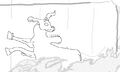 Pleiades as Bristle in Late Babylonian literature (2nd c. BCE)
-
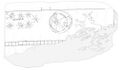 Taurus sign on clay tablet VAT 7851 with drawings of Pleiades (Bristle), Hyades (Chariot), Bull, and the Moon during a total lunar eclipse in the Moon's hypsoma; drawing by Hoffmann (2025)[9].

Mythology
Hyginus, Astronomica
IAU Working Group on Star Names
In antiquity, the stars of the cluster were unnamed. Names were given to nine stars in the 17th century and these names were approved by the IAU WGSN in 2016:
The parents:
The daughters:
- Alcyone for η Tau in 2016
- Asterope for 21 Tau in 2016
- Celaeno for 16 Tau in 2016
- Electra for 17 Tau in 2016
- Maia for 20 Tau in 2016
- Merope for 23 Tau in 2016
- Taygeta for 19 Tau in 2016
Weblinks
Warburg Institute Iconographic Database – Pleiades
Reference
- References (general)
- References (early modern)
- Ian Ridpath "Who Named the Stars of the Pleiades?" The Observatory, 2026 February, 3–6.
- Ridpath, Ian, Star Tales Taurus.
- ↑ 1.0 1.1 Susanne M. Hoffmann,* Khalid AlAjaji, B.S. Shylaja, Yang Boshun, Danielle Adams, Eric Mamajek, Ian Ridpath, Paul Baki, Juan Antonio Belmonte Avilés, Sze-Leung Cheung, Daniel Cunnama, Jörg Matthias Determann, M. Sadegh Faghanpour, Steven Gullberg, Duane Hamacher, Roland Laffitte, Alejandro M. López, Javier Mejuto, Thierry Montmerle, Clive Ruggles, Shi Yunli, Doris Vickers, Sun Xiaochun, and Hitoshi Yamaoka (2025). The IAU Working Group on Star Names (WGSN): Research Finds in 2025. Journal of Astronomical History and Heritage, 28(4), 1026–1038 (2025).
- ↑ 2.0 2.1 2.2 2.3 Hoffmann, S.M. & Hunger, H. (2023): Was steht in der ersten Schaltregel in MUL.APIN?, Codices Manuscripti & Impressi, Wien, 7-16
- ↑ 3.0 3.1 Hunger, H. and J. M. Steele (2019). The Babylonian Astronomical Compendium MUL.APIN, Routledge, New York
- ↑ Maria Teresa Renzi-Sepe (2023). The Perception of the Pleiades in Mesopotamian Culture, LAOS 15, Harrassowitz, Wiesbaden
- ↑ 5.0 5.1 5.2 Hoffmann, S.M. (2023): Zeigt die Himmelsscheibe von Nebra ein Instrument der Zeitrechnung?, Codices Manuscriptii & Impressi, Wien, 37-52
- ↑ Hesiod, Work and Days, online at THEOI
- ↑ Hoffmann, S.M. & Hunger, H. (2023): Was steht in der ersten Schaltregel in MUL.APIN?, Codices Manuscripti & Impressi, Wien, 7-16
- ↑ 8.0 8.1 Pamìas, Jordi und Zucker, Arnaud (2013). Ératosthènes de Cyrène: Catastérrismes, Belles Lettres, Paris
- ↑ Hoffmann, S.M. (2025). Image Analysis of VAT 7851, Archiv für Orientforschung (AfO) 56, 45-53