Ru: Difference between revisions
From All Skies Encyclopaedia
References |
image variants |
||
| Line 19: | Line 19: | ||
== Mythology / Religion == | == Mythology / Religion == | ||
... | |||
=== Image Variants === | |||
<gallery> | |||
File:Hru.png|Lintang Hru (CC-BY Alfred Maaß, (1929), Astrologische Kalender der Balinesen) | |||
File:Lintang Ru.png|Lintang Ru in the cloth (CC-BY UPTD Museum Bali) | |||
File:Lintang Sayaka.jpg|Lintang Sayaka (CC-BY Youla Azkarrula taken in the ceiling of Taman Gili Klungkung Palace Bali) | |||
</gallery> | |||
== Cultural Beliefs == | == Cultural Beliefs == | ||
Revision as of 10:38, 20 September 2025
Ru is an Oceanic name from Bali (Indonesia). The lintang of ru is found in intersection of Saniscara (Saturday, in saptawara) and Paing (in pancawara) in a series of palelintangan. Lintang ru means arrow constellation.[1]
Etymology and History
....
Spelling Variants
- hru
- panah
- jurit mati
- kapěrang
- panah rhu
- sajaka
Origin of Constellation
ii test ...
Transfer and Transformation of the Constellation
Mythology / Religion
Image Variants
-
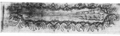 Lintang Hru (CC-BY Alfred Maaß, (1929), Astrologische Kalender der Balinesen)
 -
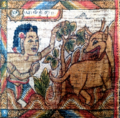 Lintang Ru in the cloth (CC-BY UPTD Museum Bali)
 -
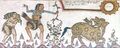 Lintang Sayaka (CC-BY Youla Azkarrula taken in the ceiling of Taman Gili Klungkung Palace Bali)


Cultural Beliefs
Numerology (Neptu/Urip)
Saniscara (Saturday, in saptawara) has a value of 9 and Paing (in pancawara) has a value of 9. Thus, the total urip on this lintang is 18.[2]
Astrological Characteristics
Respected by people and they have many servants. Loved by great and influential people. Do not be a soldier, avoid physical combat (fighting) and avoid the battlefield. Easily angered but quickly calm down, easily regret and they are forgiving and kind although a bit greedy.[2]
Matching Gemstones
Kecubung (amethyst), Biduri Bulan (Moon stone), mirah (ruby).[2]
Weblinks
References
- References (general)
- ↑ Maass, Alfred, “Astrologische Kalender der Balinesen,” in Koninklijk Bataviaasch Genootschap van Kunsten en Wetenschappen, Feestbundel bij gelegenheid van zijn 150 jarig bestaan 1778-1928, 2 vols. (Weltevreden, 1929), Vol. 2, 126-157.
- ↑ 2.0 2.1 2.2 Tim Kajian Palelintangan, “Gabungan Kajian Palelintangan,” Museum Bali (2021), 1-149.