Pulcherrima
Authors: Susanne M Hoffmann, Eric Mamajek, Youla Azkarrula, Ian Ridpath

The name Pulcherrima was given to the double star Epsilon Boötis (mags. 2.5 and 4.8) by Friedrich G. W. von Struve in 1837.[1] The Latin name translates to "most beautiful" or "loveliest," referring to its striking, contrasting colors — a bright yellow primary and a blue-white secondary star. The official IAU name for Epsilon Boötis A (ε Boo A) is Izar, adopted in 2016.
Concordance, Etymology, History

19th century German-Russian astronomer Friedrich Georg Wilhelm von Struve, known for his study of double stars, described the star as duplex pulcherrima, Latin for “the loveliest double”.
Proctor (1866) for name "Pulcherissima" states
"A name given by modern astronomers to express the extreme beauty of this double star (orange and green), viewed with a good telescope."
However the spelling "Pulcherrima" appeared much more often after mid-19th century. Admiral Smyth (1844)[2] cites Struve as the source of the name.
Note on the date of first appearance
Some books claim that Struve invented this name in 1829, but the earliest we can find is on p.49 of his Stellarum duplicium multiplicium mensurae micrometricae of 1837. There he describes it as duplex pulcherrima, “the most beautiful double”. The error seems to stem from Robert Burnham's well-known 3-volume Celestial Handbook: An Observer's Guide to the Universe Beyond the Solar System (1978): archive. He may have obtained this date from Smyth who lists an observation of the separation and position angle of the pair by Struve in 1829.

Burnham also errs in claiming that the binary character of Epsilon Boötis was first discovered by Wilhelm Struve; it was actually discovered by William Herschel in 1779.
-
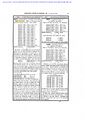 Struve 1837
 -
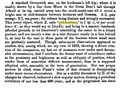 Smyth 1844
 -
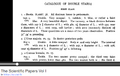 Herschel 1779
 -
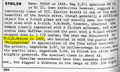 Burnham (1978) about Struve's name

Mythology
IAU Working Group on Star Names
The name was suggested to the IAU WGSN in 2023 for HIP 72105 B. WGSN chose ... (not to apply/ to apply the name to a neighbouring star/ to ...) in the IAU-CSN.
Weblinks
Reference
- References (general)
- References (early modern)
- Ian Ridpath's Star Tales – Boötes([1])





