Tepennekhet: Difference between revisions
infobox |
infocards |
||
| (One intermediate revision by one other user not shown) | |||
| Line 1: | Line 1: | ||
Authors: {{PAGEAUTHORS}} | Authors: {{PAGEAUTHORS}} | ||
---- | ---- | ||
[[File:Tepennekhet_profileCard_SadeghFaghanpour-IAU-WGSN.jpg|thumb|(CC BY Sadegh Faghanpour for IAU WGSN)]] | |||
{{Infobox constellation | {{Infobox constellation | ||
| name = Tepennekhet | | name = Tepennekhet | ||
| Line 30: | Line 31: | ||
==Concordance, Etymology, History== | ==Concordance, Etymology, History== | ||
[[File:Nekhet_RSC_Belmonte+Lull2023_stellarium.jpg|thumb|[[Nekhet]] in the Ramesside Star Clocks (Belmonte and Lull 2023, drawing & mapping by SMH 2026).]] | |||
[[Nekhet]], the Giant, is a huge constellation that is preserved in ancient Egyptian texts and visual representations. As the constellation is mentioned in the Ramesside Star Clocks (RSC), some stars can be identified by given right ascension coordinates. It stretches from east of [[Altair]] in [[Aquila]] through [[Delphinus]], [[Equuleus]], [[Pegasus]] up to [[Andromeda]]. | |||
==Mythology/ Religion== | |||
==Mythology== | |||
==IAU Working Group on Star Names== | ==IAU Working Group on Star Names== | ||
| Line 39: | Line 41: | ||
<gallery> | <gallery> | ||
File: | File:Tepennekhet profileCard SadeghFaghanpour-IAU-WGSN.jpg|(CC BY Sadegh Faghanpour for IAU WGSN) | ||
File: | File:Tepennekhet stickfigure SadeghFaghanpour-IAU-WGSN.jpg|(CC BY Sadegh Faghanpour for IAU WGSN) | ||
</gallery> | </gallery> | ||
Latest revision as of 22:59, 14 October 2026
Authors: Susanne M Hoffmann, ASE Tech Team

| Asterism Info | |
| Native | Tepen and Nekhet |
|---|---|
| Translation | Head of the Giant |
| Position (2000) | |
| Right ascension | 318.6200638 |
| Declination | 10.00697941 |
| Area | 0 sq. deg. |
| Stars | |
| Bright stars | 1 |
| Bayer/Flamsteed stars | 1 |
| Stars brighter than 3.00m | 0 |
| Brightest star | Tepennekhet (4.49m) |
| Taxonomy | |
| category of asterism | IAU-Star Name |
| IAU- constellations | Equ |
Tepennekhet, Head of the Giant, is a modern star name adopted by the International Astronomical Union in the IAU-Catalog of Star Names (IAU-CSN). Its origin is Ancient Egyptian. It is the name of the star Delta Equulei in constellation Equuleus.
Concordance, Etymology, History

Nekhet, the Giant, is a huge constellation that is preserved in ancient Egyptian texts and visual representations. As the constellation is mentioned in the Ramesside Star Clocks (RSC), some stars can be identified by given right ascension coordinates. It stretches from east of Altair in Aquila through Delphinus, Equuleus, Pegasus up to Andromeda.
Mythology/ Religion
IAU Working Group on Star Names
The name Nekhet was suggested to the IAU WGSN in 2023. As this is a huge constellation, it cannot be justified to be represented by only a tiny star. WGSN chose to keep its heritage with a star name that is found as a body part of Nekhet in the Ramesside Star Clocks. The name was adopted on 16 July 2026.
-
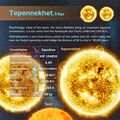 (CC BY Sadegh Faghanpour for IAU WGSN)
-
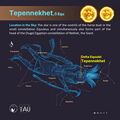 (CC BY Sadegh Faghanpour for IAU WGSN)