Lilium: Difference between revisions
IanRidpath (talk | contribs) |
No edit summary |
||
| (3 intermediate revisions by the same user not shown) | |||
| Line 1: | Line 1: | ||
{{distinguish|Lilii Borea|Lilii Austrina}} | |||
Authors: {{PAGEAUTHORS}} | Authors: {{PAGEAUTHORS}} | ||
---- | ---- | ||
| Line 5: | Line 6: | ||
==Etymology and History== | ==Etymology and History== | ||
'''Variants''' | |||
* Fleur-de-lis | |||
* [[Lilii Borea]] (IAU-Star Name) | |||
* Lilii Austrina (historical star name, not adopted by IAU) | |||
'''Other historical names of this asterism''' | |||
* [[Musca Borealis]] (Latin), Apes/ Apis, Vespa (Latin) | |||
* [[Bharani]] (Vedic, at least 3000 years old) | |||
=== Origin of the Constellation === | |||
[[File:Lilium, Triangulum - Corbinian Thomas.jpg|alt=coloured image in historical map|thumb|Lilium, Triangulum - Thomas Corbinian 1730 (CC0)]] | [[File:Lilium, Triangulum - Corbinian Thomas.jpg|alt=coloured image in historical map|thumb|Lilium, Triangulum - Thomas Corbinian 1730 (CC0)]] | ||
The constellation ''Lilium'', the fleur-de-lis of France, was posthumously published in 1674 on plate 2 of the atlas ''[https://gallica.bnf.fr/ark:/12148/btv1b59714416/f2.zoom Globi coelestis in tabulas planas redacti descriptio],'' although Pardies did not attach a name to the image. He had reused four stars in the north of Aries from which the Dutch cartographer [https://en.wikipedia.org/wiki/Petrus_Plancius Petrus Plancius] in 1613 had previously formed Apes, the Bee to model the constellation. | The constellation ''Lilium'', the fleur-de-lis of France, was posthumously published in 1674 on plate 2 of the atlas ''[https://gallica.bnf.fr/ark:/12148/btv1b59714416/f2.zoom Globi coelestis in tabulas planas redacti descriptio],'' although Pardies did not attach a name to the image. He had reused four stars in the north of Aries from which the Dutch cartographer [https://en.wikipedia.org/wiki/Petrus_Plancius Petrus Plancius] in 1613 had previously formed Apes, the Bee to model the constellation. | ||
| Line 13: | Line 25: | ||
In 1795, Jean Nicolas Fortin published [http://digital.bib-bvb.de/view/bvb_mets/viewer.0.6.5.jsp?folder_id=0&dvs=1720676081581~622&pid=2749579&locale=de&usePid1=true&usePid2=true his commentary] to Flamsteed's Atlas Coelestis and mentions the Fleur de Lis:<blockquote>'''La tête de Méduse''' A l’Orient du triangle, on remarque un groupe de cinq étoiles, formant la tête de Méduse; la plus orientale est de la seconde grandeur, & se nomme Algol; cette étoile est singuliere en ce qu’elle diminue de grandeur & de lumiere dans l’espace de 2 jours 20 heures 49 minutes 1 seconde. Si l’on prend le triangle & la tête de Méduse pour les deux extrémités de la base d’un triangle équilatéral dont le sommet seroit au Midi, on remarquera trois étoiles dont une est de la troisieme grandeur, c’est la petite Constellation de la Mouche, ou le Lys.</blockquote>English translation:<blockquote>'''The Head of Medusa''' To the east of the triangle (''Triangulum'') we see a group of five stars, forming the Head of Medusa; the easternmost is of the second magnitude, and is called Algol; this star is singular in that it diminishes in magnitude and luminosity in the period of 2 days 20 hours 49 minutes 1 second. If we take the triangle (''Triangulum'') and the Head of Medusa for the two extremities of the base of an equilateral triangle whose summit would be southwards, we will notice three stars of which one is of the third magnitude, it is the small Constellation of the Fly, or the Lily.</blockquote> | In 1795, Jean Nicolas Fortin published [http://digital.bib-bvb.de/view/bvb_mets/viewer.0.6.5.jsp?folder_id=0&dvs=1720676081581~622&pid=2749579&locale=de&usePid1=true&usePid2=true his commentary] to Flamsteed's Atlas Coelestis and mentions the Fleur de Lis:<blockquote>'''La tête de Méduse''' A l’Orient du triangle, on remarque un groupe de cinq étoiles, formant la tête de Méduse; la plus orientale est de la seconde grandeur, & se nomme Algol; cette étoile est singuliere en ce qu’elle diminue de grandeur & de lumiere dans l’espace de 2 jours 20 heures 49 minutes 1 seconde. Si l’on prend le triangle & la tête de Méduse pour les deux extrémités de la base d’un triangle équilatéral dont le sommet seroit au Midi, on remarquera trois étoiles dont une est de la troisieme grandeur, c’est la petite Constellation de la Mouche, ou le Lys.</blockquote>English translation:<blockquote>'''The Head of Medusa''' To the east of the triangle (''Triangulum'') we see a group of five stars, forming the Head of Medusa; the easternmost is of the second magnitude, and is called Algol; this star is singular in that it diminishes in magnitude and luminosity in the period of 2 days 20 hours 49 minutes 1 second. If we take the triangle (''Triangulum'') and the Head of Medusa for the two extremities of the base of an equilateral triangle whose summit would be southwards, we will notice three stars of which one is of the third magnitude, it is the small Constellation of the Fly, or the Lily.</blockquote> | ||
==Mythology== | |||
=== Star Names in Lilium === | |||
[[File:Lacaille1757_LiliiBorea_marked.jpg|alt=screenshot of page from Lacaille's star list, Lilii Borea highlighted|thumb|Screenshot of a page from Lacaille's star list, Lilii Borea highlighted]] | |||
Lacaille named its two brightest stars ''Lilii Borea'' and ''Lilii Austrina'' (i.e. in the north and south of the lily). The Latin term can be interpreted as "a star outside the constellation and in the north/south of it" or "a star in the northern/southern section of the constellation". As both stars form part of the asterism (since Ptolemy where it was unnamed), we should understand "The Northern One of the Lily" and "The Southern One of the Lily". | |||
In his ''Astronomiæ fundamenta novissimis solis et stellarum observationibus stabilita'' published in 1757<ref>Lacaille, N. L. (1757). Astronomiae fundamenta novissimis solis et stellarum observationibus stabilita, Lutetiae in Collegio mazarineo et in Africa ad caput Bonae Spei peractis a Nicolao Ludovico de La Caille. [https://books.google.de/books/about/Astronomiae_fundamenta_novissimis_solis.html?id=LXm0RAf6fk0C&redir_esc=y Digitalized by GoogleBooks], here p. 227 and 233.</ref>, Lacaille presented several tables, e.g. a star catalogue (''Tabula exhibens Stellarum a∫cen∫iones rectas veras declinationes veras'') and a list of right ascensions of selected stars (''De veris aliquot Stellarum afcenfionibus rectis fæpiùs'') where he calls the two star names ''Lilii Borea'' and ''Lilii Austrina''. | |||
{| class="wikitable" | |||
|+ | |||
! | |||
!RA<sub>1750</sub> | |||
!DEC<sub>1750</sub> | |||
!identification | |||
|- | |||
|[[Lilii Borea]] | |||
|38° 15' 39."7 | |||
|28° 11' 33."1 | |||
|39 Arietis (a star of Lilium) | |||
|- | |||
|39 Ari (Stellarium) | |||
|38.°28 | |||
38° 17' 1".6 | |||
|28° 11' 34."6 | |||
| | |||
|- | |||
|Lilii Austrina | |||
|38° 49' 45."2 | |||
|26° 12' 47."7 | |||
|41 Arietis (a star of Lilium) | |||
|- | |||
|41 Ari (Stellarium) | |||
|38.°84 | |||
38° 50' 37" | |||
|26° 12' 52."1 | |||
| | |||
|} | |||
Lacaille also published the ''[https://books.google.at/books?id=8Y9uW-OVAOsC&printsec=frontcover&hl=de&source=gbs_ge_summary_r&cad=0#v=onepage&q&f=false Ephemerides des mouvemens celestes, pour dix annees, depuis 1765]''<ref>Lacaille (1765) ''[https://books.google.at/books?id=8Y9uW-OVAOsC&printsec=frontcover&hl=de&source=gbs_ge_summary_r&cad=0#v=onepage&q&f=false Ephemerides des mouvemens celestes, pour dix annees, depuis]''</ref> and names these two stars ''La Boreale a la fleur de Lys'' (The Northern one of the Lily) and ''L'Australe a la fleur de Lys'' (The Southern one of the Lily). | |||
The modern designations of these two stars are 39 and 41 Arietis. <gallery> | |||
File:Lacaille1757_LiliiBorea-et-Austrina_marked.jpg|Page of the star catalogue of Lacaille1757 (''Astronomiae fundamenta novissimis solis et stellarum observationibus stabilita, Lutetiae in Collegio mazarineo et in Africa ad caput Bonae Spei'') with Lilii Borea and Lilii Austrina marked | |||
File:Lacaille1757_LiliiBorea_marked.jpg|Screenshot of page from Lacaille's star list, Lilii Borea highlighted. | |||
File:Lacaille_LiliiAustrina_marked.jpg|Lilii Austrina highlighted in Lacaille's star list 1757 | |||
</gallery> | |||
==Mythology/ Religion/ Narrative== | |||
The Lily was an emblem of France: the "Fleur-de-lis" (Unicode U+269C ⚜) is a heraldic symbol. In particular, in the time of Louis XIV this symbol was dedicated to the French king as the country's representative. | The Lily was an emblem of France: the "Fleur-de-lis" (Unicode U+269C ⚜) is a heraldic symbol. In particular, in the time of Louis XIV this symbol was dedicated to the French king as the country's representative. | ||
==IAU Working Group Star Names== | ==IAU Working Group Star Names== | ||
Lacaille later introduced the star names "[[Lilii Borea]]" and "[[Lilii Austrina]]" for two stars in this constellation. They both were discussed by the IAU WGSN. [[Lilii Borea]] was applied in 2017, but [[Lilii Austrina]] was dropped because the respective star already was given another name. | Lacaille later introduced the star names "[[Lilii Borea]]" and "[[Lilii Austrina]]" for two stars in this constellation. They both were discussed by the IAU WGSN. [[Lilii Borea]] was applied in 2017, but [[Lilii Austrina]] was dropped because the respective star (41 Ari) already was given another name ([[Bharani]]). | ||
==Weblinks== | ==Weblinks== | ||
Latest revision as of 06:19, 25 September 2026
Authors: Susanne M Hoffmann, Robert van Gent, Ian Ridpath, Youla Azkarrula
._Cartographe_bnf-gallica.jpg)
In 1674, the French Jesuit priest and scientist Ignace-Gaston Pardies introduced a new (now obsolete) constellation Lilium, the fleur-de-lis of France. He had reused four stars in the north of Aries which had originally been catalogued by Claudius Ptolemy as a small group of "unformed" stars in the same constellation. The individual stars of the Lily were unnamed.
Etymology and History
Variants
- Fleur-de-lis
- Lilii Borea (IAU-Star Name)
- Lilii Austrina (historical star name, not adopted by IAU)
Other historical names of this asterism
- Musca Borealis (Latin), Apes/ Apis, Vespa (Latin)
- Bharani (भरणी) (Vedic, at least 3000 years old)
Origin of the Constellation

The constellation Lilium, the fleur-de-lis of France, was posthumously published in 1674 on plate 2 of the atlas Globi coelestis in tabulas planas redacti descriptio, although Pardies did not attach a name to the image. He had reused four stars in the north of Aries from which the Dutch cartographer Petrus Plancius in 1613 had previously formed Apes, the Bee to model the constellation.
In 1679, the French architect Augustin Royer published his Cartes du ciel réduites en quatre tables and an accompanying star catalogue, both of which contain the constellation Lilium, this time carrying the name and the translation "La Fleur de lys".
In 1730, the constellation Lilium also appeared in Mercurii philosophici firmamentum firmianum descriptionem et usum globi artificialis coelestis by Thomas Corbinian, a German-Austrian monk who lived in Augsburg and Salzburg.
In 1795, Jean Nicolas Fortin published his commentary to Flamsteed's Atlas Coelestis and mentions the Fleur de Lis:
La tête de Méduse A l’Orient du triangle, on remarque un groupe de cinq étoiles, formant la tête de Méduse; la plus orientale est de la seconde grandeur, & se nomme Algol; cette étoile est singuliere en ce qu’elle diminue de grandeur & de lumiere dans l’espace de 2 jours 20 heures 49 minutes 1 seconde. Si l’on prend le triangle & la tête de Méduse pour les deux extrémités de la base d’un triangle équilatéral dont le sommet seroit au Midi, on remarquera trois étoiles dont une est de la troisieme grandeur, c’est la petite Constellation de la Mouche, ou le Lys.
English translation:
The Head of Medusa To the east of the triangle (Triangulum) we see a group of five stars, forming the Head of Medusa; the easternmost is of the second magnitude, and is called Algol; this star is singular in that it diminishes in magnitude and luminosity in the period of 2 days 20 hours 49 minutes 1 second. If we take the triangle (Triangulum) and the Head of Medusa for the two extremities of the base of an equilateral triangle whose summit would be southwards, we will notice three stars of which one is of the third magnitude, it is the small Constellation of the Fly, or the Lily.
Star Names in Lilium

Lacaille named its two brightest stars Lilii Borea and Lilii Austrina (i.e. in the north and south of the lily). The Latin term can be interpreted as "a star outside the constellation and in the north/south of it" or "a star in the northern/southern section of the constellation". As both stars form part of the asterism (since Ptolemy where it was unnamed), we should understand "The Northern One of the Lily" and "The Southern One of the Lily".
In his Astronomiæ fundamenta novissimis solis et stellarum observationibus stabilita published in 1757[1], Lacaille presented several tables, e.g. a star catalogue (Tabula exhibens Stellarum a∫cen∫iones rectas veras declinationes veras) and a list of right ascensions of selected stars (De veris aliquot Stellarum afcenfionibus rectis fæpiùs) where he calls the two star names Lilii Borea and Lilii Austrina.
| RA1750 | DEC1750 | identification | |
|---|---|---|---|
| Lilii Borea | 38° 15' 39."7 | 28° 11' 33."1 | 39 Arietis (a star of Lilium) |
| 39 Ari (Stellarium) | 38.°28
38° 17' 1".6 |
28° 11' 34."6 | |
| Lilii Austrina | 38° 49' 45."2 | 26° 12' 47."7 | 41 Arietis (a star of Lilium) |
| 41 Ari (Stellarium) | 38.°84
38° 50' 37" |
26° 12' 52."1 |
Lacaille also published the Ephemerides des mouvemens celestes, pour dix annees, depuis 1765[2] and names these two stars La Boreale a la fleur de Lys (The Northern one of the Lily) and L'Australe a la fleur de Lys (The Southern one of the Lily).
The modern designations of these two stars are 39 and 41 Arietis.
-
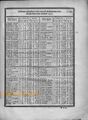 Page of the star catalogue of Lacaille1757 (Astronomiae fundamenta novissimis solis et stellarum observationibus stabilita, Lutetiae in Collegio mazarineo et in Africa ad caput Bonae Spei) with Lilii Borea and Lilii Austrina marked
 -
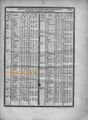 Screenshot of page from Lacaille's star list, Lilii Borea highlighted.
 -
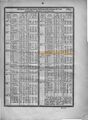 Lilii Austrina highlighted in Lacaille's star list 1757


Mythology/ Religion/ Narrative
The Lily was an emblem of France: the "Fleur-de-lis" (Unicode U+269C ⚜) is a heraldic symbol. In particular, in the time of Louis XIV this symbol was dedicated to the French king as the country's representative.
IAU Working Group Star Names
Lacaille later introduced the star names "Lilii Borea" and "Lilii Austrina" for two stars in this constellation. They both were discussed by the IAU WGSN. Lilii Borea was applied in 2017, but Lilii Austrina was dropped because the respective star (41 Ari) already was given another name (Bharani (भरणी)).
Weblinks
- Ian Ridpath's Star Tales – Lilium
Reference
- ↑ Lacaille, N. L. (1757). Astronomiae fundamenta novissimis solis et stellarum observationibus stabilita, Lutetiae in Collegio mazarineo et in Africa ad caput Bonae Spei peractis a Nicolao Ludovico de La Caille. Digitalized by GoogleBooks, here p. 227 and 233.
- ↑ Lacaille (1765) Ephemerides des mouvemens celestes, pour dix annees, depuis