One of the 88 IAU constellations with Greco-Roman background. It has been developed from a Babylonian predecessor (UR.GU.LA). The constellation lies in the zodiac and was therefore adopted from Greek astronomy around the middle of the 1st millennium BCE from Babylon. In Mesopotamia a millennium earlier, however, it was not named directly after an animal: the Sumerian word UR.GU.LA refers to a demon that looks like a winged lion, as depicted on a clay tablet as a scratch drawing.
[3]In the 1st millennium, a uranography describes two figures in this region of the sky: a lion (UR.MAḪ) and this demon, the winged lion (UR.GU.LA). However, according to current knowledge, this pairing of terms has only been documented once. Another text from the 1st millennium can be understood as equating the two figures, and yet another speaks of a rear and a front demon lion. It is still unclear what transformations the demon underwent to become a normal lion. In any case, the foreign Greek culture certainly did not understand the demon, and at that point at the latest, the two figures were equated and the wings removed.
It is noteworthy that the lion, as we imagine it today, lies only north of the ecliptic. The lion's body consists of a trapezoid of bright stars, the southernmost of which, Regulus, lies less than a moon's diameter north of the ecliptic. It can therefore be covered by the sun and moon. The lion's front paws lie south of the ecliptic, but there is a large gap between its hind paws and the ecliptic – or even the neighbouring southern constellation. Assyriologists have therefore suggested that the doubling in Babylonian uranography was an attempt to close this gap. According to this, the second lion would be interpreted as lying south of today's constellation Leo.
However, on the microzodiac clay tablet in the Museum of the Ancient Near East in Berlin, it is clear to see that the winged lion is walking on a Musch snake (mul (d)MUŠ). The tablet dates from the Seleucid period (i.e. the period of Greek rule) and shows the image as it was already described in MUL.APIN about 1.5 millennia earlier: There is nothing between the winged lion and the snake we call Hydra.
This was no different in Greek constellation culture – except that the lion had no wings. It was not until the advent of telescope surveys in the 17th century that a new constellation of faint stars was defined in the ‘nothingness’ beneath the lion: the Sextans, The Sextant.
Leo and Virgo above the MUŠ-Dragon, two claytablet drawings from the Seleucid era (roughly 2nd century BCE), CC BY SMH based upon the drawings by E. Weidner (1967) and Thureau-Dangin (1922).
In Ptolemaic times (1st century BCE), when Egypt was ruled by the Romans, new Egyptian temples were built: a Chnum temple in Esna and a Hathor temple Dendera (south and north of Thebes/ Luxor). They display a cultural mixture of Babylonian and Egyptian constellations.
Constellation of a Lion with a Lady on its Tail in Leo+Coma Berenices (πλόκαμος) on the circular Zodiac of Dendera, Egypt (drawing by SMH for Stellarium 2026).
Constellation of a Serpent with a Bird in Hydra+Corvus on the circular Zodiac of Dendera, Egypt (drawing by SMH for Stellarium 2026).
Aratos
Beneath the Bear’s head are the Twins, beneath her belly the Crab, and under her hind legs the Lion shines brightly. This is where the sun’s track is hottest, [150] and the fields are seen bereft o f their corn-ears when the sun first comes into conjunction with the Lion. This is the time when the whistling etesian winds sweep strongly across the broad sea, and it is no longer seasonable for ships to be under oars. Then let broad-beamed ships be my pleasure, [155] and let helmsmen hold their steering-oars into the wind. (Kidd 1997)
Var. 1: It is one of the most prominent constellations. Apparently, the zodiacal Lion was granted this honour by Zeus because it ranks first among four-legged animals. Some <say> that it represents the first labour performed by Heracles.
Leo has three stars on its head, two on its neck, one on its chest, three on its back, one bright star on its tail, two beneath its chest, and one on its forepaw. Thirteen in all.
Var. 2: It is one of the most prominent constellations. Apparently, the zodiacal Lion was granted this honour by Zeus because it ranks first among four-legged animals. Some say it represents the first labour accomplished by Heracles, placed there so that the memory might be preserved. It is indeed the only animal he killed unarmed, for the love of glory, by suffocating it in his arms. Pisander of Rhodes recounts this episode. Hence Heracles wears the lion’s skin, a sign of the illustrious feat he accomplished. This is the lion that was killed by Heracles at Nemea.
The Lion has three stars on its head, one on its chest and two below, a bright one on its right paw, one in the middle of its belly, another below, one on its hip, one on its hind knee, a bright one at the tip of its paw, two on its neck, three on its back, one in the middle of its tail, and a bright one at the tip of its tail. Nineteen in all.
Leo and the "triangle near the tail"; rectangular zodiac of Dendera
Above the Lion, one can also see seven dim stars forming a triangle towards the tail. They are called “the Hair of Berenice the Benefactor”.
Eratosthenes's star catalogue can be reconstructed from the list of stars he mentions in the last section of each of the constelllation descriptions. Hoffmann (2017)[5] made such a catalogue and used it for computational comparison with Hipparchus's, Ptolemy's and Babylonian data; it is based on the edition and translation by Pamias and Geus (2007)[6] and presented here in English translation.
erat.Cat.ID
constStarID
starName
ident.Bayer
ident.HIP
certainty
180
1
three stars on the head
eps Leo
47908
1
181
2
three stars on the head
mu Leo
48455
1
182
3
three stars on the head
lambda Leo
46750
1
183
4
one on the chest
alpha Leo
49669
1
184
5
two below the chest
31 Leo
49637
1
185
6
two below the chest
pi Leo
49029
1
186
7
one bright one on the right paw
2 Sex (although it is only 4.6 mag, there are no bright stars left that have not already been assigned - unless he counted something twice...)
47310
1
187
8
one in the middle of the belly
rho Leo
51624
1
188
9
one below the belly
48 Leo
51775
2
189
10
one on the hip
theta Leo
54879
1
190
11
one on the rear knee
sigma Leo
55434
1
191
12
one bright one on the tip of the paw
omikron Leo
47508
1
192
13
two on the nape
zeta Leo
50335
1
193
14
two on the nape
gamma1 Leo
50583
1
194
15
three on the back
m Leo
52686
1
195
16
three on the back
b Leo
53954
1
196
17
three on the back
delta Leo
54872
1
197
18
one bright one at the end
beta Leo
57632
1
198
1
above the Lion seven dim stars, which form a triangle at the tail and are called the locks of the benefactress Berenice
gamma Com
60742
1
199
2
above the Lion seven dim stars, which form a triangle at the tail and are called the locks of the benefactress Berenice
12 Com
60351
1
200
3
above the Lion seven dim stars, which form a triangle at the tail and are called the locks of the benefactress Berenice
14 Com
60697
1
201
4
above the Lion seven dim stars, which form a triangle at the tail and are called the locks of the benefactress Berenice
17 Com
60904
1
202
5
above the Lion seven dim stars, which form a triangle at the tail and are called the locks of the benefactress Berenice
23 Com
61394
1
203
6
above the Lion seven dim stars, which form a triangle at the tail and are called the locks of the benefactress Berenice
7 Com
59847
1
204
7
above the Lion seven dim stars, which form a triangle at the tail and are called the locks of the benefactress Berenice
16 Com
60746
1
Hipparchus
Rising (Lib III Cap III §2)
The Rising of ...
east
south
lam1
lam2
lam1
lam2
Cnc 7 1/2
Leo 18 1/2
Psc 20
Tau 11 1/2
star
of those in the head the northern of the front ones
the one in the hind feet
duration
3 1/4 hours = 195 min = 48 3/4 degree
Setting (Lib II Cap VI §10)
west
south
lam1
lam2
lam1
lam2
Cnc 20 1/2
Vir 14
Sco 13
Sgr 20 1/2
star
the one in the front feet
the one at the tip of the tail
duration
2 2/3 hours = 160 min = 40°
Hipparchus's "lost" star Catalogue
The star catalogue of Hipparchus is not preserved. Yet, several scholars have reconstructed it in the past century: Vogt (1925)[7], Grasshoff (1990)[8], Hoffmann (2017)[9] and Glover (2026)[10]. Grasshoff's catalogue and computations are not published digitally, Hoffmann published three versions of the Manitius+Hoffmann[11] star lists in the CDS VizieR "catalog of catalogs", and Glover printed the star lists constellationwise in his book.
Hipparchus's star in Aquarius (Glover 2026)
hipp.Cat.ID
constStarID
starName
ident.Bayer
ident.HIP
concordance
348
1
α Leo
49669
CPAE
349
2
β Leo
57632
CPAE
350
3
γ Leo (γ1)
50583
CPAE
351
4
δ Leo
54872
CPAE
352
5
ε Leo
47908
CPAE
353
6
ζ Leo
50335
CPAE
354
7
η Leo
49583
CPAE
355
8
θ Leo
54879
CPAE
356
9
ι Leo
55642
CPAE
357
10
κ Leo
46146
CPAE
358
11
λ Leo
46750
CPAE
359
12
μ Leo
48455
CPAE
360
13
ν Leo
48883
CPAE
361
14
ο Leo
47508
CPAE
362
15
ρ Leo
51264
CPAE
363
16
σ Leo
55434
CPAE
364
17
b Leo
53954
CPAE
365
18
m Leo
52686
CPAE
366
19
72 Leo
54951
CPAE
Hyginus, Astronomica
He is said to have been put among the stars because he is considered the king of beasts. Some writers add that Hercules' first Labor was with him and that he killed him, unarmed. Pisandrus and many others have written about this. Above his likeness in the sky nearest the Virgin are seven other stars near his tail, arranged in a triangle, which Conon, the mathematician, and Callimachus call the Lock of Berenice. When Ptolemy had married his sister Berenice, daughter of Ptolemy and Arsinoe, and after a few days had set out to attack Asia, Berenice vowed that if Ptolemy returned as victor she would clip off her hair. She placed the lock, consecrated by this vow, in the temple of Venus Arsinoe Zephyritis, but on the following day it couldn't be seen there. When the king was distressed by this, Conon the mathematician, whom we mentioned above, desiring to win the favor of the king, said that he had seen the lock among the constellations, and pointed out seven stars without definite configuration which he imagined were the lock.
Some authors along with Callimachus have said that this Berenice raised horses, and used to send them to Olympia. Others add that once Ptolemy, Berenice's father, in panic at the number of the enemy, had sought safety in flight, but his daughter, an accomplished horsewoman, leaped on a horse, organized the remaining troops, killed many of the enemy, and put the rest to flight. For this even Callimachus calls her high-souled. Eratosthenes says that she ordered returned to the girls of Lesbos the dowry left to them by their parents, which no one had released, and she established among them right to bring action of recovery. (Mary Ward 1960)
Geminos
Almagest Δέοντος.
id
Greek
(Heiberg 1898)
English
(Toomer 1984)
ident.
Λέουτος ἀστεριῦμόρ.
Constellation of Leo
1
ὁ ἐπ’ ἄκρου τοῦ μοκτῆρος.
The star on the tip of the nostrils
kap Leo
2
ὁ ἐν τῷ χάσματι
The star in the gaping jaws
lam Leo
3
τῶν ἐν τῇ κεφαλῇ β ὁ βορειότερος.
The northernmost of the two stars in the head
mu Leo
4
ὁ νοτιώτερος αὐτῶν.
The southernmost of these
eps Leo
5
τῶν ἐν τῷ τραχήλῳ ἡ’ ὁ βόρειος
The northernmost of the 3 stars in the neck
zet Leo
6
ὁ ἐχόμευος καὶ μέσος τῶν τριῶν.
The one close to this, the middle one of the three
gam Leo
7
ὁ φότιος αὐτῶν
The southernmost of them
eta Leo
8
ὁ ἐπὶ τῆς καρδίας καλούμευος Βασιλίσκος.
The star on the heart, called 'Regulus'
alf Leo
9
ὁ φοτιώτερος αὐτοῦ καὶ ὡς ἐπὶ τοῦ στήθους
The one south of this, about on the chest
31 Leo
10
ὁ μικρῷ προηγούμευος τοῦ ἐπὶ τῆς καρδίας.
The star a little in advance of the star on the heart
Eratosthenes speculates that Zeus may have placed this constellation in the sky because the lion rules over four-legged animals. However, he adds that some people believe it to be the lion of Nemea, which Heracles strangled with his bare hands in his first of twelve labours. This lion is said to have been a dangerous beast.
Heracles was first given ten tasks by King Eurystheus to rid the world of certain evils. After these tasks were completed, he was given two more. The first of all tasks was to rid Nemea of the beast.
Eratosthenes recounts that Heracles chose not to use weapons for this task because he considered it particularly glorious. Later, he kept the lion's skin as a trophy for this heroic deed. On star charts, he is therefore often depicted either carrying it over his arm or wearing it as a cloak – with the lion's head on his head.
↑Hoffmann (2025), Some Results on the Ancient Globes, Globe Studies – The Journal of the International Coronelli Society, 69, 4169.
↑Susanne M. Hoffmann,* Khalid AlAjaji, B.S. Shylaja, Yang Boshun, Danielle Adams, Eric Mamajek, Ian Ridpath, Paul Baki, Juan Antonio Belmonte Avilés, Sze-Leung Cheung, Daniel Cunnama, Jörg Matthias Determann, M. Sadegh Faghanpour, Steven Gullberg, Duane Hamacher, Roland Laffitte, Alejandro M. López, Javier Mejuto, Thierry Montmerle, Clive Ruggles, Shi Yunli, Doris Vickers, Sun Xiaochun, and Hitoshi Yamaoka (2025). The IAU Working Group on Star Names (WGSN): Research Finds in 2025. Journal of Astronomical History and Heritage, 28(4), 1026–1038 (2025).
↑ 3.03.1Hoffmann, Susanne M. Wie der Löwe an den Himmel kam. Franckh Kosmos Verlag, Stuttgart 2021
↑Pamìas, Jordi und Zucker, Arnaud (2013). Ératosthènes de Cyrène: Catastérrismes, Belles Lettres, Paris
↑Hoffmann, S. M., <i>Hipparchs Himmelsglobus</i>. Springer Wiesbaden/ New York, 2017. doi:10.1007/978-3-658-18683-8.
↑Eratosthenes: Sternsagen, übersetzt von Pamìas, Jordi und Geus, Klaus, Verlag Utopica, Oberhaid 2007
↑Vogt, H., “Versuch einer Wiederherstellung von Hipparchs Fixsternver zeichnis”, <i>Astronomische Nachrichten</i>, vol. 224, no. 2, Wiley, p. 17, 1925. doi:10.1002/asna.19252240202.
↑Graßhoff, G., <i>The History of Ptolemy's Star Catalogue</i>, Springer, New York, 1990
↑Hoffmann, S. M., <i>Hipparchs Himmelsglobus</i>. Springer Wiesbaden/ New York, 2017. doi:10.1007/978-3-658-18683-8.
↑Glover, E. (2026). The Astronomy of Hipparchus, Cambridge University Press
↑Hipparchus's Lost Star Catalogue (1/2 reconstructed) (Hoffmann, 2017) in VizieR


 winged lion on kudurru H9095
 winged lion on kudurru SB22 (Louvre)
 winged lion on Sb22
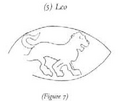 Leo on Mesopotamian seal print, Wallenfels (1993)


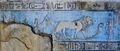 Leo (and Com); rectangular zodiac of Dendera
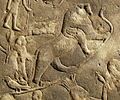 Leo with Com, Hya, Crv, circular zodiac of Dendera (CC BY Musée du Louvre, Département des Antiquités égyptiennes)
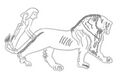 Constellation of a Lion with a Lady on its Tail in Leo+Coma Berenices (πλόκαμος) on the circular Zodiac of Dendera, Egypt (drawing by SMH for Stellarium 2026).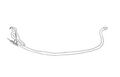


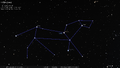 (1952) H.A. Rey's stick figure of Leo
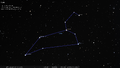 (1988) O. Hlad's stick figure of Leo
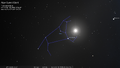 Reconstruction of Stickfigure based on the depiction of Almagest (100-170 CE). CC-BY Susanne Hoffmann in Stellarium.
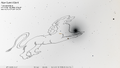 Image of the Farnese Globe (2nd century CE) taken by Susanne Hoffmann and imported into Stellarium.







