Buranun: Difference between revisions
No edit summary |
infocards and infobox |
||
| (2 intermediate revisions by one other user not shown) | |||
| Line 2: | Line 2: | ||
Authors: {{PAGEAUTHORS}} | Authors: {{PAGEAUTHORS}} | ||
---- | ---- | ||
[[File:Buranun profileCard SadeghFaghanpour-IAU-WGSN.jpg|thumb|modern star name (CC BY Sadegh Faghanpour for IAU WGSN)]] | |||
{{Infobox constellation | |||
| name = Buranun | |||
| native = Buranun | |||
| translation = The Sumerian name for the river Euphrates. | |||
| pronounce = | |||
| IPA = | |||
| culture = IAU | |||
| RA = 18.67663317 | |||
| dec = 6.995138177 | |||
| areatotal = 0 | |||
| numbermainstars = 1 | |||
| numberbfstars = 1 | |||
| numberstarsplanets = | |||
| numberbrightstars = 0 | |||
| numbernearbystars = | |||
| brighteststarname = Buranun | |||
| starmagnitude = 6.022 | |||
| neareststarname = | |||
| stardistance = | |||
| numbermessierobjects = | |||
| meteorshowers = | |||
| bordering = Psc | |||
| notes = | |||
| cat = IAU-Star Name | |||
}} | |||
Buranun is a modern star name adopted by the International Astronomical Union in the IAU-Catalog of Star Names (IAU-CSN). Its origin is the Sumerian name for the river [[Euphrates]]. It is the name of the star 88 Psc (HIP 5824) in constellation [[Pisces]]. | Buranun is a modern star name adopted by the International Astronomical Union in the IAU-Catalog of Star Names (IAU-CSN). Its origin is the Sumerian name for the river [[Euphrates]]. It is the name of the star 88 Psc (HIP 5824) in constellation [[Pisces]]. | ||
==Concordance, Etymology, History== | ==Concordance, Etymology, History== | ||
[[File:Psc+ari+aqr+and_+rivers.jpg|alt=Stellarium map|thumb|Psc-And-area with two rivers overlay to Anunitu + Swallow (SMH 2025)]] | [[File:Psc+ari+aqr+and_+rivers.jpg|alt=Stellarium map|thumb|Psc-And-area with two rivers overlay to Anunitu + Swallow (SMH 2025)]] | ||
The Sumerian term <sup>mul íd</sup>[[BURANUN]] (𒀯𒀀𒇉𒌓𒄒𒉣), equalling Akkadian ''purattu,''<ref name=":0">Kurtik, G. (2007): Звездное небо Древней Месопотамии. Шумеро-аккадские названия созвездий и других светил [The Star Heaven of Ancient Mesopotamia: Sumero-Akkadian Names of Constellations and Other Heavenly Bodies], Aletejja, St. Petersburg, Russia.</ref> Euphrates River, is a set of stars in the western portion of [[Pisces]] and [[Pegasus]] (Psc + Peg).<ref name=":1">Beaulieu, P.-A., Frahm, E., Horowitz, W. & Steele, J. (2018), The Cuneiform Uranology Texts: Drawing the Constellations, American Philosophical Society Press, Philadelphia, USA.</ref> It is an asterism in the ancient Mesopotamian constellation of The Tails, [[ZIB]],<ref name=":0" /> originally The Tails of the Swallow (SIM.MAḪ).<ref name=":2">''Materials for the Sumerian Lexicon''. Vol. XI. The Series HAR-ra = ''hubullu.'' Tablets XX-XXIV. Ed. by E.Reiner with the coll. of M.Civil. Roma, 197</ref> The asterism is mentioned in cuneiform lexical lists<ref name=":2" /> as well as described visually in the uranology texts | The Sumerian term <sup>mul íd</sup>[[BURANUN]] (𒀯𒀀𒇉𒌓𒄒𒉣), equalling Akkadian ''purattu,''<ref name=":0">Kurtik, G. (2007): Звездное небо Древней Месопотамии. Шумеро-аккадские названия созвездий и других светил [The Star Heaven of Ancient Mesopotamia: Sumero-Akkadian Names of Constellations and Other Heavenly Bodies], Aletejja, St. Petersburg, Russia.</ref> Euphrates River, is a set of stars in the western portion of [[Pisces]] and [[Pegasus]] (Psc + Peg).<ref name=":1">Beaulieu, P.-A., Frahm, E., Horowitz, W. & Steele, J. (2018), The Cuneiform Uranology Texts: Drawing the Constellations, American Philosophical Society Press, Philadelphia, USA.</ref> It is an asterism in the ancient Mesopotamian constellation of The Tails, [[ZIB]],<ref name=":0" /> originally The Tails of the Swallow (SIM.MAḪ).<ref name=":2">''Materials for the Sumerian Lexicon''. Vol. XI. The Series HAR-ra = ''hubullu.'' Tablets XX-XXIV. Ed. by E.Reiner with the coll. of M.Civil. Roma, 197</ref> The asterism is mentioned in cuneiform lexical lists<ref name=":2" /> as well as described visually in the uranology texts,<ref name=":1" /> all dating to the first millennium BCE. It is not mentioned in MUL.APIN. | ||
[[File:KEE_Tigris+Euphrates.jpg|thumb|Tigris and Euphrates on Plancius' globe gores (1612).]] | [[File:KEE_Tigris+Euphrates.jpg|thumb|Tigris and Euphrates on Plancius' globe gores (1612).]] | ||
The [[Euphrates]] River maintained its strong cultural significance over centuries and so it was also independently reinvented as a constellation name in early modern times. The Dutch cartographer Petrus Plancius created it on his 1612 celestial map, but it was rarely copied (unlike [[Tigris]]). | The [[Euphrates]] River maintained its strong cultural significance over centuries and so it was also independently reinvented as a constellation name in early modern times. The Dutch cartographer Petrus Plancius created it on his 1612 celestial map, but it was rarely copied (unlike [[Tigris]]). | ||
| Line 18: | Line 44: | ||
<gallery> | <gallery> | ||
File: | File:Buranun profileCard SadeghFaghanpour-IAU-WGSN.jpg|(CC BY Sadegh Faghanpour for IAU WGSN) | ||
File: | File:Buranun stickfigure SadeghFaghanpour-IAU-WGSN.jpg|(CC BY Sadegh Faghanpour for IAU WGSN) | ||
</gallery> | </gallery> | ||
Latest revision as of 03:10, 30 September 2026
Authors: Susanne M Hoffmann, ASE Tech Team

| Asterism Info | |
| Native | Buranun |
|---|---|
| Translation | The Sumerian name for the river Euphrates. |
| Position (2000) | |
| Right ascension | 18.67663317 |
| Declination | 6.995138177 |
| Area | 0 sq. deg. |
| Stars | |
| Bright stars | 1 |
| Bayer/Flamsteed stars | 1 |
| Stars brighter than 3.00m | 0 |
| Brightest star | Buranun (6.022m) |
| Taxonomy | |
| category of asterism | IAU-Star Name |
| IAU- constellations | Psc |
Buranun is a modern star name adopted by the International Astronomical Union in the IAU-Catalog of Star Names (IAU-CSN). Its origin is the Sumerian name for the river Euphrates. It is the name of the star 88 Psc (HIP 5824) in constellation Pisces.
Concordance, Etymology, History

The Sumerian term mul ídBURANUN (𒀯𒀀𒇉𒌓𒄒𒉣), equalling Akkadian purattu,[1] Euphrates River, is a set of stars in the western portion of Pisces and Pegasus (Psc + Peg).[2] It is an asterism in the ancient Mesopotamian constellation of The Tails, ZIB,[1] originally The Tails of the Swallow (SIM.MAḪ).[3] The asterism is mentioned in cuneiform lexical lists[3] as well as described visually in the uranology texts,[2] all dating to the first millennium BCE. It is not mentioned in MUL.APIN.

The Euphrates River maintained its strong cultural significance over centuries and so it was also independently reinvented as a constellation name in early modern times. The Dutch cartographer Petrus Plancius created it on his 1612 celestial map, but it was rarely copied (unlike Tigris).
As Plancius did not write any documentation on his newly introduced constellations, we can only speculate about some likely biblical reference. Hints are given in his personal life as a clergyman, frequently persecuted because of his belief, and his biblical (geographical) maps (Plancius 1590), where the Jordan River is featured very similarly to the celestial illustration on his globe gores, and Tigris is depicted next to the Tree of Life in Eden.
Mythology
IAU Working Group on Star Names
The name was suggested to the IAU WGSN in 2023. The name was adopted for 88 Psc by the IAU WGSN in 2026.
-
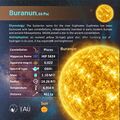 (CC BY Sadegh Faghanpour for IAU WGSN)
-
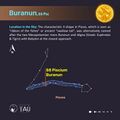 (CC BY Sadegh Faghanpour for IAU WGSN)

Weblinks
Reference
- ↑ 1.0 1.1 Kurtik, G. (2007): Звездное небо Древней Месопотамии. Шумеро-аккадские названия созвездий и других светил [The Star Heaven of Ancient Mesopotamia: Sumero-Akkadian Names of Constellations and Other Heavenly Bodies], Aletejja, St. Petersburg, Russia.
- ↑ 2.0 2.1 Beaulieu, P.-A., Frahm, E., Horowitz, W. & Steele, J. (2018), The Cuneiform Uranology Texts: Drawing the Constellations, American Philosophical Society Press, Philadelphia, USA.
- ↑ 3.0 3.1 Materials for the Sumerian Lexicon. Vol. XI. The Series HAR-ra = hubullu. Tablets XX-XXIV. Ed. by E.Reiner with the coll. of M.Civil. Roma, 197