Paradys: Difference between revisions
infobox |
|||
| (3 intermediate revisions by 3 users not shown) | |||
| Line 1: | Line 1: | ||
Authors: {{PAGEAUTHORS}} | |||
---- | |||
[[File:Paradys profileCard SadeghFaghanpour-IAU-WGSN.jpg|thumb|Paradys profile card (CC BY Sadegh Faghanpour, OAE Iran).]] | [[File:Paradys profileCard SadeghFaghanpour-IAU-WGSN.jpg|thumb|Paradys profile card (CC BY Sadegh Faghanpour, OAE Iran).]] | ||
{{Infobox constellation | |||
| name = Paradys | |||
| native = Paradys-vogel | |||
| translation = Apus-bird | |||
| pronounce = | |||
| IPA = | |||
| culture = IAU | |||
| RA = 221.9654629 | |||
| dec = -79.04475355 | |||
| areatotal = 0 | |||
| numbermainstars = 1 | |||
| numberbfstars = 1 | |||
| numberstarsplanets = | |||
| numberbrightstars = 0 | |||
| numbernearbystars = | |||
| brighteststarname = Paradys | |||
| starmagnitude = 3.798 | |||
| neareststarname = | |||
| stardistance = | |||
| numbermessierobjects = | |||
| meteorshowers = | |||
| bordering = Aps | |||
| notes = | |||
| cat = IAU-Star Name | |||
}} | |||
The term is Dutch and means "Paradise". It is an abbreviation of the original Dutch constellation name "Paradys-vogel" of the constellation [[Apus]] and names the main star. The modern star name resembles the historical Dutch spelling of the original constellation name. α Aps (Alpha Apodis) is a red giant (K3-type) of 4.5 solar masses, so it will not go supernova but only produce a planetary nebula and end as an Earth-sized diamond, a so-called white dwarf star (like our Sun). | The term is Dutch and means "Paradise". It is an abbreviation of the original Dutch constellation name "Paradys-vogel" of the constellation [[Apus]] and names the main star. The modern star name resembles the historical Dutch spelling of the original constellation name. α Aps (Alpha Apodis) is a red giant (K3-type) of 4.5 solar masses, so it will not go supernova but only produce a planetary nebula and end as an Earth-sized diamond, a so-called white dwarf star (like our Sun). | ||
==Etymology and History== | ==Etymology and History== | ||
| Line 6: | Line 33: | ||
The modern Dutch spelling which was also used by de Houtman when inventing the constellation, was "Paradijs" with "ij" (which is pronounced in the same way, like English "eye"). Yet, de Houtman's star catalogue was published only in 1603, later than the globes by Plancius and Hondius. Obviously, there was no "standard spelling" around 1600. Thus, WGSN decided use the oldest term that was published. <gallery> | The modern Dutch spelling which was also used by de Houtman when inventing the constellation, was "Paradijs" with "ij" (which is pronounced in the same way, like English "eye"). Yet, de Houtman's star catalogue was published only in 1603, later than the globes by Plancius and Hondius. Obviously, there was no "standard spelling" around 1600. Thus, WGSN decided use the oldest term that was published. <gallery> | ||
File:Plancius-apus hi.jpg| | File:Plancius-apus hi.jpg|Earliest depiction of Apus under the name Paradys-vogel on Plancius's globe of 1598. The word ‘apis’, Latin for bee, was evidently a misprint for ‘avis’, meaning bird | ||
File:Y-2dots compressed hi.JPEG| | File:Y-2dots compressed hi.JPEG|Ligature of the Dutch "ij" | ||
</gallery> | </gallery> | ||
| Line 20: | Line 47: | ||
*[[References|References (general)]] | *[[References|References (general)]] | ||
*[[References (Medieval and Early Modern)|References (early modern)]] | *[[References (Medieval and Early Modern)|References (early modern)]] | ||
*Ian Ridpath's | *Ian Ridpath's [http://www.ianridpath.com/startales/apus.html Star Tales – Apus] | ||
[[Category:IAU-Star Name]] | [[Category:IAU-Star Name]] [[Category:Asterism]] | ||
[[Category:Modern]] [[Category:Dutch]] | [[Category:Modern]] [[Category:Dutch]] | ||
[[Category:Eurasia]] | [[Category:Eurasia]] | ||
[[Category:European]] | [[Category:European]] | ||
[[Category:Aps]] | [[Category:Aps]] | ||
Latest revision as of 01:57, 17 August 2026
Authors: Susanne M Hoffmann, Youla Azkarrula, Ian Ridpath

| Asterism Info | |
| Native | Paradys-vogel |
|---|---|
| Translation | Apus-bird |
| Position (2000) | |
| Right ascension | 221.9654629 |
| Declination | -79.04475355 |
| Area | 0 sq. deg. |
| Stars | |
| Bright stars | 1 |
| Bayer/Flamsteed stars | 1 |
| Stars brighter than 3.00m | 0 |
| Brightest star | Paradys (3.798m) |
| Taxonomy | |
| category of asterism | IAU-Star Name |
| IAU- constellations | Aps |
The term is Dutch and means "Paradise". It is an abbreviation of the original Dutch constellation name "Paradys-vogel" of the constellation Apus and names the main star. The modern star name resembles the historical Dutch spelling of the original constellation name. α Aps (Alpha Apodis) is a red giant (K3-type) of 4.5 solar masses, so it will not go supernova but only produce a planetary nebula and end as an Earth-sized diamond, a so-called white dwarf star (like our Sun).
Etymology and History

The spelling with "y" was used in the earliest publications, namely on the globes by Plancius and Hondius in 1598.
The modern Dutch spelling which was also used by de Houtman when inventing the constellation, was "Paradijs" with "ij" (which is pronounced in the same way, like English "eye"). Yet, de Houtman's star catalogue was published only in 1603, later than the globes by Plancius and Hondius. Obviously, there was no "standard spelling" around 1600. Thus, WGSN decided use the oldest term that was published.
-
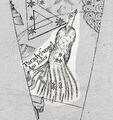 Earliest depiction of Apus under the name Paradys-vogel on Plancius's globe of 1598. The word ‘apis’, Latin for bee, was evidently a misprint for ‘avis’, meaning bird
 -
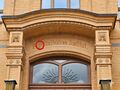 Ligature of the Dutch "ij"


Mythology
There is no mythology.
IAU Working Group on Star Names
The name was discussed and approved by the IAU WGSN in 2025.
Weblinks
Reference
- References (general)
- References (early modern)
- Ian Ridpath's Star Tales – Apus





